

SFLR means “Sorry For Late Reply.” It’s what you type when you’re finally getting back to someone after leaving them on read for a while.
You Saw Those Four Letters and Had No Clue
You got a text that started with “SFLR” and you’re sitting there wondering if it’s an apology, an excuse, or just something people say now. Maybe it popped up in a DM and you don’t want to look clueless by asking. Or someone used it on you and you’re trying to figure out if they’re actually sorry or just being polite.
What’s Really Happening When Someone Sends This
Here’s the thing about SFLR—it’s less of a real apology and more like a social bookmark. When someone types it, they’re basically saying “I know I left you hanging, and I’m acknowledging that before we continue this conversation.”
Most of the time, people aren’t genuinely sorry. They’re just trying to smooth over the awkwardness of replying three days late. It’s the texting version of clearing your throat before speaking. You use it to reset the conversation without making a big deal about the gap.
Think of it as a guilt-reduction tool. The person feels a little bad about the delay, types SFLR, and boom—they’ve addressed it without actually explaining where they’ve been or what they were doing.
Where This Actually Pops Up in Your Messages
SFLR shows up when someone finally opens your message after it’s been sitting there for hours or days. You’ll see it at the start of a text, usually followed by whatever they actually wanted to say.
In group chats, people drop it when they’re catching up on fifty unread messages and want to jump back in. On Instagram or Twitter DMs, it’s common when someone’s been ignoring their requests for a week.
Some people use it every single time they reply late, even if “late” is just two hours. Others only break it out when they’ve truly ghosted you for days. There’s no official rule about how long the delay needs to be.
You’ll also spot it in comment threads when someone’s replying to a post from last week, or in work chats where someone finally answered a question from yesterday.
Why the Same Four Letters Hit Different Depending on the Situation
The meaning of SFLR shifts depending on who’s sending it and why.
Who you’re texting matters
Between close friends, it’s usually casual and almost meaningless. You both know life gets busy, so SFLR is just a formality. If your best friend sends “SFLR, wanna grab food?” you’re not counting the hours they took to respond.
With someone you’re dating or trying to get to know, SFLR hits different. It can feel like an excuse, especially if they’re always late to reply. Three “SFLRs” in a row might make you wonder if they’re actually interested.
This is where people usually mess up
Using SFLR with someone who’s upset or dealing with something serious makes you look careless. If your friend texted about a real problem and you reply two days later with “SFLR,” that’s going to sting. The abbreviation makes it seem like you’re treating their issue lightly.
Tone also gets weird in professional settings. Your coworker might not care, but your boss definitely will. SFLR sounds too casual for most work situations, even in Slack or Teams.
The situation changes everything
Watch out for using it too often with the same person. Once is fine. Five times makes it look like you don’t actually care about replying on time.
Times When SFLR Will Make Things Worse
Skip SFLR entirely if you’re texting someone older who might not know slang. Your mom might think it’s some kind of error code.
Don’t use it in formal emails, job applications, or anything where you need to sound professional. “Apologies for my delayed response” works way better there.
Avoid it when someone shared bad news, asked for help with something urgent, or is clearly stressed. SFLR sounds dismissive in those moments. Just say “I’m sorry I didn’t see this sooner” in actual words.
If you’re already in an argument or someone’s mad at you, SFLR will make things worse. It looks like you’re taking the situation as a joke.
Public posts or comments usually don’t need it either. Nobody’s tracking when you reply to a random TikTok or Instagram comment. Save it for one-on-one conversations.
And if you were only gone for 20 minutes? You don’t need to apologize at all. SFLR makes it seem like you think you owe someone instant replies, which sets a weird expectation.
Other Ways to Say You’re Replying Late
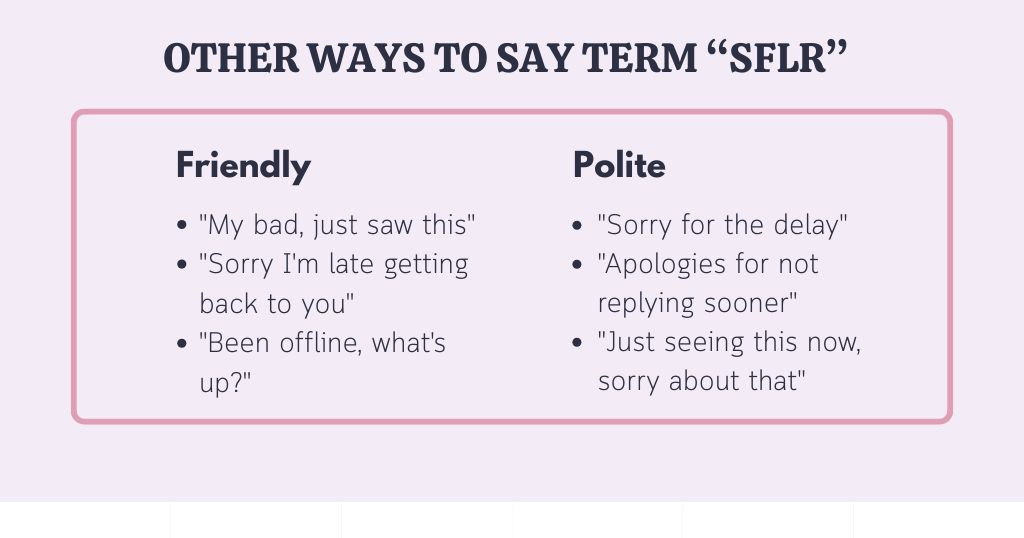
Casual with friends:
- “My bad, just saw this”
- “Sorry I’m late getting back to you”
- “Been offline, what’s up?”
Polite but not formal:
- “Sorry for the delay”
- “Apologies for not replying sooner”
- “Just seeing this now, sorry about that”
Playful or joking:
- “Sorry, I was living my life without my phone (weird, right?)”
- “Took me a minute”
- “Better late than never?”
What It Looks Like When Real People Actually Type It
“SFLR! Yeah I’m definitely coming to the party”
“SFLR, my phone died and I forgot to charge it overnight”
“Hey SFLR, been crazy busy. How’d your exam go?”
“SFLR lol I fell asleep”
“SFLR! That meme you sent me is perfect”
“Sorry for late reply, still down to meet up this weekend?”
“SFLR been at work all day. What were you saying about dinner?”
“SFLR I literally just opened Instagram for the first time today”
You Also Like it: OTT Meaning: What It Really Means in Texts, Streaming, and Everyday Life
Where This Term Lives Online (and Who Uses It Most)
SFLR shows up more in places where texting culture is intense, especially among younger users who live on apps like WhatsApp, Telegram, and Instagram, where delayed replies feel more noticeable.
On TikTok, you’ll sometimes see it in video captions when someone’s doing a “reply” video to a comment from weeks ago. Instagram DMs get flooded with it because people ignore their message requests forever.
Twitter (or X) users tend to skip it because most conversations there aren’t that personal. Same with Reddit—nobody expects instant replies to comments.
Younger people (teens and early twenties) use it without thinking. Older millennials and Gen X might write it out fully as “sorry for late reply” instead of the abbreviation.
The term exploded around 2020-2021 when everyone was stuck at home and chronically online. Before that, “SLR” (sorry late reply) was more common, but SFLR caught on because it sounds more complete.
The Mix-Ups That Keep Happening
Some people confuse SFLR with SFTL, which usually means “Sorry For The Loss” when someone’s grieving. Mixing these up in a conversation is incredibly awkward, so double-check before you send.
Another thing: people assume SFLR always means the person was genuinely busy. Sometimes they just didn’t feel like texting. The abbreviation doesn’t tell you anything about what they were actually doing.
Overusing SFLR makes it lose meaning. If someone says it every single time, you stop believing they’re actually sorry. It becomes a filler word, like “um” in regular speech.
And here’s a weird one—some people read SFLR as passive-aggressive, especially if there’s no explanation after it. Just “SFLR” by itself can feel cold, like they’re checking off a box rather than genuinely reconnecting.
Questions People Actually Ask About This
Is SFLR rude to use?
Not usually, but it depends on the situation. Between friends, it’s totally normal. In serious conversations or professional settings, it comes off as too casual.
Can I use it sarcastically?
Yes, some people use it as a joke when they reply to a message from months or even years ago. The humor is in the ridiculousness of calling it just “late.”
Does everyone know what SFLR means?
No. Older people and those who don’t text much probably won’t recognize it. If you’re unsure, write it out fully.
What if I only waited an hour?
You probably don’t need to say anything. SFLR is for actual delays, not just being human and having a life.
Is it the same as SLR?
Pretty much. SLR is just shorter. Both mean the same thing, SFLR just sounds slightly more polite.
Will people think I’m making excuses?
If you use it once in a while, no. If every conversation starts with SFLR, yeah, people might start wondering if you’re avoiding them.
Bottom Line
SFLR is one of those small tools that keeps texting friendly without making a huge deal about delays. It works best when you mean it and don’t wear it out. Use it when you actually took a while to reply, skip it when the conversation is serious, and remember that sometimes just picking up where you left off works fine too.

I’m Hazel, and I studied BSC English at GCUF. I focus on explaining word meanings in simple, clear language that anyone can understand. My goal is helping readers grasp everyday English, confusing terms, and slang used in real conversations and social media. I believe language learning works best when definitions connect to actual life situations. Through careful research and straightforward explanations, I make vocabulary accessible for students, learners, and anyone curious about how English really works in daily use.