

DKM stands for “Don’t Kill Me” in texting and social media. People use it when they’re about to say something funny, embarrassing, or slightly controversial and want you to know they’re not being totally serious.
Why This One Confuses People
You probably saw DKM pop up in a comment thread or someone’s text and thought, “Wait, is this person in danger?” Nope. The confusion makes sense because taken literally, it sounds dramatic. But here’s the thing—nobody’s actually asking you not to kill them. It’s just how internet language works now.
The skull emoji (💀) means “I’m dying laughing,” crying faces mean you’re happy, and DKM means… well, you’re bracing for impact. If you’ve been staring at those three letters trying to decode whether your friend’s joking or genuinely upset, you’re not alone.
The Real Vibe Behind It
Think of DKM as a verbal cushion. It’s what you throw out there before you land something that might make someone react. The whole point is to take the edge off whatever comes next. When someone types DKM, they’re usually either laughing so hard they can barely handle it, or they’re about to admit something that’ll make you want to kill them.
It’s rarely about the words themselves. It’s about the energy. You’re signaling “I know this is ridiculous” or “Please don’t be mad at what I’m about to say.” It’s the text version of that face you make when you’re about to tell your friend you accidentally deleted their photos.
Where You’ll Actually See It
You’ll see DKM show up when someone’s reacting to something hilarious. Like if your friend sends a video of their cat falling off the couch, you might reply “DKM that’s too funny 😭.” It pairs with the moment, not the words.
It also works as a shield. Say you forgot your friend’s birthday or you’re running late again. “DKM I’m still 20 minutes away” sounds way less harsh than just “I’m still 20 minutes away.” You’re owning the messup while asking for grace.
Group chats love this one. Someone drops an unpopular opinion about a TV show everyone’s watching? They’ll throw in DKM first. “DKM but that character deserved what happened.” Now everyone knows it’s banter, not a real argument starter.
Why Context Is Everything Here
Here’s where things get tricky. DKM sounds completely different depending on who you’re talking to and what’s happening.
With close friends, it’s almost always playful. You can say “DKM I ate your leftovers” and they’ll know you’re being goofy about it. But if you send that same message to someone you barely know, it might come off weird or like you’re not taking them seriously.
The biggest misread happens when someone’s actually upset and you respond with DKM. Let’s say your roommate texts “You left the door unlocked again” and you reply “DKM my bad.” They might think you’re brushing it off instead of apologizing for real. Tone doesn’t transfer through screens, and DKM without the right context can sound dismissive.
Sarcasm’s another landmine. If someone posts something they’re proud of and you comment “DKM that’s so bad,” even if you’re joking with them, other people reading it won’t know your relationship. It’ll just look mean.
Times to Avoid Using It
Don’t use DKM with your boss, your teacher, or anyone in a work email. “DKM I missed the deadline” will not make your manager laugh. It’ll make them question your professionalism.
Skip it in serious conversations. If someone’s telling you about a real problem they’re dealing with, DKM makes you sound like you’re not listening. Same goes for apologies that actually matter—if you messed up something important, a real apology works better than internet slang.
Public posts where strangers might see it? Be careful. What sounds funny to your friends might look rude to someone who doesn’t know you’re joking. And definitely don’t use it when you’re genuinely trying to communicate something important. If you need someone to understand you clearly, drop the abbreviations.
Other Ways to Say the Same Thing
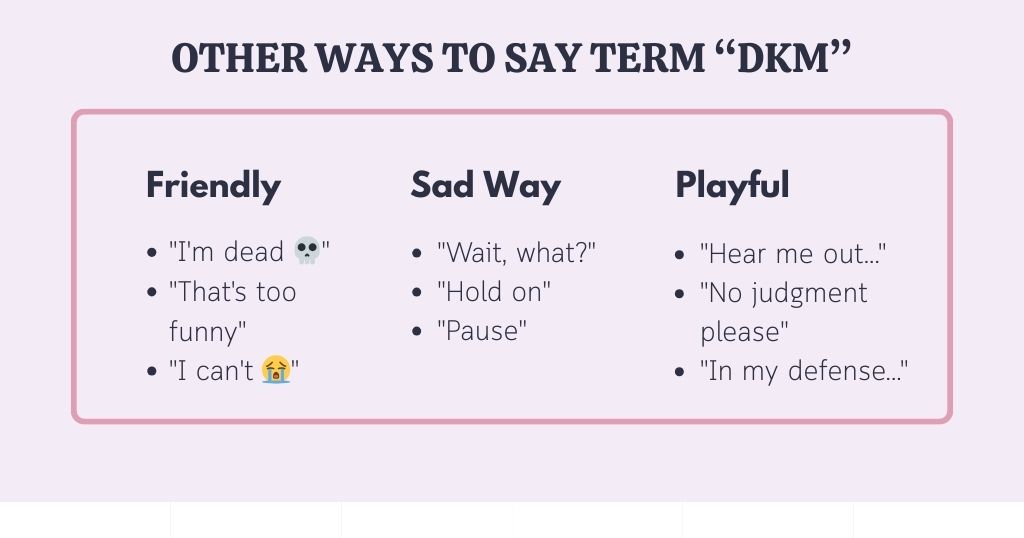
When you’re just laughing:
- “I’m dead 💀”
- “That’s too funny”
- “I can’t 😭”
When you’re softening bad news:
- “Sorry in advance but…”
- “Don’t hate me…”
- “I know you’ll be mad but…”
When you’re being playful:
- “Hear me out…”
- “No judgment please”
- “In my defense…”
What It Looks Like in Real Messages
“Just spent $60 on another pair of shoes I don’t need, DKM”
“DKM why did he show up wearing that 💀”
“I forgot to submit the group project… DKM please tell me you have a copy”
“DKM but I actually like the movie everyone hates”
“Your joke was so bad, DKM 😭😭”
“Gonna be honest, DKM, I don’t think that outfit works”
“DKM I just liked my ex’s post from 2019”
“The way she pronounces ‘library’ has me DKM every time”
How Different Apps Use It
TikTok comments lean hard into the laughing version. You’ll see it under funny videos where people are genuinely cracking up. Instagram’s similar, but you’ll also catch it in Stories when someone’s posting something slightly embarrassing about themselves.
WhatsApp and regular texting? That’s where the “please forgive me” version lives. It’s more personal there because you’re talking one-on-one instead of performing for an audience.
Twitter (or X, whatever we’re calling it now) uses DKM for hot takes. People will say “DKM but [unpopular opinion]” and then watch the chaos unfold. It’s part defense, part invitation to argue.
The term hit its stride in the early 2010s when text speak was evolving fast. It came from people literally typing “please don’t kill me for this” and realizing that was way too many words. Internet slang always finds the shortest route.
Ways People Get It Wrong
Another mixup happens when people use it too much. If you’re throwing DKM into every single message, it loses meaning. It starts sounding like a verbal tic instead of an actual reaction.
Some folks also assume it’s only for young people. Not true. Plenty of adults use it, though you’re more likely to see it from people under 30. But internet slang doesn’t have age gates.
And watch out for the non-slang meanings. In science or math contexts, dkm means decameter (10 meters). If you’re doing homework and you type “DKM 💀” in your answer, your teacher’s gonna be confused.
Read Also: AYO Meaning: What Does AYO Mean in Text?
Questions People Actually Ask
Can DKM sound passive-aggressive?
Yes, absolutely. If someone’s genuinely upset and you reply with DKM like it’s all a joke, they’ll think you’re being dismissive.
Do girls and guys use it differently?
Not really. Both use it the same way—either for laughs or to soften bad news. The only difference is personal style, not gender.
Is it outdated?
Nah, it’s still going strong. As long as people are saying embarrassing things online and watching funny videos, DKM isn’t going anywhere.
What if someone sends it to me and I don’t know how to respond?
Just react normally to whatever they said after the DKM. That’s the whole point—they’re trying to make the conversation easier, so go with it.
Does it work in professional settings?
No. Save it for friends. Work communication needs actual words, not abbreviations that make you sound like you’re not taking things seriously.
DKM is one of those terms that makes sense once you see it in action a few times. It’s not complicated—it’s just people trying to keep conversations light or brace for a reaction. Whether you’re laughing at something ridiculous or admitting you messed up, those three letters do a lot of heavy lifting. Just remember the setting matters, the relationship matters, and timing matters. Use it with people who get your vibe, and you’ll be fine.

I’m Hazel, and I studied BSC English at GCUF. I focus on explaining word meanings in simple, clear language that anyone can understand. My goal is helping readers grasp everyday English, confusing terms, and slang used in real conversations and social media. I believe language learning works best when definitions connect to actual life situations. Through careful research and straightforward explanations, I make vocabulary accessible for students, learners, and anyone curious about how English really works in daily use.