

TBC usually means “To Be Continued” or “To Be Confirmed” in texts and messages. It’s a quick way to pause a story you’re telling or show that plans aren’t locked in yet.
Why This Gets Confusing
You’re scrolling through Instagram comments and someone drops “TBC” at the end of a dramatic story. Or your friend texts about weekend plans and adds “TBC” after the restaurant name. Wait—does that mean they’re finishing the story later, or they haven’t picked the place yet?
The confusion makes sense. TBC works differently depending on what people are talking about. Sometimes it’s a cliffhanger. Sometimes it’s just saying “we’ll figure it out.” And if you’ve seen it in other places—like on a Ford truck dashboard or a movie poster—things get even messier.
The Real Meaning Behind It
When someone uses TBC, they’re buying time without being rude about it. Think of it as hitting pause instead of stop.
“To Be Continued” is the drama version. You’re in the middle of spilling tea, venting about your day, or telling a wild story, but you’ve got to go. Leaving people on “TBC” is intentional—it keeps them hooked. You’re basically saying “this isn’t over, I’ve got more to tell you.”
“To Be Confirmed” is the planning version. You want to do something, you’re pretty sure it’ll happen, but the details aren’t solid. Maybe you’re waiting on one more person to say yes, or you need to check your schedule. It’s softer than canceling but more committed than “maybe.”
People pick TBC because it sounds less flaky than “idk” and less formal than typing out the full phrase. It splits the difference between being vague and being specific. It’s similar to how people use other abbreviations like “FR” to keep things casual without sounding too stiff.
Where You’ll Actually See People Using This
In group chats, TBC shows up when plans are halfway formed. Someone suggests going out Friday, a few people say yes, and then: “Meeting at 8, place TBC.” Everyone knows the plan exists—they just don’t know where yet.
When you’re texting one-on-one and the conversation gets long, TBC works as an exit. You’ve been typing paragraphs back and forth, but you need to actually do something. Dropping “TBC” signals you’re not done talking, you’re just done right now.
On social media, especially TikTok or Instagram Stories, people use TBC to build suspense. Part 1 of a story ends with “TBC,” and followers know to check back. It’s a hook that keeps people coming back to your profile.
Sometimes people throw it into replies when they’re sharing gossip or reacting to drama but can’t type everything out in one go. The vibe is always “trust me, there’s more.”
Tone & Context Matter More Than You Think
Here’s where people mess up: TBC doesn’t always feel the same.
If your close friend leaves you on “TBC” after a story, you’ll probably laugh and wait for the rest. But if someone you barely know does it—especially about plans—it can feel like they’re keeping you hanging. You’re left wondering if they’re actually interested or just being polite.
In work situations, “TBC” on a calendar invite or email usually means “To Be Confirmed” and it’s fine. But using it in casual text speak (“meeting went badly… TBC”) could confuse coworkers who aren’t used to internet slang. They might think you’re being weirdly cryptic instead of just informal.
Big warning: Don’t use “TBC” when someone needs a real answer. If your friend asks “Are you coming to my birthday?” and you say “TBC,” it sounds like you don’t care enough to commit. Same goes for serious conversations—leaving someone on “TBC” during an argument or important talk feels dismissive, like you’re treating their feelings as a cliffhanger.
Sarcasm breaks TBC too. If someone’s annoying you and you reply “TBC” to their long rant, they might not catch that you’re being sarcastic. Text doesn’t carry tone well, so what feels like a funny brush-off to you could seem genuinely rude to them.
Read More: Kik Meaning: What People Actually Mean When They Say It
Times to Skip “TBC” Completely
Skip TBC entirely in professional emails or formal messages. Writing “Budget discussion TBC” in a work email to your boss works, but texting your supervisor “Talked to the client… TBC” looks unprofessional. Just finish your thought.
Don’t use it with people who aren’t online much—like older relatives or anyone who doesn’t text a lot. They’ll have no idea what you mean, and you’ll just confuse them.
Never leave someone on “TBC” when they’re upset or need support. If a friend is venting about something serious and you respond with “TBC,” it feels cold. Like you’re treating their problem as entertainment instead of actually listening.
Avoid it in dating early on. If you’re texting someone new and you end conversations with “TBC,” it can seem like you’re playing games or not that interested. Save it for once you’ve got an actual relationship going.
Public posts need extra thought too. Ending a Tweet or Facebook post with “TBC” when you’re talking about something sensitive—politics, tragedy, personal loss—can seem attention-seeking. People might think you’re dragging out serious topics for engagement.
Say It a Different Way (Alternatives That Work)
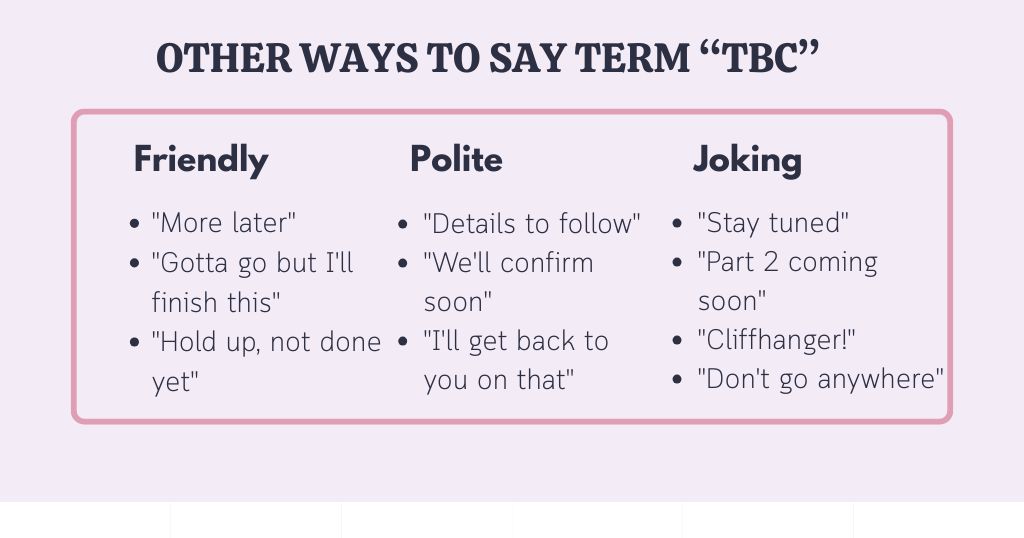
When TBC doesn’t fit the vibe, you’ve got options. People respond differently to casual slang like “SFLR” depending on the situation, so picking the right alternative matters. Here are some that work:
Casual with friends:
- “More later”
- “Gotta go but I’ll finish this”
- “Hold up, not done yet”
- “Pause—I’ll text you in a bit”
Polite or professional:
- “Details to follow”
- “We’ll confirm soon”
- “I’ll get back to you on that”
- “Still working out the specifics”
Playful or joking:
- “Stay tuned”
- “Part 2 coming soon”
- “Cliffhanger!”
- “Don’t go anywhere”
Messages People Actually Send
Story pause: “So I walk into the room and everyone goes quiet. Like DEAD silent. TBC when I get home”
Plans forming: “Beach day Saturday for sure. Time TBC depending on weather”
Group chat energy: “Y’all are not ready for what just happened at work. TBC after my shift”
Social media hook: “Update on the apartment drama… part 3 TBC tomorrow”
Quick exit: “Wait someone’s calling me. TBC in like 10”
Event coordination: “Party at mine next Friday. Guest list TBC but you’re obviously invited”
Age, Apps, and Where This Shows Up Most
TBC feels younger. If you’re under 30, you’ve probably seen it a thousand times. If you’re older, you might recognize it from work emails but not from casual texting.
TikTok made the “To Be Continued” version way more popular. Creators split stories across multiple videos, and “TBC” in the caption tells viewers there’s a part 2. Other slang like “IHH” also blew up on TikTok the same way—platform culture shapes how abbreviations spread. Instagram picked up the same habit with Stories and carousel posts.
In the UK and Australia, people use TBC more casually than in the US, where “TBD” (To Be Determined) is more common for uncertain plans. The difference is small but noticeable—TBC sounds a bit more definite, like the plan will happen once details get sorted.
Gaming communities, especially World of Warcraft players, might see “TBC” and immediately think of “The Burning Crusade” expansion. It’s so embedded in that world that using it for anything else in gaming forums can get confusing.
Mix-Ups That Happen All the Time
People think TBC and TBD mean exactly the same thing. They’re close, but TBD suggests nothing’s decided yet, while TBC implies someone’s working on confirming the details. Just like how “ND” gets confused with other shorthand, mixing up similar abbreviations happens all the time in texting. It’s a subtle difference that doesn’t matter much in casual texts but can matter in work settings.
Some folks assume TBC always means “To Be Continued” because that’s what they see on Netflix or YouTube. Then they get a calendar invite with “TBC” next to a speaker’s name and wonder why the meeting is turning into a series.
Overusing TBC makes people stop taking you seriously. If you constantly leave conversations hanging with “TBC,” friends start assuming you’ll never actually finish the story. It becomes background noise instead of building suspense.
There’s also the medical mix-up. In hospitals or international health contexts, TBC sometimes means “Total Blood Count” or even relates to tuberculosis programs. If you’re texting someone who works in healthcare and you casually drop “TBC,” they might read it through a completely different lens.
Places “TBC” Pops Up Outside Texting
On Ford trucks: If you’ve got an F-250 or F-350 and your dashboard shows “TBC Fault,” that’s “Trailer Brake Controller.” It means there’s probably a wiring issue with your trailer connection. Has nothing to do with texting—it’s just the same letters.
In movie theaters: UK cinema ratings sometimes show “TBC” on posters before a film gets its official age rating. It means “To Be Classified,” so you can’t tell yet if it’s PG or R-rated.
On construction plans: Engineers use “TBC” to mark “Top Back of Curb”—a measurement showing curb height. If you’re building something and see TBC on blueprints, don’t assume it means the contractor will confirm later.
In sports schedules: Tournament brackets say “TBC” when one team hasn’t won their match yet. Like “Winner of Game A vs. TBC.” It’s just a placeholder until someone advances.
Banking documents: Financial reports might list “TBC” to flag unconfirmed transaction dates or pending approvals. Same meaning as business contexts—details coming soon.
Questions People Keep Asking
Does TBC sound rude?
Not usually, but it depends on the situation. Between friends, it’s casual and normal. With people you don’t know well, or in serious moments, it can feel dismissive.
Can people use it sarcastically?
Yeah, but it’s risky. Sarcasm doesn’t translate well over text, so your “TBC” might land wrong. Save sarcastic TBC for people who really get your humor.
Is it the same as cliffhanger?
Sort of. “To Be Continued” is definitely a cliffhanger move. But “To Be Confirmed” isn’t—that’s just about unfinished plans, not suspense.
Do younger people use it more?
Definitely. TBC is internet speak, and it’s way more common with people who grew up texting and using social media daily.
Should I use it in work emails?
Only for the “To Be Confirmed” meaning, and only in context where it makes sense—like agenda items or pending schedules. Don’t use it for casual story-telling at work.
What if someone leaves me on TBC and never follows up?
That’s annoying but common. Some people forget or lose interest. If it matters, just ask them directly instead of waiting around.
TBC is one of those terms that seems simple until you actually try using it. Context changes everything—what works in a group chat with friends could flop in a work email or confuse someone who doesn’t live online. The key is knowing your audience and reading the room. If you’re genuinely pausing a conversation or your plans really aren’t set yet, TBC does the job. Just don’t lean on it so much that people stop expecting you to finish what you started.
TBC means “To Be Continued” or “To Be Confirmed” in texts, but context matters. Find out when to use it, common mistakes, and what it means in other places.

I’m Hazel, and I studied BSC English at GCUF. I focus on explaining word meanings in simple, clear language that anyone can understand. My goal is helping readers grasp everyday English, confusing terms, and slang used in real conversations and social media. I believe language learning works best when definitions connect to actual life situations. Through careful research and straightforward explanations, I make vocabulary accessible for students, learners, and anyone curious about how English really works in daily use.