

BFF stands for “Best Friends Forever.” It’s what you call someone who’s more than just a regular friend—someone you trust completely, share everything with, and plan to keep in your life long-term.
You’re Here Because Something Felt Off
You probably saw “BFF” in someone’s Instagram caption, got a text saying “you’re my BFF,” or heard it in a conversation and wondered if it means something different now. Maybe you’re not sure if calling someone your BFF is a big deal or just casual. Or you’re curious if there’s some hidden meaning you’re missing, especially when guys use it or when it pops up on Snapchat with those weird emojis.
The confusion makes sense. Words that started as simple acronyms don’t always stay simple, and BFF has picked up different vibes depending on who’s saying it and where.
Beyond the Letters: What’s Really Being Said
When someone calls you their BFF, they’re saying you’re in their inner circle. You’re the person they text first with good news, the one they vent to without filter, and who they’d call at 2 AM if things went wrong.
But here’s the thing—not everyone means it the same way anymore. Some people throw “BFF” around like it’s nothing, using it for someone they’ve known for two weeks. Others save it for that one person who’s been there since middle school. The weight of the word depends entirely on who’s using it.
It’s also become a way to define your relationship publicly. Posting “day out with my BFF” tells everyone this person matters to you. It’s like wearing matching bracelets, but in word form.
Where You’ll Actually See This Pop Up
You’ll see BFF most often in texts and social media. Someone might comment “BFF goals 💕” on a photo of two friends laughing. Or your friend texts “BFF movie night tonight?” when making plans.
It shows up in group chats too, usually when someone’s hyping up the friendship: “I don’t know what I’d do without my BFF honestly.” Sometimes people use it as a nickname—just calling someone “BFF” instead of their actual name.
On Snapchat specifically, it’s not just a word. If you see a yellow heart next to someone’s name, that’s the app labeling them your “#1 BFF” because you snap each other the most. That’s created a whole different thing where people actually compete for BFF status or feel weird if their supposed best friend isn’t their Snapchat BFF.
Reading the Room (Because Context Is Everything)
The same three letters can mean totally different things depending on the vibe.
From a girl to another girl: Usually means genuine closeness. Think sharing clothes, knowing each other’s drama, crying together over breakups. It’s taken pretty seriously most of the time.
From a guy to another guy: Often more casual. Guys might say “that’s my BFF” but mean “we play basketball together and he’s cool.” Less emotional weight unless they’re really close.
From a guy to a girl (or vice versa): This is where it gets tricky. Sometimes it means actual best friendship. But sometimes when a guy calls a girl his BFF, he’s making it clear there’s nothing romantic happening—basically friend-zoning the situation for anyone watching. And girls sometimes use it the same way to shut down assumptions.
In relationships: If your boyfriend or girlfriend calls you their BFF, it could be sweet (you’re partners and friends). But if they only call you that and never anything romantic, that might feel weird.
Warning about misinterpretation: If you sarcastically call someone your BFF after they annoyed you, they might not catch the sarcasm in text. “Thanks for telling everyone my secret, BFF 🙄” works in person with the right tone, but in a message it could actually hurt someone’s feelings if they don’t read the emoji. This happens with lots of texting slang—even simple terms like NN can mean different things depending on context, and SUS can sound joking or serious based on who’s saying it.”
Timing matters too. Calling someone your BFF after knowing them one week comes off as either super eager or kinda fake.
Times to Keep This One in Your Pocket
At work: Don’t call your coworker your BFF in professional emails or meetings. It sounds immature and makes things awkward. Save it for actual friendship outside the office, not your desk neighbor.
With someone you just met: Even if you vibed with someone at a party, calling them your BFF immediately feels pushy. They might think you’re coming on too strong or don’t have other friends.
During serious moments: If someone’s sharing something deeply personal or painful, responding with “omg BFF” minimizes what they said. Just be real instead.
In formal writing: School essays, job applications, any official communication—BFF doesn’t belong there. Use “close friend” or “best friend” instead.
When you’re actually mad: Saying “okay BFF” sarcastically during a fight usually makes things worse. It sounds petty even if that’s how you feel.
Read Also: What Does OTP Mean in Text? The 3 Meanings You Need to Know
Other Ways to Say the Same Thing
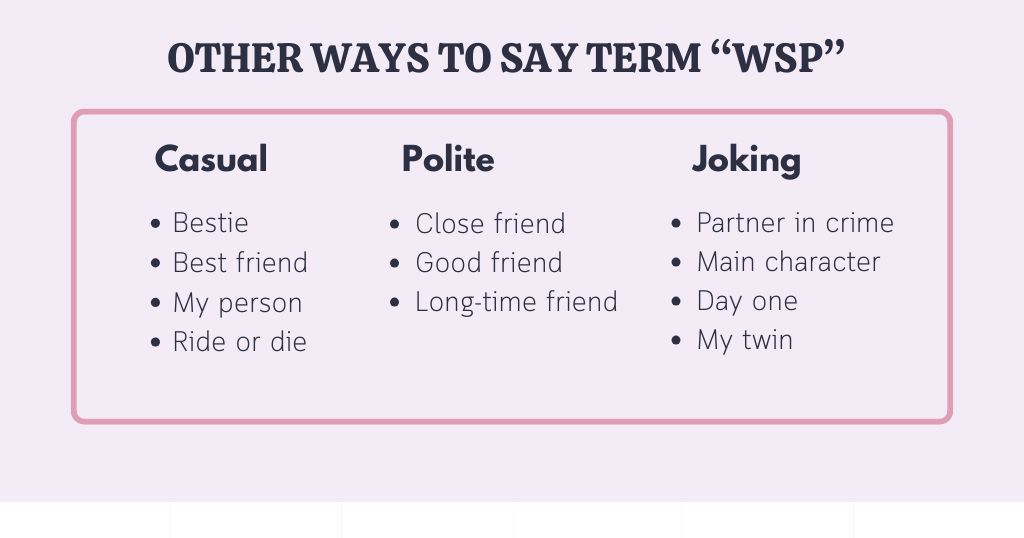
Casual / friendly:
- Bestie
- Best friend
- My person
- Ride or die
Polite / professional:
- Close friend
- Good friend
- Long-time friend
Playful / joking:
- Partner in crime
- Main character
- Day one
- My twin
For emphasizing permanence:
- Friend for life
- Lifer
- Forever friend
If you’re looking for something more casual than BFF, terms like ‘bestie’ work great in texts. Speaking of texting shortcuts, people also use abbreviations like FR to show they’re being serious or NP when they want to sound chill about something.
Messages That Sound Like Real People Sent Them
“Can’t wait to see my BFF this weekend, it’s been too long”
“You really showed up when I needed you. You’re my BFF fr”
“BFF since third grade and we still tell each other everything”
“I love you BFF ❤️” (usually between girls)
“Grateful for my BFF who gets me”
“When your BFF knows your coffee order by heart >>”
“My BFF and I are basically the same person at this point”
“Shoutout to my BFF for always having my back”
How This Term Has Shifted Over Time
BFF started getting popular in the late 90s and early 2000s, but it exploded when texting became huge. Paris Hilton had a reality show literally called “Paris Hilton’s My New BFF” in 2008, which made it even more mainstream.
These days, younger people (Gen Z especially) use it more casually than Millennials did. They’ve also created their own texting language with terms like YHU instead of “you” and DKM when something’s hilarious—each generation puts their own spin on how they communicate online.
TikTok has created terms like “internet BFF” for someone you’re close with online but have never met in person. That would’ve sounded ridiculous ten years ago, but now it’s normal.
Some people have started saying “BSF” instead (Best Sister Friend or just another way to say best friend). It means basically the same thing but with slightly different energy—a bit more Gen Z coded.
There’s also a weird hierarchy now: casual friend → good friend → bestie → BFF → day one. Each level means something slightly different in terms of how close you actually are.
Myths People Actually Believe
“BFF means you’ll actually be friends forever” Not really. People say it with good intentions, but friendships change. Moving away, growing apart, or having a falling out happens even with BFFs. The “forever” part is more about the feeling in the moment than a binding contract.
“It’s only for girls” Guys use it too, just less often and usually with a different vibe. The stereotype that only girls have BFFs is outdated. Plenty of guys have best friends they’d call that, they just might not post about it as much.
“It’s always serious and emotional” Sometimes people use BFF ironically or jokingly. If someone says “pizza is my BFF,” they obviously don’t mean it literally. Or someone might call their dog their BFF as a joke about not having human friends. Context tells you if it’s serious or not.
“You can only have one BFF” Some people think BFF means the best friend, singular. But lots of people have multiple BFFs—maybe one from childhood, one from college, one from work. The term has loosened up over time.
“Calling someone your BFF makes it official” It’s not like you need to have a conversation about it. Some best friends never even use the term but are clearly BFFs based on their actions. And calling someone your BFF doesn’t automatically make the friendship deeper if it isn’t already there.
Questions You’re Probably Wondering About
Can you call your boyfriend or girlfriend your BFF?
Yeah, lots of people do. It means your romantic partner is also your best friend, which most people see as healthy. Just make sure you’re also treating them like a partner, not only a friend.
Is it rude to have multiple BFFs?
Not really, but it can hurt someone’s feelings if they thought they were your only BFF and then find out you have three others. Be honest about where people stand with you.
What if someone calls you their BFF but you don’t feel the same?
That’s awkward. You can either let it go and just accept that they see the friendship as closer than you do, or gently set boundaries without being mean about it.
Does BFF mean something different in texting vs. in person?
Not different meanings, but texting makes it easier to say casually. People might text “love you BFF!” when they’d feel shy saying it out loud.
Can you break up with a BFF?
Absolutely. Friend breakups are real and sometimes necessary. If a friendship becomes toxic or you’ve grown into different people, ending it is okay even if you used to call each other BFFs.
What’s the male version of BFF?
There isn’t one. Guys just say BFF too, or “best friend,” or “bro.” Some people think guys need a different term but that’s just gender stereotypes talking.
BFF is one of those terms that everyone knows but uses slightly differently. For some people it’s sacred—reserved for that one person who’s been through everything with them. For others it’s thrown around more freely. Neither way is wrong, but knowing the difference helps you read the room.
If someone calls you their BFF, take it as a compliment but also pay attention to their actions. Real best friendship shows up in how someone treats you, not just what they call you. And if you’re about to call someone your BFF, just make sure it matches what you actually feel. Words are easy; showing up is what counts.

I’m Hazel, and I studied BSC English at GCUF. I focus on explaining word meanings in simple, clear language that anyone can understand. My goal is helping readers grasp everyday English, confusing terms, and slang used in real conversations and social media. I believe language learning works best when definitions connect to actual life situations. Through careful research and straightforward explanations, I make vocabulary accessible for students, learners, and anyone curious about how English really works in daily use.