

NFW means “No F***ing Way” in texts and chats. It’s a strong reaction showing shock, disbelief, or a hard “no” to something surprising or ridiculous.
You’re Here Because Someone Dropped “NFW” and You’re Confused
You saw NFW pop up in a text or comment and weren’t sure if the person was angry, excited, or just messing around. Maybe a friend sent it after you shared news, or you spotted it under a viral post. The confusing part? It sounds aggressive, but people use it when they’re pumped up too. You’re not alone in wondering if you should use it back or just ignore it.
The Real Emotion Behind Those Three Letters
When someone types NFW, they’re putting emphasis on disbelief. It’s like saying “seriously?!” but cranked up. People pick this over longer responses because it captures that instant gut reaction—whether they’re stunned by good news, calling out something fake, or flat-out refusing an idea.
The F-word makes it hit harder. That’s the point. It’s not meant to be polite or neutral. It’s raw emotion in three letters. Think of it as the text version of your jaw dropping or your eyes going wide.
Where You’ll Actually See This Pop Up
You’ll see NFW show up when:
- Someone shares wild gossip or unbelievable news
- A friend posts an achievement that sounds too good to be true
- You’re shutting down a bad idea in a group chat
- Reacting to sports scores, celebrity drama, or surprise announcements
- Calling out obvious lies or exaggerations
It works as a complete response. You don’t need to add anything else. Just “NFW” and the other person knows exactly what you mean.
Here’s Where Things Get Messy: Reading the Room
Here’s where things get tricky. NFW can sound totally different depending on who’s saying it and why.
Between close friends: It’s usually playful excitement. “I got the job!” followed by “NFW! That’s amazing!” feels like a celebration.
With someone you barely know: It might come off aggressive or dismissive. Imagine a coworker sharing an idea in Slack and you reply “NFW.” That reads like an insult, not enthusiasm.
In serious conversations: It can sound mocking. If someone’s sharing something personal or painful and you drop an NFW, they might think you’re making fun of them.
Warning about sarcasm: Sometimes people use NFW sarcastically to mean “Yeah, obviously that’s not happening” or “Nice try, but no.” If you can’t hear their voice, you might miss that they’re being snarky instead of genuinely shocked.
Misinterpretation risk: The F-word buried in there means some people will always read it as hostile, even when you meant it as hype. Tone gets lost in text, and NFW amplifies that problem.
Read More: What Does OTP Mean in Text? The 3 Meanings You Need to Know
Places “NFW” Will Backfire on You
Skip NFW in these situations:
At work or school: Emails, Slack messages, assignments, or any professional setting. Even if your workplace is casual, the profanity makes it risky. HR won’t care if you “meant it nicely.”
With parents, teachers, or authority figures: Unless you’re trying to start a fight, don’t do it.
Public comments or posts tied to your real name: Future employers and college admissions staff check social media. NFW in your comment history looks immature.
When someone shares sensitive news: Deaths, breakups, health issues—NFW sounds insensitive here, even if you mean “I can’t believe that happened.”
With people from different cultures or age groups: Older folks or people outside the U.S. might not recognize it as slang and just see the profanity.
First conversations with strangers online: You don’t know their sense of humor yet. Play it safe.
Saying the Same Thing Without the Risk
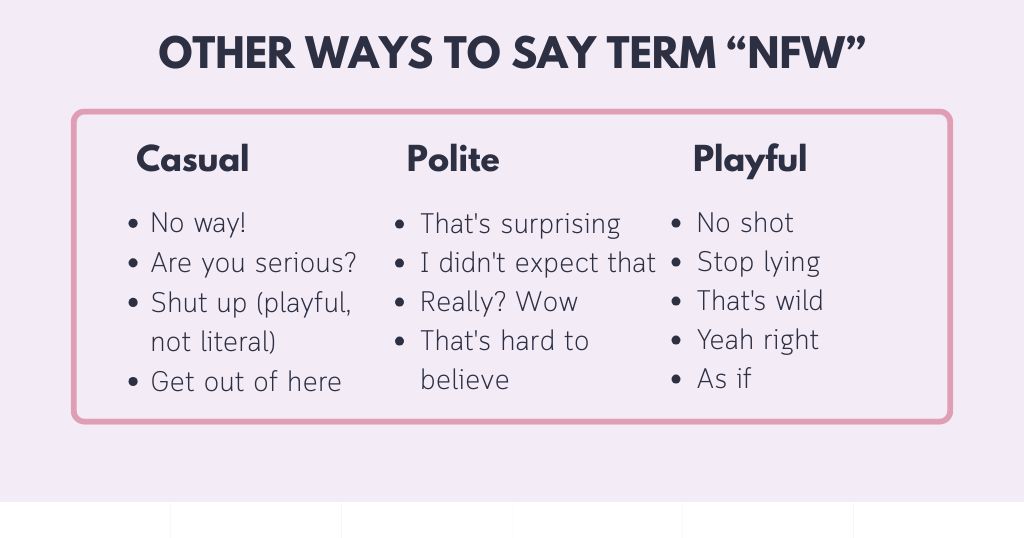
Casual with friends:
- No way!
- Are you serious?
- Shut up (playful, not literal)
- Get out of here
- You’re kidding
Some people also use NP in casual texts when they want to sound chill about shocking news, though it works differently than NFW.
Polite or professional:
- That’s surprising
- I didn’t expect that
- Really? Wow
- That’s hard to believe
- I’m shocked
Playful or joking:
- No shot
- Stop lying
- That’s wild
- Yeah right
- As if
Messages That Sound Like Real People Sent Them
Friend texts: “I just ran into Chris Evans at the coffee shop”
You: “NFW”
Group chat: “Who wants to drive 6 hours tonight?”
Someone: “NFW, I’m exhausted”
Social media comment under a crazy stunt video: “NFW he landed that”
Text from sibling: “Mom said you can borrow her car”
You: “NFW she said yes”
Dating app match: “I’ve been to 47 countries”
You might think: (This is where you probably shouldn’t use NFW—you don’t know them yet)
Sports fan on Twitter: “They won in overtime?! NFW”
Friend sharing bad news: “They cancelled the concert”
You: “NFW, I already bought tickets”
Coworker in casual Slack: “Meeting’s cancelled”
(Don’t reply with NFW—sounds too strong for work)
Read more: What Does PFP Mean in Text? The Two Definitions You Need to Know
Different Crowds, Different Vibes
NFW shows up more on Twitter (now X) and Instagram than in regular texts. People use it to react quickly to breaking news, sports upsets, or viral moments. It fits the fast-moving, reactive style of those apps.
On TikTok, you’ll see it in video captions, usually with something shocking or impressive. The comments section is full of NFW reactions to stunts, fails, or plot twists.
Younger people (teens to late 20s) throw it around more casually. If you’re over 35, it might feel too aggressive or unfamiliar.
Regional difference: In the UK and Australia, NFW leans more negative—like you’re rejecting something hard. In the U.S., it swings both ways (positive surprise or strong refusal).
Censorship note: Some platforms shadowban or filter posts with profanity, so people swap in emojis or spell it out differently (N F W with spaces, or “no freaking way” spelled out). This is similar to how terms like “Thicc” evolved to avoid filters while keeping the same energy, or how “dope” shifted from risky to acceptable over time.
Ways People Get “NFW” Wrong
People think it’s always angry: Not true. Half the time it’s excited disbelief, like “no way, that’s incredible!” The other half is rejection or doubt.
Assuming everyone knows what it means: Your grandma probably doesn’t. Neither does your teacher. If they ask, be prepared to explain (and maybe apologize).
Using it too much: If you reply NFW to everything, it loses punch. People will stop taking your reactions seriously or think you’re lazy with replies.
Thinking “sick” changes the meaning: You might see people say “NFW, that’s sick!” In this case, “sick” means awesome or cool (slang from the 90s that stuck around). It’s not about being ill. The combo just means “No way, that’s amazing!” Like other slang terms, the meaning shifts based on tone and context – what sounds excited in one conversation might read as sarcastic in another.
Medical confusion: In nursing notes or health chats, NFW sometimes means “Not Feeling Well.” If you’re texting about being sick and someone replies NFW, they might be asking if you’re okay—not expressing disbelief. Context matters.
The workplace trap: Thinking your “cool” boss won’t mind profanity-adjacent slang. They might not say anything, but it still looks unprofessional in writing.
Questions You’re Probably Still Wondering About
Is NFW always rude?
Not always, but it carries attitude. With close friends, it’s usually fine. With everyone else, it’s risky.
Can it be sarcastic?
Yes. “NFW that’s true” can mean “yeah right, I don’t believe you.” The sarcasm is hard to catch without hearing someone’s voice.
What if someone uses it and I’m not sure how they meant it?
Look at what came before. If they’re hyped about something, it’s probably positive. If they’re arguing or shutting down an idea, it’s negative. When in doubt, ask: “Wait, is that a good NFW or bad NFW?”
Is it the same as OMG or WTF?
Similar energy, different flavors. OMG is pure surprise. WTF is confusion or annoyance. NFW is disbelief mixed with either excitement or rejection – kind of like how “SUS” carries suspicion but stays playful.
Do people ever use it in school assignments?
Don’t. Teachers will mark you down for profanity, even abbreviated. Save it for texts with friends.
What about “No Freaking Way” instead?
Some people soften it by swapping the F-word. It’s safer around parents or younger siblings, but most people still mean the stronger version when they type NFW.
Can I use it on LinkedIn or professional Twitter?
Absolutely not. Keep your online professional presence clean.
NFW isn’t complicated once you get the vibe. It’s loud, informal, and packs emotion into three letters. Use it with people who talk like you do, skip it when things are formal or sensitive, and watch out for tone confusion. If you’re second-guessing whether to send it, that’s your brain telling you to pick something else. Trust that instinct.

I’m Hazel, and I studied BSC English at GCUF. I focus on explaining word meanings in simple, clear language that anyone can understand. My goal is helping readers grasp everyday English, confusing terms, and slang used in real conversations and social media. I believe language learning works best when definitions connect to actual life situations. Through careful research and straightforward explanations, I make vocabulary accessible for students, learners, and anyone curious about how English really works in daily use.