

TTG usually means “Time To Go” in texts and chats—like when you’re leaving somewhere or wrapping things up. But depending on who’s saying it and where, it can also mean “Trained To Go” in rap culture, or even show up as a medical test acronym.
Why Everyone Gets Confused By These Three Letters
You’ve probably seen TTG pop up in a friend’s text, on TikTok, or maybe on a clothing tag and thought, “Wait, what?” The confusion is real because TTG doesn’t just have one meaning. A rapper might use it completely differently than your coworker texting you. Your brain has to figure out which version applies based on who’s talking and what’s happening. That’s why people end up searching for it—because context matters way more than most abbreviations.
The Real Meanings Behind “TTG” (Depending Who’s Talking)
Let’s break down the main ways people use TTG:
In Everyday Texting
Most of the time, TTG means “Time To Go.” It’s simple. Someone’s ready to leave, done with a conversation, or signaling an activity is ending. It’s not aggressive or rude—just practical. Think of it like saying “gotta run” but shorter.
In Rap and Music Culture
Here’s where it flips. In drill music and rap (especially around NBA YoungBoy and his crew), TTG stands for “Trained To Go.” This version carries weight—it means someone’s ready for confrontation, always prepared, or living that street lifestyle. Fans use it to show loyalty to an artist or crew. The energy is completely different from the texting version.
On Medical Papers
If you see TTG on lab results, it’s talking about Tissue Transglutaminase, which is a blood test for celiac disease. Doctors use it to check if your body reacts badly to gluten. Zero slang involved here.
On Clothing Tags
Ralph Lauren and some other brands use TTG on size tags. It’s French for “Très Très Grand,” meaning extra extra large. Not a secret code, just sizing.
Spotting “TTG” in Your Daily Life
In group chats, someone might drop “TTG in 10” when they’re about to head out. On Instagram stories, you’ll see “TTG from this mess” when someone’s done with drama. Parents text their kids “TTG, we’re leaving” at events. It’s casual shorthand that saves typing time.
The rap version shows up differently. You’ll hear it in song lyrics, see it in usernames, or catch fans commenting “TTG 🔥” on music videos. It’s less about leaving and more about identity or attitude.
You might also like it: BOL in Texting: Decode the Meaning Before You Reply Wrong
Reading the Room: Why Context Is Everything
Here’s the tricky part: the same three letters can sound completely different based on the vibe.
If your friend texts “TTG!” after a fun hangout, it’s light and friendly. But if someone says “he’s TTG” in a serious conversation about street stuff, they’re talking about someone being dangerous or ready for trouble. The words are identical, but the feeling behind them is opposite.
Misinterpretation Warning #1: If you’re chatting with someone new and they use TTG, don’t assume it’s the innocent “leaving” meaning. Check the context. Are they talking about plans or about someone’s reputation? Big difference.
Misinterpretation Warning #2: Using the rap version casually can backfire. If you throw out “I’m TTG” trying to sound cool but you’re really just heading home from Target, people might think you’re trying too hard or misusing slang that doesn’t fit your life. It’s like using SUS or Thicc without understanding the vibe—you’ll sound off.
Misinterpretation Warning #3: Texting “TTG” to end a serious conversation can seem dismissive. It works for casual stuff, but if someone’s pouring their heart out and you reply with “TTG,” they’ll probably feel brushed off.
Places Where “TTG” Will Make You Look Bad
Skip it in work emails or professional messages. “Time To Go” sounds too casual when you should say “I need to leave the meeting at 3 PM” or “I’ll be logging off early today.” Your boss doesn’t need abbreviations.
Don’t use it during sensitive conversations. If someone’s upset or sharing something personal, typing “TTG” makes you look checked out. Even if you genuinely need to leave, spell it out: “I have to go, but let’s talk more tomorrow.”
Avoid the “Trained To Go” version unless you’re actually part of that culture. Using rap slang you don’t understand or live can come across as fake or disrespectful. It’s not about gatekeeping—it’s about authenticity.
Better Words When “TTG” Doesn’t Fit
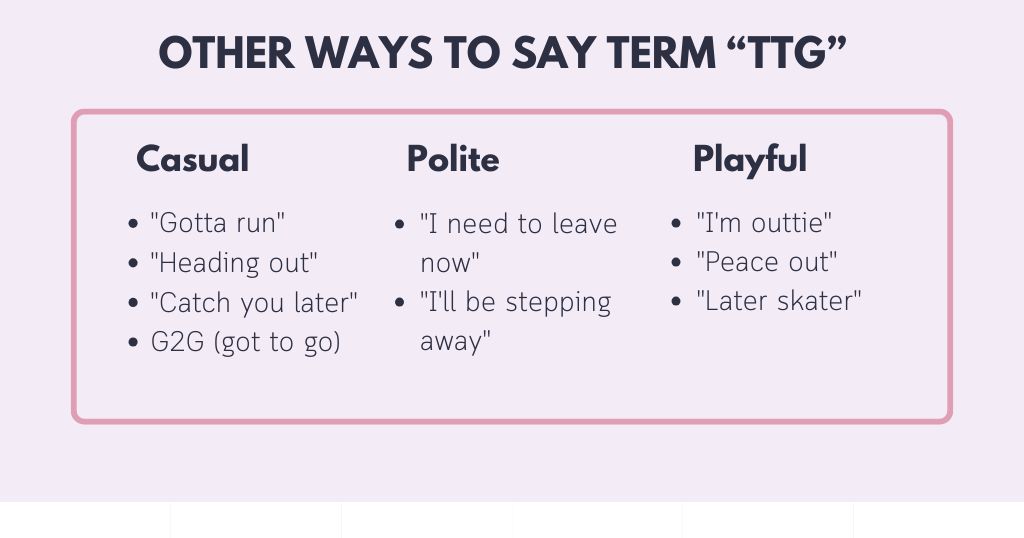
For casual exits:
- “Gotta run”
- “Heading out”
- “Catch you later”
- G2G (got to go)
For professional settings:
- “I need to leave now”
- “I’ll be stepping away”
- “Wrapping up for the day”
For polite conversations:
- “I should probably get going”
- “I’ll let you go”
- “Talk soon?”
For playful energy:
- “I’m outtie”
- “Peace out”
- “Later skater”
You also like this other slang: GMS Meaning: What It Really Means in Texts, Snapchat, and Real Life
Messages People Actually Send Using “TTG“
“Party’s dead, TTG”
(Someone’s ready to leave a boring event)
“TTG in 5, be ready”
(Parent texting their kid to wrap up)
“He stay TTG, don’t test him”
(Rap context—talking about someone’s reputation)
“TTG from this drama fr”
(Distancing yourself from messy situations on social media)
“Doctor ordered a TTG test”
(Medical context—nothing to do with slang)
“This shirt says XXL/TTG”
(Clothing size confusion)
“We TTG to the next level”
(Gaming context—moving forward in a game)
“She said TTG and blocked everyone”
(Someone dramatically leaving a group chat)
Different Crowds, Different Meanings
Younger people on TikTok and Instagram lean into the “leaving drama” usage. You’ll see it on posts about cutting off toxic people or ending situationships—same energy as when people say Wig over something shocking.
Gaming communities use it literally—time to log off, time to move to the next match, or sometimes “time to grind” (start playing seriously). It’s practical communication during gameplay.
Rap fans and people in urban communities recognize both meanings instantly. They can tell from context whether someone’s talking about leaving or living a certain lifestyle. The distinction is automatic for them.
Fashion shoppers get confused when they see TTG on tags and search for slang meanings. The French sizing explanation rarely shows up first, so people think it’s a brand logo or secret collection.
Mix-Ups That Happen All the Time
People assume it’s always casual and friendly, but the rap meaning carries serious implications. You can’t swap them interchangeably.
Some folks think TTG in numbers means something coded, especially when they see posts about “38” or other numbers near NBA YoungBoy references. Those numbers relate to his branding (38 Baby), not a secret TTG translation.
When girls use TTG on TikTok with outfit videos, they usually mean they’re “ready to go” out or looking good. It’s not aggressive—it’s confident. But viewers sometimes misread the energy.
Medical searches get mixed with slang results, which is frustrating if you’re trying to understand lab work and keep finding definitions about texting.
Does Your Platform Change What “TTG” Means?
Instagram captions using TTG tend to be about leaving situations or looking ready for something. It’s visual—paired with photos of someone dressed up or walking away from something.
Snapchat uses it more for immediate plans. “TTG” on someone’s story usually means they’re actively leaving or about to.
Twitter sees the rap version more often, especially in threads about music or street culture. The tone is specific and understood by the community.
Gaming streams and Discord servers stick to the literal “time to go” or “time to grind” meanings. No one’s using the street slang version when they’re talking about Fortnite matches.
More Post: OIC Meaning: What It Really Means in Texts, Work, and Beyond
Questions Nobody Answers Honestly
Is “TTG” rude?
Not by itself, but it can feel dismissive if you use it to cut off an important conversation. It’s all about timing.
Can you use it sarcastically?
Absolutely. “Oh wow, TTG already?” works when someone’s leaving way too early or being dramatic about an exit.
Does it mean the same thing everywhere?
Not even close. Location, age, and community change what people think you mean. Urban areas recognize multiple meanings faster than suburban ones.
Is it okay to use the rap version if you’re not part of that culture?
Probably skip it. Borrowing slang you don’t live comes across as performative. Stick to meanings that fit your actual life.
What if someone uses “TTG” and you’re not sure which meaning?
Just ask. “Like leaving or like ready for something?” clears it up fast. People appreciate clarity over awkward assumptions.
What other abbreviations work like “TTG”?
RT for “retweet” or agreement, OTP for your favorite pairing, or TBC when plans aren’t final yet—they all depend on context just like TTG does.”
Here’s What You Actually Need to Know
TTG works perfectly in casual texting when you need to leave somewhere or end a conversation quickly. It’s clean, simple, and gets the job done. Just remember that in music culture, it carries a completely different weight. Don’t mix up size tags with slang, and definitely don’t use abbreviations in professional settings where clarity matters more than speed. The key is matching your language to your situation—and when you’re unsure, spelling things out never hurts.

I’m Hazel, and I studied BSC English at GCUF. I focus on explaining word meanings in simple, clear language that anyone can understand. My goal is helping readers grasp everyday English, confusing terms, and slang used in real conversations and social media. I believe language learning works best when definitions connect to actual life situations. Through careful research and straightforward explanations, I make vocabulary accessible for students, learners, and anyone curious about how English really works in daily use.