

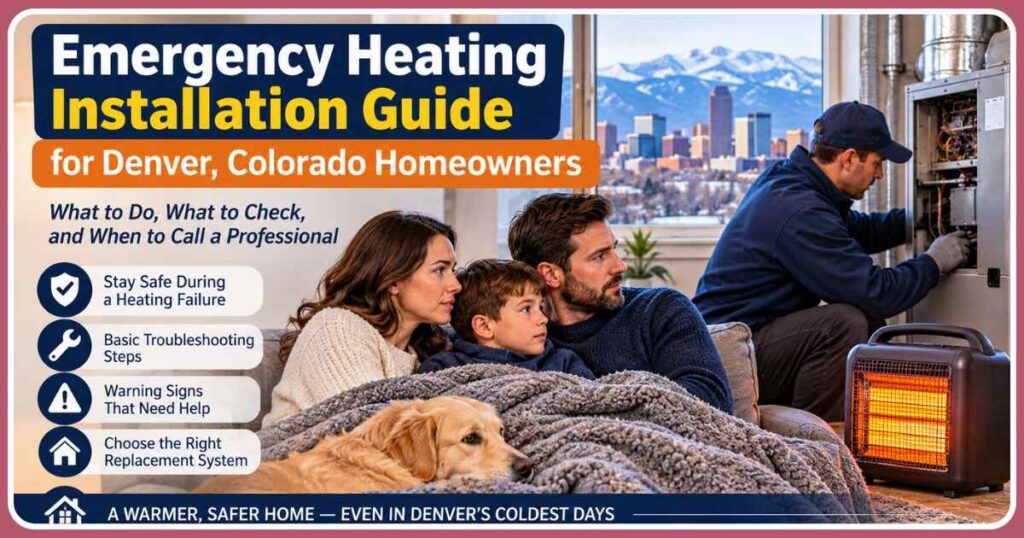
Key Takeaways
- Heating failures can pose safety risks when indoor temperatures drop or when vulnerable household members are present.
- Gas odors, smoke, burning smells, and carbon monoxide alarms require immediate action.
- Homeowners can check basic settings and airflow issues, but fuel, electrical, and combustion repairs require a professional.
- Portable heaters are short-term support only and must be used carefully.
- Replacement equipment should be selected for the home’s heating needs, existing infrastructure, and safety requirements.
When a furnace or heat pump stops during a Denver cold snap, the priority is protecting people, pets, plumbing, and the home itself. This guide explains what to do first, which checks are safe to make, and when to arrange Denver Veteran heating installation services for a dependable long-term solution.
Denver homes can lose indoor heat quickly when temperatures fall overnight, especially in older properties, homes with drafty windows, or rooms above garages and near exterior walls. A calm response can help your household stay safer while a qualified technician diagnoses the problem or installs replacement equipment. Keep phones charged if possible, gather flashlights and warm bedding, and make sure everyone in the household knows where to meet if an alarm, gas odor, or other emergency requires leaving the home.
Why Heating Failures Need Fast Action
A cold home is more than an inconvenience. Young children, older adults, pets, and people with health conditions may be less able to tolerate a rapidly cooling indoor environment. Low temperatures can also place plumbing at risk, particularly pipes near exterior walls, crawlspaces, garages, and unheated areas.
Watch the indoor temperature rather than waiting until the house feels extremely cold. If conditions are worsening, make an early plan to stay with friends or family, use an approved warming location, or arrange another safe place to spend the night. This can be especially important when the home has an infant, a person who depends on powered medical equipment, or a resident who cannot easily move to a warmer location.
During a severe Denver weather event, concentrate household members in one warm, safe room, close doors to unused rooms, and use blankets and layered clothing. Avoid repeatedly restarting a malfunctioning furnace, because an unresolved fault can worsen or trigger a safety shutdown. Keep interior doors open when practical so warmer air can reach rooms with exposed plumbing, but avoid opening exterior doors unnecessarily.
First Steps When the Heat Stops
- Check that the thermostat is set to “heat” and to a temperature above the current room temperature.
- Replace thermostat batteries if the display is blank or unresponsive.
- Check the electrical panel for a tripped breaker, but do not reset it if there is smoke, water, or a burning odor.
- Check the filter and replace it if it is visibly dirty or heavily clogged.
- Make sure return grilles and supply registers are not covered by furniture, rugs, or storage.
- Call for service if the system does not resume normal operation after these basic checks.
Before calling, note what happened immediately before the failure. For example, write down whether the system was making unusual noises, whether only some rooms were cold, whether the thermostat displayed an error message, and whether the outdoor heat pump unit was running. This information can help a technician narrow down the issue and can make the service visit more efficient.
If the system starts again after a basic check, pay attention to whether it produces normal airflow and maintains the thermostat setting. A furnace or heat pump that cycles repeatedly, blows cool air, trips a breaker again, or stops after a few minutes still needs professional evaluation. Do not assume the issue is resolved simply because the equipment restarts once.
Do not remove furnace access panels, bypass safety switches, alter gas connections, or attempt combustion repairs. Those tasks require proper testing equipment and training.
Warning Signs That Require Immediate Help
- Gas odor: Leave the home, avoid flames and electrical switches, then contact 911 or the gas utility from a safe location.
- Carbon monoxide alarm: Get everyone outside immediately and call 911.
- Smoke or a burning-plastic smell: Shut off power only if it is safe to do so, then leave if smoke continues.
- Yellow burner flame, delayed ignition, or loud banging: Stop using the equipment and request an urgent inspection.
- Water around electrical equipment: Keep clear of the area and seek professional help.
Do not re-enter a home after a carbon monoxide alarm simply because the alarm becomes quiet. Emergency responders or qualified professionals should determine whether the building is safe and identify the source of the problem. Carbon monoxide is colorless and odorless, so occupants should never rely on smell or visible smoke to identify the hazard.
Using Temporary Heat Safely
Temporary heat can make a room more comfortable while help is on the way, but it is not a replacement for a functioning central system. Use only heaters intended for indoor use, keep children and pets away from hot surfaces and cords, and turn the unit off before sleeping or leaving the room.
Place a portable heater on a stable, level surface where it cannot be knocked over by people, pets, or a closing door. Avoid placing it in a hallway, near a doorway, or anywhere the cord creates a tripping hazard. A heater should supplement warmth in an occupied room, not heat an entire home through the night.
- Keep heaters at least three feet from bedding, curtains, furniture, clothing, and boxes.
- Plug electric heaters directly into a wall outlet, not an extension cord or power strip.
- Never use an oven, stovetop, grill, generator, or outdoor heater to warm the home.
- Keep doors and windows closed while maintaining any ventilation required by approved indoor equipment.
Safe Checks Homeowners Can Make
These checks are limited to visible, user-accessible items and should never involve disassembling equipment. If something looks damaged, wet, scorched, loose, or unusual, stop troubleshooting and contact a qualified HVAC professional instead.
Reasonable User-Level Checks
- Thermostat settings, batteries, and programmed schedules.
- Dirty filters, closed registers, and blocked return grilles.
- A tripped breaker when no hazardous conditions are present.
- Snow or ice blocking an exterior appliance vent should be cleared carefully without damaging the vent.
When checking an exterior heat pump, keep a safe distance from moving fan blades and electrical components. Light snow around the unit may be normal, but packed snow, ice, leaves, or other debris that blocks airflow should be addressed carefully. Do not chip ice from coils, use sharp tools, or pour hot water on the equipment.
Work for a Qualified Professional
- Gas valves, burners, ignition systems, and heat exchangers.
- Electrical components, wiring, and control boards.
- Heat pump refrigerant systems and outdoor-unit repairs.
- Flue, vent, chimney, or combustion-safety testing.
Repair or Replace?
Repair may be practical when the equipment is relatively young, the fault is isolated, and the system has otherwise operated reliably. Replacement may be worth considering when major components fail, repairs recur, parts are difficult to obtain, or the existing system no longer meets the home’s needs.
Age alone does not determine whether replacement is necessary. A well-maintained system with a straightforward repair may have useful service life remaining, while a newer system with repeated major failures may deserve a more careful replacement discussion. Consider comfort problems as well, such as rooms that never warm evenly, persistent airflow issues, excessive noise, or equipment that cannot maintain the selected indoor temperature.
Ask for a written diagnosis that identifies the failed component, the scope of repair, the expected cost, any safety concerns, and available replacement options. If unsafe venting, damaged wiring, or carbon monoxide concerns are identified, safety should guide the decision.
More Guide: Essential HVAC System Upgrades and Maintenance for Year-Round Comfort
Heating System Options for Denver Homes
- Gas furnaces: Often fit homes with existing ducts and natural-gas service. Venting, combustion safety, and regular maintenance remain important.
- Heat pumps: Provide electric heating and cooling in one system. Cold-weather performance, backup heat, electrical capacity, and duct condition should be reviewed.
- Boilers: Serve homes with radiators or hydronic baseboards. Pumps, piping, controls, and radiator condition affect performance.
- Ductless mini-splits: Can suit additions, individual rooms, or homes without central ductwork. Outdoor placement and low-temperature capacity matter in Colorado winters.
The right system depends on more than the type of equipment currently in the home. A contractor should consider insulation levels, air leakage, window condition, room layout, duct leakage or pipe condition, and the home’s actual heating load. Equipment that is too large can cycle on and off more often than necessary, while equipment that is too small may struggle to keep up during colder weather.
For heat pumps, ask how the proposed model performs at low outdoor temperatures and whether supplemental or backup heat is included in the design. Homes with existing ductwork may also need duct repairs, sealing, or airflow adjustments to ensure the new equipment delivers heat effectively to each room. For boiler homes, the evaluation should include radiator output, zoning, circulation pumps, and the condition of existing piping.
Installation Planning and Prevention
Before approving installation, verify that the contractor will assess the home’s heating requirements, ducts or piping, electrical service, fuel connections, permits, old equipment removal, and safety testing. The lowest initial cost isn’t always the best long-term choice if sizing, airflow, or quality are neglected. Ask for details on the installation timeline, temporary heating needs, and accessible work areas.
The plan should include permit procurement, removal of old equipment, and timing for final testing. Keep copies of equipment details, warranties, permits, invoices, and maintenance tips for future service. Protect plumbing during repairs by opening sink cabinets, leaving interior doors open, and knowing where the main water shutoff is.
Winter preparations involve clearing snow from vents and avoiding open flames when thawing pipes. If a pipe appears frozen, don’t use flames; instead, monitor and shut off water if leaks develop. Contact a plumber if the main shutoff is unknown or if water damage occurs.
Conclusion
Heating emergencies in Denver require prompt action, careful safety checks, and professional support when equipment fails. Homeowners can reduce risks by using temporary heat responsibly, protecting plumbing, and recognizing warning signs. When replacement is necessary, choosing properly sized equipment and qualified installation helps support reliable comfort throughout Colorado’s colder months.
Discover More Guides:
