

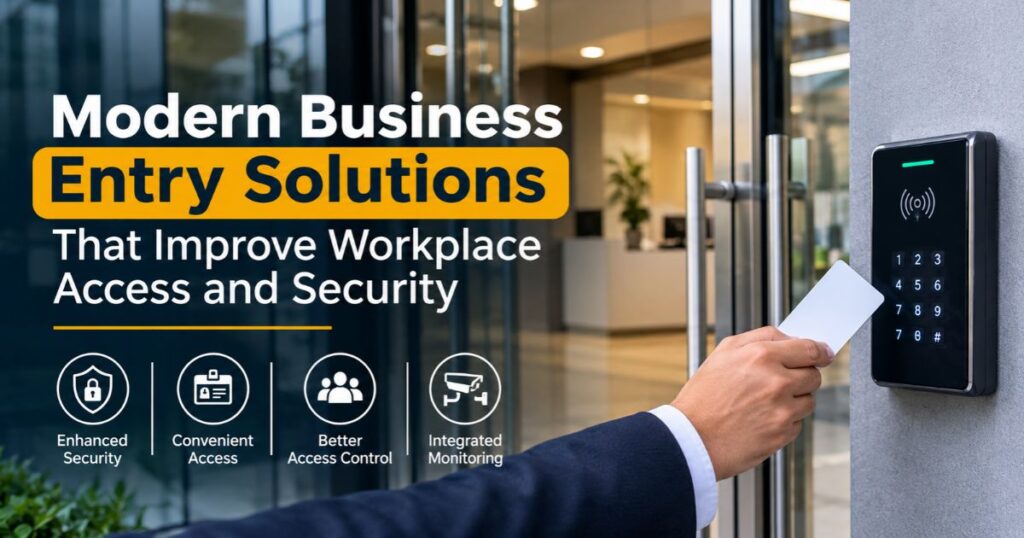
Managing access to a commercial property is an important part of maintaining a safe, organised, and productive workplace. Offices, warehouses, retail premises, and corporate buildings regularly receive employees, customers, contractors, and visitors. Without suitable entry management, businesses may face challenges such as unauthorised access, lost keys, security gaps, and difficulties monitoring building activity.
Modern entry solutions help organisations manage who can enter their premises while making everyday access more convenient. From electronic access control to video intercoms and automated entry systems, businesses have several options for improving building security. Investing in suitable Commercial Security solutions can help create a more controlled and efficient workplace environment.
1. Electronic Access Control Systems
Traditional keys can be difficult to manage in workplaces where multiple employees need access to different areas. Electronic access control provides a more flexible alternative by allowing authorised users to enter through credentials such as access cards, PIN codes, or mobile devices.
Businesses can assign different permissions according to employee roles and responsibilities. For example, general staff may have access to common office areas, while management or authorised technicians may be permitted to enter restricted rooms.
Another advantage is the ability to update permissions without replacing physical locks whenever an employee leaves or changes positions. Access records can also help organisations review entry activity when necessary.
2. Smart Card and Mobile Entry Systems
Smart cards and mobile credentials offer convenient ways to manage workplace access. Employees can use an authorised card or compatible smartphone to unlock designated entry points without carrying traditional keys.
Mobile access systems may also allow administrators to issue, update, or revoke credentials remotely. This can be particularly useful for organisations with multiple offices or employees who frequently work across different locations.
Before selecting a solution, businesses should consider compatibility with existing access control equipment, credential security, and how lost or compromised devices will be managed.
A reliable credential management process helps ensure that convenience does not come at the expense of security.
3. Video Intercom Systems for Visitor Management
Commercial buildings often receive visitors who need access to reception areas, meeting rooms, or specific departments. Video intercom systems allow staff to identify visitors and communicate with them before granting entry.
Modern systems may include cameras, two-way audio, remote unlocking, and integration with access control equipment. Reception staff can verify a visitor’s identity and contact the relevant employee without leaving their workstation.
This is especially useful for buildings where the main entrance is not continuously staffed. Video intercoms can also help reduce unnecessary movement through restricted areas.
For effective operation, cameras should provide a clear view of the entrance, and communication equipment should be positioned where visitors can use it comfortably.
4. Automated Door Entry Solutions
Automated doors can improve accessibility and convenience in commercial environments. They are particularly useful in reception areas, healthcare facilities, retail premises, and buildings that experience frequent foot traffic.
Depending on the building’s requirements, automated entry may include sliding doors, swing doors, sensor-operated systems, and controlled access points.
These systems can help manage movement while reducing the need for visitors to physically operate heavy doors. However, safety sensors, emergency release functions, and suitable installation standards must be considered.
Businesses should select automated door equipment according to the expected traffic levels, entrance design, and accessibility requirements.
5. Biometric Access Control
Biometric systems use unique physical characteristics, such as fingerprints or facial recognition, to verify a person’s identity. They can provide an additional layer of access management for workplaces that require tighter security.
These systems may be suitable for restricted offices, data rooms, research facilities, or areas containing valuable equipment and sensitive information.
However, biometric technology requires careful consideration of privacy, data protection, and applicable legal requirements. Businesses should understand how biometric information is collected, stored, protected, and accessed.
It is also important to provide appropriate alternative entry arrangements for authorised individuals who cannot use a particular biometric method.
6. Integrated CCTV and Entry Monitoring
Access control becomes more useful when it works alongside video surveillance. Integrated systems can help businesses connect entry events with relevant camera footage.
For example, if an access card is used outside normal working hours, authorised personnel may be able to review the corresponding camera recording. This can provide additional context when investigating unusual activity.
CCTV cameras should cover important access points, reception areas, loading entrances, and other relevant locations. Businesses should avoid unnecessary surveillance and follow appropriate privacy and recording policies.
Combining entry records with surveillance can help improve visibility across the property and support more informed security decisions.
7. Centralised Security Management
Businesses with multiple entrances or departments may find it difficult to manage separate security devices independently. Centralised management platforms can bring compatible systems together through a shared interface.
Depending on the installation, authorised administrators may be able to manage access permissions, monitor entry activity, review alerts, and oversee connected security equipment from one location.
This can reduce administrative complexity and make it easier to maintain consistent access policies throughout a building.
Centralised systems should have clearly defined user permissions so that only authorised personnel can change important security settings.
8. Visitor and Contractor Access Management
Employees are not the only people who enter commercial properties. Contractors, delivery personnel, suppliers, and customers may also require temporary access.
A visitor management process can help businesses record arrivals, confirm appointments, issue temporary credentials, and notify employees when guests reach reception.
Temporary access permissions can be limited to particular areas or time periods. This reduces the need to provide visitors with permanent credentials that may remain active after their visit.
Clear procedures should also explain where visitors can go, whether they need an escort, and which areas are restricted.
9. Reliable Network Connectivity and System Integration
Many modern entry solutions depend on network connectivity to communicate with management platforms and other security devices. Poor network performance can affect remote access, notifications, and system monitoring.
Businesses should ensure that network infrastructure can support the number of connected devices and provide suitable protection against unauthorised access.
Compatibility is another important consideration. New entry equipment should work with existing security systems where possible, reducing unnecessary duplication and installation costs.
Planning connectivity and integration requirements before purchasing equipment can help avoid technical difficulties later.
10. Professional Installation and Regular Maintenance
Even advanced security equipment needs proper installation and ongoing maintenance. Incorrectly positioned readers, poorly configured permissions, or unreliable connections can reduce the effectiveness of an entry system.
Professional installation helps ensure that devices are placed appropriately, configured correctly, and tested before the system is used regularly.
Businesses should also schedule inspections to check door mechanisms, access readers, intercoms, cameras, and backup power arrangements. Software updates and credential reviews should form part of the maintenance process.
Working with experienced providers of Commercial Security solutions can help organisations choose equipment that suits their building layout, operational needs, and long-term security requirements.
Final Thoughts
Modern business entry solutions can improve workplace security while making daily access more convenient for employees and visitors. Electronic access control, mobile credentials, video intercoms, automated doors, biometric verification, and integrated surveillance all offer practical ways to manage building entry.
The right system depends on the size of the property, the number of users, the sensitivity of restricted areas, and the organisation’s operational requirements.
By planning carefully and maintaining equipment regularly, businesses can create a more organised and secure workplace. Suitable Commercial Security solutions help bring these features together while supporting the changing needs of modern commercial properties.
More Guide: 4 Proven Ways to Master Risk Management Strategies
