

AYO is internet slang that works like “hey” or “yo” to grab someone’s attention, but it also works as a reaction when something sounds weird, suspicious, or accidentally inappropriate. The meaning depends completely on how and when it’s used.
You’re Here Because Something Felt Off
You saw someone drop “Ayo” in a comment section and it didn’t feel like a normal greeting. Maybe your crush texted “Ayo?” with a question mark after you said something, and now you’re wondering if you messed up. Or you’re scrolling TikTok and everyone’s spamming “AYO 🤨” under a video that seemed innocent at first. The confusion makes sense because this word plays two completely different roles depending on the situation.
Breaking Down What’s Really Happening
When someone types “Ayo,” they’re either kicking off a conversation with energy or reacting to something that made them pause. The same word flips meaning based on timing, tone, and what was said right before it.
The twist? Gen Z turned it into a judgment word. If someone says something that sounds accidentally flirty or just plain sus, “Ayo” becomes the text version of raising your eyebrows and tilting your head. It’s like saying “Pause. Rewind. Did you hear what you just said?”
What makes it stick around while other slang dies is that it sounds like something. You can hear it in your head. That’s why it survived from street culture into internet culture without losing its punch.
Real Conversations Where This Pops Up
Someone might text “Ayo, you still coming?” to check on plans without sounding pushy. In group chats, it’s a quick way to restart a dead conversation—just drop “Ayo” and people know you want attention but you’re keeping it light.
On TikTok, it lives in the comments. Someone makes a video about “eating healthy” and accidentally says something that sounds wrong, the comments flood with “ayo?” because everyone noticed the same thing. It’s basically the internet’s way of doing a double-take together.
In gaming circles, people shout it when something wild happens. Someone pulls off an impossible move? “AYO!” works as both surprise and respect. It’s faster than typing “Wow, that was incredible.”
Punctuation Changes Everything (Pay Attention Here)
The punctuation completely changes what “Ayo” means, and people mess this up constantly.
“Ayo!” with an exclamation point means excitement or hype. You’re either greeting someone with energy or reacting to something cool.
“Ayo?” with a question mark is where things get tricky. This usually means “Hold up, what did you just say?” If someone sends you this, check your last message because they probably think you said something odd.
“Ayo…” with dots signals disappointment or concern. It’s the text equivalent of a slow head shake.
Here’s a real scenario: You text a girl “I’m coming over” and she replies “Ayo?” That question mark means she either didn’t invite you or you phrased it in a way that sounds too forward. If you text your friend about acing a test and he sends back “Ayo!” that’s just celebration.
The relationship between you and the person matters too. Between close friends, “Ayo” keeps things casual. But if you barely know someone, starting a DM with just “Ayo” might come off like you’re trying too hard to sound cool.
Skip This Word in These Situations
Don’t open work emails or professional messages with “Ayo.” Even if your workplace is relaxed, it reads as too informal for anyone above you on the organizational chart. Save it for coworkers you actually joke around with on Slack.
Avoid using it with older family members who aren’t online much. They’ll either ignore it because they don’t know what it means, or worse, they’ll think you’re asking if they’re okay (mixing it up with “Are you okay?”).
If you’re texting someone you’re interested in romantically and things are still new, be careful. Opening with “Ayo” can make you seem like you’re not taking the conversation seriously. And definitely don’t respond to something vulnerable or serious they shared with “Ayo?”—that’ll make you look dismissive.
In public social media posts where your name is attached, think twice. What sounds fun in a private chat can look unprofessional when a future employer scrolls your Instagram.
Read Also: What Does HML Mean in Text? The One Thing Nobody Tells You
Other Ways to Say the Same Thing
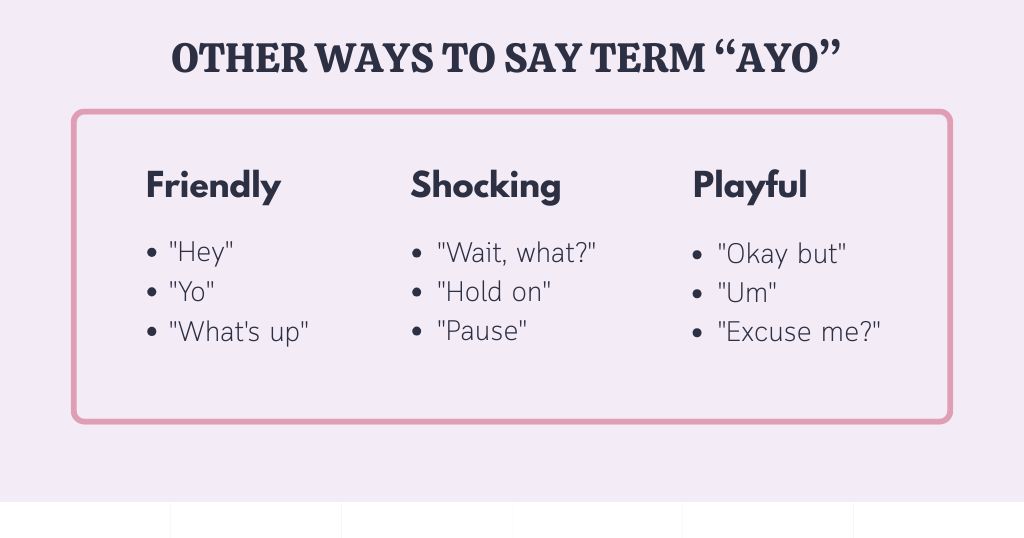
If you’re keeping it friendly: “Hey,” “Yo,” “What’s up”
If you want to check on someone: “You good?” “Everything okay?” “What’s going on?”
If you’re reacting to something shocking: “Wait, what?” “Hold on,” “Pause”
If you’re being playful: “Okay but,” “Um,” “Excuse me?”
If you need to be polite: “Hi there,” “Hello,” “Hey, quick question”
The alternative you pick depends on who you’re talking to and what you’re trying to say. You wouldn’t use “What’s up” at the same time you’d use the suspicious version of “Ayo.”
Example Messages People Actually Send
Friend sharing good news:
“Ayo, I got the job!”
Calling out something weird in a comment:
“He said he likes to watch people sleep. Ayo? 🤨”
Starting a casual conversation:
“Ayo, you tryna play later?”
Reacting to an impressive play:
“Ayo that was crazy”
When someone overshares by accident:
Person A: “I love the smell of gasoline”
Person B: “Ayo?”
Checking if plans are still on:
“Ayo we still meeting at 6?”
In a Discord gaming channel:
“Ayo who’s got the link?”
When a friend posts something suspicious:
“Ayo what are you doing in that photo 💀”
Different Platforms, Different Vibes
TikTok practically owns the suspicious version of “Ayo.” If you’re scrolling comments under videos, especially comedy or reaction content, you’ll see it anytime someone says something that could be taken the wrong way. Creators even leave these moments in on purpose because they know the comment section will go wild.
Instagram uses it more as a greeting in DMs. People slide into DMs with “Ayo” instead of “Hey” because it feels less formal but still friendly. Stories get “Ayo” reactions when something surprising pops up.
Snapchat keeps it quick—just “Ayo” as a snap with a selfie means “I’m thinking about you” without the pressure of a full conversation.
Gaming platforms like Discord treat it as an alert sound. When someone needs the squad’s attention fast, “Ayo” cuts through message spam better than “@everyone.”
There’s a generation gap too. People in their late twenties and older might use it as a greeting only, if they use it at all. Gen Z switches between both meanings naturally, and they’re the ones who really pushed the “calling out sus stuff” usage into the mainstream.
You also like it: What Does YHU Mean in Text: The Casual Slang That’s Not a Typo
Mistakes Everyone Makes With This One
The biggest mix-up? Thinking “Ayo” is always friendly. It’s not. Context is everything, and if you miss the tone, you’ll respond completely wrong.
Some people think it’s just another way to say “Hey you” and treat it like a formal acronym (A-Y-O standing for something). It’s not an acronym. It’s slang that sounds like “aye-yo” when you say it out loud, which is why spelling it “eyo” or “ayo” both work, though “ayo” is way more common now.
Another mistake: assuming the person is asking if you’re okay. “Ayo?” and “Are you okay?” are completely different. If someone sends “Ayo?” they’re usually questioning what you said, not checking your wellbeing. Though sometimes people do use it to check in, like “Ayo, you good?” but you’ll notice the extra words there.
People also overuse it trying to sound cool, and it backfires. If you start every single message with “Ayo,” it stops meaning anything and just sounds like you don’t know how to begin a sentence normally.
Questions You’re Probably Wondering About “AYO” Slang
Can you use it with someone older than you?
Depends on how they talk. If your older sibling or young aunt uses slang regularly, sure. If they text like they’re writing letters, skip it.
Does it sound rude?
Not by itself, but “Ayo?” as a response can sound like you’re judging someone, which might feel rude depending on what they shared.
Is there a difference when a girl vs guy uses it?
Not really. Both use it the same way. The meaning comes from the situation and punctuation, not the gender of who’s typing.
Can it be sarcastic?
Absolutely. “Ayo, great idea 🙄” is clearly sarcastic. Tone comes from what’s around it—emojis, context, your relationship with the person.
What if someone uses it and I don’t know which meaning they meant?
Look at the punctuation and what you said right before. If you said something normal and they reply “Ayo!” they’re probably just being friendly. If they reply “Ayo?” you might want to reconsider your last message.
Do people still say this in 2026?
Yeah, it’s not going anywhere soon. It’s been around in spoken slang for decades and the internet version is still growing, especially on short-form video platforms.
“Ayo” is one of those words that does more work than it should. It greets people, calls out weirdness, shows excitement, and marks boundaries—all in three letters. The trick is reading the room (or the chat) and picking up on whether someone’s being friendly or pressing pause on whatever you just said. Once you get the rhythm of it, you’ll notice it everywhere, and you’ll know exactly when dropping an “Ayo?” is the perfect response.

I’m Hazel, and I studied BSC English at GCUF. I focus on explaining word meanings in simple, clear language that anyone can understand. My goal is helping readers grasp everyday English, confusing terms, and slang used in real conversations and social media. I believe language learning works best when definitions connect to actual life situations. Through careful research and straightforward explanations, I make vocabulary accessible for students, learners, and anyone curious about how English really works in daily use.