

“Sus” is short for suspicious or suspect. When someone says you’re acting sus, they think you’re hiding something or being shady about what you’re doing.
Why Everyone’s Suddenly Asking About This
You probably saw someone drop “sus” in a group chat and weren’t sure if they were mad, joking, or just calling out weird behavior. Maybe your friend said “that’s sus” about your excuse for being late, or you got a comment on Instagram that just said “sus 🤨” and you’re standing there like… is that good or bad?
The confusing part? It can mean anything from “I’m genuinely worried about this” to “lol you’re acting weird” depending on who’s saying it and how. And yeah, that makes figuring it out pretty annoying when you’re just trying to understand a three-letter word.
What Sus Actually Feels Like When People Use It
Think of “sus” as someone hitting pause on a conversation because something doesn’t add up. It’s that feeling when your friend changes their story, or someone’s being too nice out of nowhere, or the vibes are just… off.
People use “sus” because it’s a quick way to flag that something doesn’t add up without turning the moment serious or confrontational.
It’s a soft call-out — enough to pause the conversation, not enough to start an argument.
How It Shows Up in Real Conversations
In text messages, someone might hit you with “why are you being sus?” when you dodge a direct question. Like if they ask where you were and you say “around” instead of actually answering.
In group chats, one person types something that doesn’t match what they said before, and someone else just drops “sus” in the thread. Everyone sees it, everyone knows what it means, conversation moves on.
On Instagram or TikTok, you’ll see it in comments when someone posts something that looks fake or edited to death. “This pic is sus” = “I don’t believe this is real.” Sometimes people stretch it out like “suuuuus” when they’re being playful about it, not actually calling someone out seriously.
In gaming chats, especially stuff like Among Us where the whole point is finding liars, “sus” gets thrown around constantly. “Red is sus” became such a big meme that people started using it outside games too.
How the Same Word Changes Meaning Based on Who’s Talking
With close friends, calling something sus is usually playful. Your best friend being sus about where they were last night? That’s funny, and they know you’re just messing around while also genuinely curious.
With someone you barely know, the same word can feel like an actual accusation. If a classmate you don’t talk to much suddenly says you’re being sus, that feels way more serious than when your friend says it.
In work Slack channels or professional spaces, even if people are trying to be casual, “sus” can come across wrong. Your coworker might think you’re actually questioning their work ethic, not making a joke.
Text makes this trickier, since there’s no voice or facial expression to guide intent. “That’s sus” with a laughing emoji = joking. “That’s sus” with nothing after it = could be anything from mild concern to actual distrust. Some people stretch it out (“sussss”) to signal they’re joking — but not everyone does.
Warning about misreading this: If someone uses “sus” and you’re not sure if they’re mad, the safest move is asking “wait are you actually concerned or just joking?” Because jumping to conclusions either way can make things awkward fast.
Read More: What Does WC Meaning in Text? The Real Answer
When You Should Keep This Word Out of Your Mouth
Don’t use “sus” in actual professional emails or formal messages. Your boss doesn’t want to hear that the quarterly report looks “sus.” Say you have concerns about the data instead.
Skip it when talking to older relatives who aren’t online much. They might think you’re speaking another language or that you’re being rude without realizing it. Just say “something seems off” like a normal person.
Be really careful using it about someone’s identity, appearance, or personal life choices. Calling someone “sus” because of how they dress or who they date isn’t playful—it’s just mean. The LGBT community especially has dealt with people using “sus” to mock others for not acting “normal,” and that’s not what the word should be for.
Don’t use it in serious situations where someone actually needs help or is genuinely upset. If your friend is venting about something real, responding with “that’s sus” makes you look like you’re not taking them seriously.
When texting someone new you’re interested in, be careful. Calling their stories or excuses “sus” too early can make you seem paranoid or like you already don’t trust them.
Other Ways to Say the Same Thing
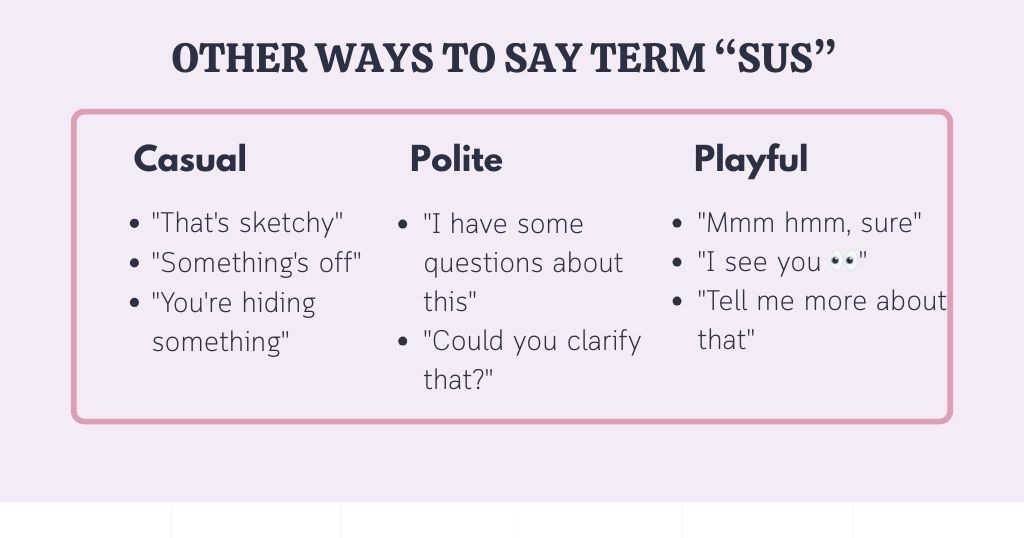
Casual with friends:
- “That’s sketchy”
- “Something’s off”
- “You’re hiding something”
- “Cap” (means lie, works in similar situations)
Polite or professional:
- “I have some questions about this”
- “Could you clarify that?”
- “This doesn’t quite match up”
- “I’m confused by this part”
Playful or joking:
- “Mmm hmm, sure”
- “I see you 👀”
- “Tell me more about that”
- “Interesting story there”
Real Examples of How People Actually Text This
“Why’d you leave me on read for 4 hours then come back with ‘hey sorry was busy’ that’s sus”
“This job offer wants me to pay $200 for training… sus right?”
“He said he doesn’t have Instagram but I found his account with 2000 followers 💀 sus”
“You: going to bed early tonight. Also you: active on Discord at 2am. Very sus behavior”
“Her story keeps changing every time she tells it, getting real sus”
“That account DMing me has 0 posts and 3 followers, hard sus”
“You said you hate that show but know every character’s name? Kinda sus my guy”
“Bro really said ‘I don’t remember’ about something that happened yesterday 😭 sus”
“My bad for the late reply, was busy” – “SFLR but also kinda sus timing”
Quick Notes on Where and When You’ll See This
Instagram and TikTok users throw “sus” around constantly, especially Gen Z. It’s like their default word for anything that feels fake or try-hard. Similar to how “IHH” gets used on TikTok and DMs, these short slang terms spread fast on visual platforms. The older the platform’s main users are (like Facebook), the less you’ll see it.
The word exploded around 2020 because of Among Us, but it’s not new. People in certain communities have been saying “sus” for years—the game just made it mainstream. Now everyone from 13-year-olds to people in their 30s use it, though younger people use it way more casually.
In Hindi-English chats, people just use “sus” as is. There’s no Hindi version or full form—they borrowed it straight from English. Someone might say “yaar woh sus lag raha hai” (dude he seems sus), mixing both languages like people naturally do online.
Different age groups read the intensity differently. Younger people (teens, early 20s) use “sus” for everything from actually suspicious to just slightly weird. Older people who use it tend to save it for situations that are genuinely questionable.
What People Get Wrong About Sus
Thinking it’s always an insult: It’s not. Sometimes people say things are sus just because they’re confused or curious, not because they’re accusing you of lying.
Believing it’s just a gaming word: Among Us made it huge, but people were saying “sus” way before that game existed. Acting like it’s only about imposters misses the point.
Using it for everything: When you call literally anything slightly unusual “sus,” the word loses meaning. Your friend being 5 minutes late isn’t sus. Your friend being 5 minutes late and refusing to say where they were—that’s sus.
Forgetting tone matters: “You’re sus” in a playful roast session with friends is totally different from “you’re sus” when someone’s genuinely questioning your honesty. Context is everything, and text makes that context disappear.
Assuming it’s a complete sentence: Just typing “sus” and nothing else can be confusing. At least add an emoji or context so people know what you’re referring to and how serious you’re being.
How to Actually Respond When Someone Says You’re Sus
If they’re your friend joking around: “No cap, I was literally just [doing whatever]” “You’re the sus one for even noticing that”
If you’re genuinely curious why they said it: “Wait what part seems sus to you?” “What do you mean?”
If you want to be polite: “Happy to explain—what didn’t make sense?” “Here’s what actually happened: [explanation]”
If they’re being annoying about it: “K” Just don’t respond and let them sit with it
If you actually were hiding something and got caught: Own it or deflect, your choice, but saying “I’m not sus” when you definitely were just makes it worse.
Common Questions People Actually Ask
Does “sus” mean someone’s definitely lying?
Not always. Sometimes it just means their story doesn’t quite add up yet, or they’re acting differently than usual. It’s more like “I need more information” than “you’re a liar.”
Can girls and guys use it the same way?
Yeah, it’s not gender-specific. “Sus girl” just means a girl acting suspicious, same as “sus guy” would mean for guys. There’s no special girl version or different meaning.
Is it rude to call someone sus?
Depends entirely on your relationship and tone. Between friends? Usually fine. To someone you don’t know well? Can feel like an attack.
What’s “imposter sus” about?
It’s from Among Us where you’re trying to find the imposter (fake crewmate). “Imposter sus” just means the liar/fake person is acting suspicious. People use it now for anyone pretending to be something they’re not.
Do I have to play Among Us to understand this?
Not at all. The game made it popular, but “sus” works perfectly fine without knowing anything about the game.
What other slang gets misunderstood like “sus”?
Tons of them. Words like “ND” and “YHU” confuse people the same way because tone and context matter just as much as the actual letters. Same with “OY” — short, casual, and easy to misread if you don’t know the vibe.
The Real Deal on Using Sus
It’s just shorthand for when something feels off and you want to point it out without being super serious about it. The word works because it’s quick, casual, and usually doesn’t start actual fights—unless you use it wrong or at the wrong time.
If you’re still figuring out when to use it, just pay attention to how your friends or people online use it first. You’ll pick up the vibe pretty fast. And if you use it and someone seems confused or annoyed, you learned something about either that person or that situation.
The word isn’t going anywhere anytime soon, so you might as well understand what people mean when they say it.

I’m Hazel, and I studied BSC English at GCUF. I focus on explaining word meanings in simple, clear language that anyone can understand. My goal is helping readers grasp everyday English, confusing terms, and slang used in real conversations and social media. I believe language learning works best when definitions connect to actual life situations. Through careful research and straightforward explanations, I make vocabulary accessible for students, learners, and anyone curious about how English really works in daily use.