

TYL usually means “Text You Later” or “Tell You Later” in casual messaging. It’s a quick way to say you’ll continue the conversation soon, just not right now.
So You Got “TYL” and Now You’re Lost
You probably got a message that just said “TYL” and you’re sitting there wondering if the person’s ending the chat or promising juicy gossip. Maybe you saw it in a comment and couldn’t figure out if it was friendly or dismissive. The tricky part? TYL sounds a lot like TTYL (Talk To You Later), but they’re not quite the same thing. Plus, the same three letters mean completely different things depending on who’s typing and what’s happening in the conversation.
Breaking Down What TYL Really Communicates
When someone sends you TYL, they’re hitting pause on the conversation but keeping the door open. It’s not a full goodbye like TTYL would be. Think of it as saying “hold that thought” instead of “we’re done here.”
The vibe behind TYL is usually one of three things: “I’m busy right now but we’re not done talking,” “I have something to share but this isn’t the right moment,” or occasionally “I appreciate this” (when it means Thank You, Lord). It’s kind of like when someone sends GMS (Good Morning Streaks) on Snapchat — there’s a promise of continued connection, even if it’s brief right now.
What you need to know is that TYL often comes with an unspoken promise. If someone says they’ll text or tell you later, they’re creating a little bit of anticipation. Sometimes that’s genuine, sometimes it’s just a polite exit strategy.
Where You’ll Actually See TYL Pop Up
You’ll see TYL pop up when someone’s in the middle of something and can’t give you their full attention. Maybe they’re in class, at work, driving, or dealing with family stuff. Instead of ignoring your message completely, they send a quick TYL to acknowledge you.
In group chats, someone might drop TYL when a conversation’s getting intense but they need to step away. It’s their way of saying “I’m interested but can’t engage right now.”
The “Tell You Later” version shows up when someone has information they don’t want to type out. Could be gossip that’s too detailed for texting. Could be news they’d rather share over a call. Could be something they don’t want sitting in a text thread where others might see it.
Some people use TYL as a conversation ender when they’re losing interest but don’t want to seem rude. That’s the less honest version. This soft-exit strategy is similar to how people use IGH (Alright) or OIC (Oh I See) to politely wrap things up without being obvious about it.
Tone & Context: Why Changes Everything
Here’s where things get messy. TYL can sound completely different based on who sent it and what came before.
From a close friend after you shared something important? That’s usually genuine. They really will get back to you when they have time to focus.
From someone you just started talking to? Could be interest, could be a soft brush-off. If they actually follow up later, they meant it. If you never hear about it again, it was probably just a nice way to end things.
The “Tell You Later” meaning carries more excitement or secrecy. When it comes with emojis like 👀 or 🤫, that person definitely has something they’re holding back. But plain TYL without context can feel cold or dismissive if you were expecting a real response.
Warning About Misreading
If someone sends TYL after you asked them a direct question, pay attention to whether they actually circle back. Some people use it to dodge questions they don’t want to answer. If it becomes a pattern, they’re probably avoiding you, not just busy. Same energy as when someone keeps replying with just NM every time you ask what’s up technically an answer, but not really engaging.
Timing Matters
A TYL at 2am hits different than one at 2pm. Late night usually means “I’m too tired to get into this now.” Afternoon might mean “I’m at work and can’t chat.”
The relationship makes a huge difference too. Your best friend saying TYL? No worries. Your crush saying it for the third time this week? Yeah, they might not be that interested.
Times When TYL Just Doesn’t Work
Don’t use TYL in professional emails or work chats with people you don’t know well. It sounds too casual for anything job-related unless you have that kind of relationship with coworkers.
Skip it when someone’s sharing something serious or emotional. If a friend just told you about a breakup or a family problem, TYL makes it seem like you don’t care. Take the time to respond properly, even if it’s brief.
Don’t send TYL as your first response to someone you just met or barely know. It can come off like you’re already trying to escape the conversation before it even started.
Avoid using it repeatedly with the same person without actually following through. If you keep saying “tell you later” or “text you later” but never do, people stop believing you. It turns into the boy who cried wolf situation.
Public comments aren’t great for TYL either. On someone’s Instagram post or Facebook status, it looks weird and makes people curious about private stuff that doesn’t concern them.
Better Professional Alternatives
- “I’ll get back to you shortly”
- “Let me follow up with you this afternoon”
- “I’ll send you details soon”
Say It Another Way: Better Options Than TYL
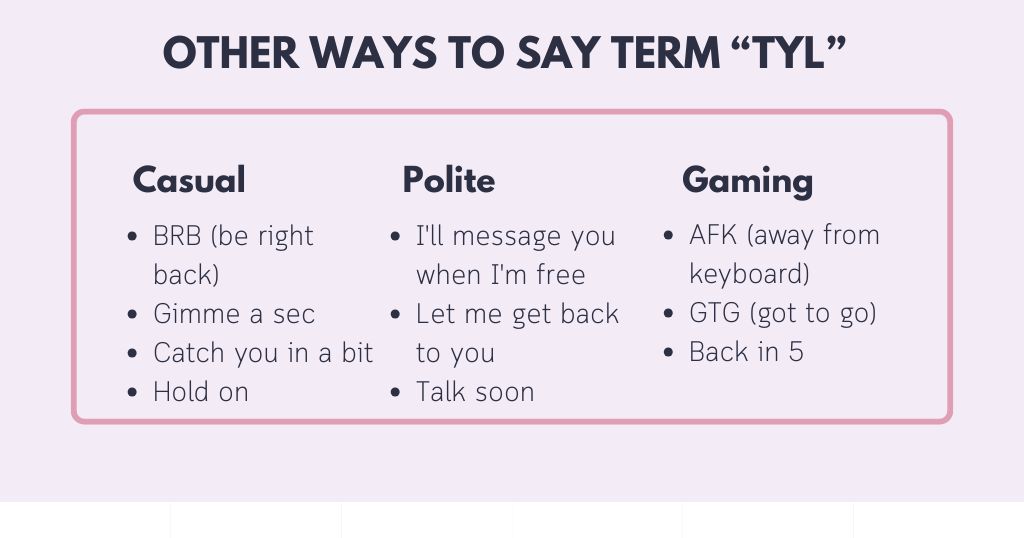
Casual with friends:
- BRB (be right back)
- Gimme a sec
- Catch you in a bit
- Hold on
These quick exit phrases work similar to NM or WSP they’re functional but friendly.
When you actually have news to share:
- I’ll call you about it
- Remind me to tell you later
- Wait till you hear this
- Long story, I’ll explain
Polite but still relaxed:
- I’ll message you when I’m free
- Let me get back to you
- Talk soon
- I’ll fill you in later
If you’re looking for more professional alternatives, check out phrases like NP (No Problem) or even a simple acknowledgment.
Quick gaming or busy responses:
- AFK (away from keyboard)
- GTG (got to go)
- Back in 5
Examples: What TYL Looks Like in Actual Conversations
Friend asks what happened at the party “Oh man, so much drama. TYL when I get home, can’t type all this out rn”
Someone apologizes for late reply “You’re good! TYL, I know you’ve been swamped”
In middle of watching something “Can’t talk, watching the finale. TYL!”
Got news at work “Just heard something wild about the schedule changes. TYL after my shift”
Dodging a question softly “That’s complicated lol. TYL?”
Creating anticipation “Guess who I ran into today 👀 TYL”
After someone shares good news “That’s incredible! TYL ❤️” (as Thank You Lord)
Quick exit during game “Boss calling, TYL guys”
App-Specific Quirks: Does Platform Change the Meaning?
On Snapchat, people sometimes use TYL in the “tell you later” sense because messages disappear quickly and longer conversations often move to another platform. If something’s worth saving, they’ll switch platforms or say TYL and move to regular texts or calls. The temporary nature makes TYL feel more like “this conversation deserves better than a snap.”
Instagram and Facebook see more of the “Thank You Lord” usage, especially in captions or comments on big life moments. Graduation pics, new job announcements, engagement photos—you’ll see TYL in the comments from people expressing gratitude.
Gaming communities sometimes use TYL as a quick team communication thing, but it’s less common than BRB or AFK. When it does appear, it’s usually “text you later” meaning someone’s stepping away from voice chat but might message in the game chat.
Younger users (teens and early twenties) tend to spell it TYL more often. Older texters might not recognize it as quickly and could confuse it with TTYL.
Ways People Get TYL Wrong
The TLY mixup: People sometimes type TLY by accident when they mean TYL. TLY isn’t really a standard acronym, so if you get that, they probably just hit the wrong key. Context usually makes it obvious. Similar typo confusion happens with other acronyms too — like when people mix up BYW and BTW or wonder if ISG is even real slang.
Thinking it’s always a goodbye: TYL isn’t necessarily ending the conversation the way TTYL does. It’s more of a pause button. But without tone of voice, some people read it as dismissive when it’s meant to be casual.
Assuming it’s always genuine: Not everyone who says they’ll text or tell you later actually will. Some people use it as a polite way to stop responding without saying “I don’t want to talk anymore.” Watch for patterns. If someone keeps saying TYL but never follows up, they’re probably not that interested in continuing.
Missing the religious context: When someone comments TYL on their own post or after good news, they usually mean Thank You Lord, not text/tell you later. The context makes it clear—nobody’s texting themselves later.
Overuse kills the meaning: If you send TYL every time someone messages you, it stops meaning anything. People catch on that you’re just not wanting to chat, and it becomes annoying instead of understanding.
Questions People Actually Ask About TYL
Can TYL sound rude?
Yeah, depending on timing and relationship. If someone just opened up to you and you respond with just “TYL,” that’s pretty cold. But between friends who text constantly, it’s usually fine.
Is it different from TTYL?
Yep. TTYL is “talk to you later”—a definite sign-off. TYL is either “text you later” or “tell you later,” which feels more like a pause than an ending. TTYL closes the conversation, TYL postpones part of it. Other conversation closers like SFLR Meaning serve a different purpose — they explain the delay instead of creating one.
What if someone keeps saying TYL but never does?
They’re either super forgetful or not that interested. You can call it out directly (“Hey, you keep saying you’ll tell me later but never do”) or just stop expecting follow-through from them.
Does TYL mean the same thing everywhere?
Mostly, but religious communities use “Thank You Lord” way more than the average person. And on different apps, the tell vs text meaning shifts based on how people normally communicate there.
Can it be sarcastic?
Sure. If someone states something super obvious and you reply “TYL” (like Today You Learned), that’s sarcastic. But you’d need to know each other well enough for that joke to land.
Is TYL used more by guys or girls?
Both use it, but sometimes with slightly different energy. Some people use it simply to say they’re busy, while others add emojis when it’s the “tell you later” version with gossip or exciting news attached. But that’s not a rule, just a tendency.
Final Thoughts on Using TYL
TYL works when you need a quick, friendly way to pause a conversation or promise information later. Just make sure you actually mean it. The people who use it best are the ones who follow through. And remember, not every situation needs an acronym—sometimes typing out a real sentence shows you care more than any shorthand ever could. Whether you’re using TYL, FR (For Real), or IMHO (In My Honest Opinion), the key is knowing when abbreviations help and when they hurt.

I’m Hazel, and I studied BSC English at GCUF. I focus on explaining word meanings in simple, clear language that anyone can understand. My goal is helping readers grasp everyday English, confusing terms, and slang used in real conversations and social media. I believe language learning works best when definitions connect to actual life situations. Through careful research and straightforward explanations, I make vocabulary accessible for students, learners, and anyone curious about how English really works in daily use.