

In texting, “camp” describes something that’s deliberately over-the-top, theatrical, or hilariously dramatic in style. It’s about being extra on purpose—not about tents or outdoor trips.
Where Did You Even Hear This Word?
You see someone comment “that’s so camp” under a TikTok, and you’re sitting there wondering if they made a typo. Or maybe your friend texts “your reaction was camp” after you sent a dramatic voice message, and you’re genuinely confused whether that’s praise or an insult.
Despite the name, it has nothing to do with camping. It doesn’t mean someone’s outdoorsy or loves nature. It’s one of those internet terms that sounds random until you know the story behind it.
Breaking Down the Real Vibe
When someone calls something “camp,” they’re pointing out that it’s intentionally ridiculous, exaggerated, or theatrical—but in a way that actually works.
The feeling behind camp is “I know this is absurd, but I’m doing it anyway.” It’s not accidental weirdness. It’s planned weirdness that becomes entertaining or even stylish because the person commits to it fully.
People use this word instead of just saying ‘weird’ or dramatic because camp has a specific vibe. It means something is so exaggerated and self-aware that the absurdity becomes part of the appeal.
Read More: What Does PFP Mean in Text? The Two Definitions You Need to Know
Spotting Camp in Your Daily Conversations
In group chats, someone might text “this whole situation is camp” when describing something that feels like a reality TV moment. Like when your teacher showed up to class in a full Renaissance costume for no reason, or when your coworker gave a PowerPoint presentation about their cat.
On social media, you’ll see it in comments under posts that are intentionally extra. Someone posts a photo where they’re posing dramatically in their bedroom with ring lights and fake wind? That gets called camp. A video where someone makes toast but films it like a cooking show with intense music? Also camp.
People also use it to describe personalities. If someone always responds to simple questions with theatrical speeches, their friends might text “why are you so camp today?” It’s become shorthand for “you’re being extra and I’m here for it.”
Tone: Why Context Changes Everything
Here’s where things get messy: camp as a compliment versus camp as a read depends entirely on who’s saying it and why.
Among friends who share the same humor, calling something camp is usually positive. It means “I see what you’re doing, it’s ridiculous, and I love it.” But if someone says your serious outfit is camp when you were genuinely trying to look professional, that’s them laughing at you, not with you.
Warning about misreading tone:
Text makes this harder. “That’s camp” without context could mean:
- “You’re iconic and I’m obsessed” (positive)
- “You’re trying too hard” (critical)
- “This is hilariously bad taste” (playful but sharp)
The relationship matters hugely. Your best friend calling your dramatic Snapchat story “pure camp” hits different than your boss saying your presentation style was “a bit camp.” One’s affectionate teasing, the other’s probably not great.
When tone becomes a problem:
If you’re genuinely upset or being vulnerable and someone responds with “okay that’s camp,” it can feel dismissive—like they’re treating your real emotions as performance art.
Read Also: What Does IGH Mean in Text? (It’s Not What You Think)
Places This Word Will Backfire
Don’t use “camp” in work emails, job interviews, or formal settings. Saying “I thought your camp approach to the budget report was interesting” in a meeting will get you weird looks. It sounds unprofessional and confusing to people who don’t know the slang.
Avoid using it about someone’s natural mannerisms if they’re not in on the joke. Calling someone camp just because they’re expressive or flamboyant can come across as mocking, especially since the word has roots in LGBTQ+ culture. It can sound like you’re making fun of how someone naturally acts.
Skip it when comforting someone. If your friend texts you about a genuine problem and you respond “that’s so camp though,” you’re basically telling them their pain sounds fake or overdramatic. Not the move.
In professional contexts, stick with:
- “That was really creative”
- “Bold choice”
- “Interesting approach”
- “Unique style”
Say This Instead (Without Sounding Weird)
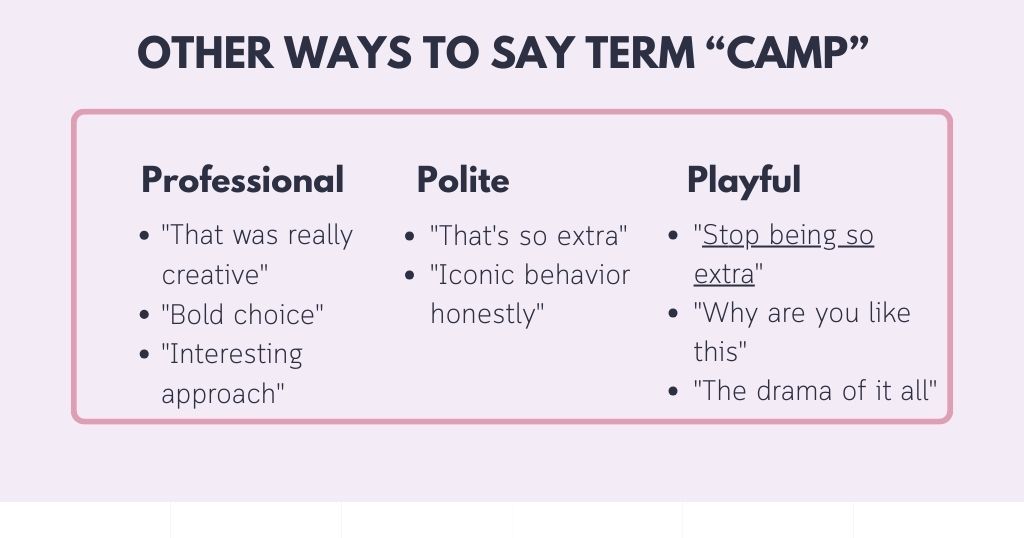
Casual/friendly:
- “That’s so extra”
- “Iconic behavior honestly”
- “You’re being dramatic and I love it”
Polite/professional:
- “That’s quite bold”
- “Really theatrical”
- “That has a lot of personality”
Playful/joking:
- “Stop being so extra“
- “Why are you like this”
- “The drama of it all”
Read Also: What Does IIRC Mean in Text? Decode Before You Use It Wrong
Actual Example Texts People Send
Friend sends a 10-second video of them dramatically falling on their bed: “This is camp I’m crying 😭”
Someone posts a photo in a massive hat that barely fits in frame: “The way this is actually camp”
Group chat discussing a TV show character: “She walked into that meeting in a full gown, it was so camp”
Commenting on someone’s birthday party decorations: “20 disco balls is camp and you know it”
Texting about a mutual friend’s reaction to something small: “He gasped like three times over a typo, camp behavior”
Responding to someone’s outfit selfie with clashing patterns: “Camp! Keep it”
How Camp Travels Across Apps and Ages
TikTok
TikTok users throw “camp” around way more loosely than people did even five years ago. On there, it sometimes just means “funny in a weird way” or “intentionally cringe,” which isn’t quite the original meaning but that’s how language shifts.
Younger Gen Z
Younger Gen Z uses it almost like a compliment for anything aesthetically chaotic. Older millennials or Gen X might still connect it more to drag culture, old movies, or high fashion, so there’s a generational gap in what people picture.
Instagram and Twitter
On Instagram and Twitter, it often describes fashion choices or celebrity moments. On Snapchat or in texts, it’s more about someone’s behavior or reaction. Same word, slightly different contexts.
In British English, “camp” has sometimes been used to describe flamboyant or theatrical personalities. Because of the word’s history and its connections to LGBTQ+ culture, people today are often more careful about using it to label someone’s natural mannerisms.
Mistakes Everyone Makes With This Word
Thinking it’s always positive: Camp can be affectionate or critical depending on context. Someone might say “that’s camp” meaning “you look ridiculous” if they don’t like what you’re wearing.
Assuming it means gay: Camp has strong roots in LGBTQ+ history and drag culture, but the word itself isn’t an identity label. It describes a style or vibe, not a person’s orientation. Using it as a stereotype about someone’s mannerisms is offensive.
Using it interchangeably with “weird”: Camp requires intention. Accidentally wearing mismatched socks isn’t camp. Wearing mismatched socks with platform heels and declaring it your new aesthetic is camp.
Overusing it kills the meaning: If you call everything camp—your lunch, your homework, a normal Tuesday—the word loses impact and starts sounding like you just discovered it yesterday.
Read More: What Does PM Mean in Text? Here’s What They Really Want
Questions You’re Probably Wondering
Is calling something camp rude?
Not automatically. It depends on your tone, relationship, and whether the person was intentionally being theatrical. Among friends who get it, it’s usually a compliment.
Can camp be sarcastic?
Yes. “Oh that’s real camp” said flatly might mean “you’re trying way too hard.” Context and delivery matter.
Does everyone know this word means the same thing?
No. Younger internet users might think it just means “funny-weird,” while people familiar with fashion or drag culture understand the deeper theatrical meaning.
Is it offensive to use if you’re not LGBTQ+?
It’s not a forbidden word, but know where it comes from and use it respectfully. Don’t use it to mock someone’s mannerisms or personality.
Why do people say “camp” instead of just “dramatic”?
Because dramatic can be accidental. Camp implies someone knows exactly what they’re doing and commits to the bit.
Does it only apply to fashion?
No. It describes behavior, decor, movies, reactions, social media posts—anything that’s intentionally theatrical or over-the-top in an entertaining way.
The Bigger Picture on Camp
Camp is one of those words that sounds simple but carries layers. Once you recognize it, you’ll start seeing it everywhere—in your friend’s chaotic outfit choices, in the way someone tells a basic story like it’s a thriller, in videos where people treat mundane moments like high drama. It’s less about the thing itself and more about the spirit behind it: going big, being unapologetic, and making absurdity look intentional.

I’m Hazel, and I studied BSC English at GCUF. I focus on explaining word meanings in simple, clear language that anyone can understand. My goal is helping readers grasp everyday English, confusing terms, and slang used in real conversations and social media. I believe language learning works best when definitions connect to actual life situations. Through careful research and straightforward explanations, I make vocabulary accessible for students, learners, and anyone curious about how English really works in daily use.