

NP means “No Problem” in texting. It’s a quick, casual way to say “you’re welcome” or “don’t worry about it” when someone thanks you or apologizes.
You’re Here Because Something Felt Off
You got a text that just said “np” and you’re not sure if the person’s being friendly, short with you, or something else entirely. Maybe you’ve seen it in comments, group chats, or DMs and it felt… different each time. The confusion makes sense because two letters can mean a lot of things depending on who sent them and what happened right before.
The Real Feeling Behind Those Two Letters
When someone types “np,” they’re signaling that the favor didn’t cost them anything emotionally. It’s less about the words and more about the tone — quick, low-effort, and meant to keep things moving without turning a small moment into a big exchange.
The feeling behind it? Usually relaxed and unbothered. It’s saying “I helped you and it wasn’t a big deal to me.” That’s the vibe most people aim for. But here’s the thing—sometimes it lands differently than intended, and that’s where things get tricky.
Where You’ll Actually See This Pop Up
You’ll see “np” pop up in totally normal moments:
- Someone asks you to send a link, you do it, they say thanks, you reply “np”
- A friend apologizes for canceling plans and you hit them with “np” to show it’s fine
- Your roommate thanks you for doing the dishes and you text back “np”
- Someone in a group chat asks a question, you answer, they appreciate it, you keep it moving with “np”
It shows up most when the favor or help was small enough that making a big deal about it would feel weird. Like if someone held a door for you and then wrote you a thank-you card—that’d be strange, right? Same energy.
Why the Same Two Letters Can Land So Differently
Here’s where people mess up: “np” doesn’t always sound the same.
With close friends, it reads warm and easy. With someone you just met, it might come off cold or like you can’t be bothered to type more. The relationship changes everything.
Situations where tone shifts:
If your partner just opened up about something emotional and you reply “np” to their thanks, it can feel dismissive. They’re looking for warmth, and you gave them efficiency.
In professional settings, “np” can read as too casual or even slightly rude. Your boss thanks you for a report? “No problem” spelled out is safer. Just “np” might make you seem like you’re not taking things seriously.
Warning #1: Using “np” after someone apologizes for something actually serious can make them feel like you’re brushing them off. “Sorry I forgot your birthday” shouldn’t get a quick “np”—that moment needs more.
Warning #2: Some people, especially older generations, might not know what it means at all. They could think you made a typo or you’re being weird.
Warning #3: Sending just “np” with nothing else can sometimes end a conversation awkwardly. The other person might wonder if you’re annoyed or done talking.
Times to Keep “NP” Out of Your Messages
Skip “np” in these situations:
At work: Emails to clients, messages to your manager, or any formal business chat. Write “You’re welcome” or “Happy to help” instead. Professional settings need professional language, and shortcuts can make you look careless.
After big favors: If someone drove you to the airport at 5 AM or spent hours helping you move, “np” feels insulting. The favor was actually a problem—it took time and energy. Say something real like “I really appreciate it” or “thanks so much for doing that.”
Serious conversations: When someone’s upset, stressed, or dealing with something heavy, “np” sounds flippant. Match their emotional energy.
With people you’re trying to impress: Job interviews (even by text), people you’re dating in early stages, or anyone you want to show respect to. You don’t want to seem lazy or uninterested.
In public comments: Responding to strangers on social media with “np” can look weird or standoffish. It works in DMs but not always in public threads.
Other Ways to Say the Same Thing
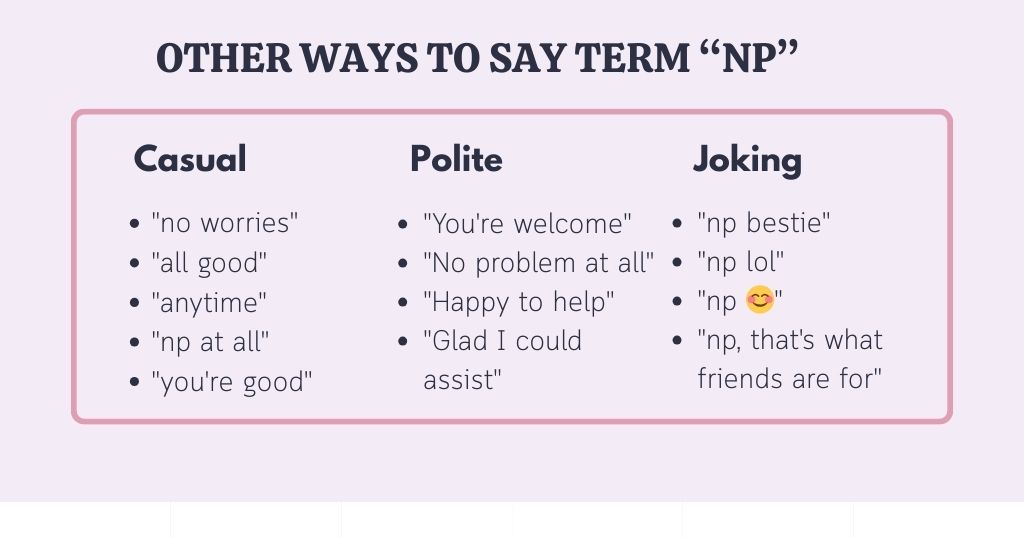
Casual / Friendly:
- “no worries”
- “all good”
- “anytime”
- “np at all”
- “you’re good”
These casual alternatives work the same way other texting shortcuts do—like FR in chat, which keeps things real and direct, or SFLR when you’re apologizing for a late reply.”
Polite / Professional:
- “You’re welcome”
- “No problem at all”
- “Happy to help”
- “Glad I could assist”
- “My pleasure”
Playful / Joking:
- “np bestie”
- “np lol”
- “np 😊”
- “np, that’s what friends are for”
What It Looks Like in Actual Conversations
Text from a friend: “Thanks for covering my shift!” “np, I wasn’t doing anything anyway”
After a small favor: “Can you grab me a water?” “np”
Gaming chat: “Nice save!” “np gg”
In a relationship (lighter moment): “Thanks for picking up dinner babe” “np love”
From someone who’s maybe being short: “Sorry for venting earlier” “np” (This one feels a bit cold—needs more words)
WhatsApp group: “Who has the homework?” “I’ll send it” “Thanks!” “np”
Wrong context (feels off): “Thank you so much for staying up all night to help me with this project” “np” (Way too casual for the level of help given)
Lowercase vs uppercase: “thanks man” “np” (relaxed, easy)
“Thanks!” “NP” (can feel slightly more formal or even abrupt)
Different Crowds, Different Vibes
From girls: Often paired with emojis to keep things warm—”np girl 💕” or “np!!” The extra punctuation or symbols soften it because plain “np” can accidentally sound dry.
From guys: More likely to be standalone, especially in gaming or sports group chats. “np bro” shows up a lot. It’s less about being cold and more about keeping messages short and direct. This shorthand style is common across texting slang. You’ll see similar patterns with YHU or AYO—quick, punchy terms that get the point across without extra fluff.”
Age differences: Younger people (teens, early 20s) use “np” constantly and don’t think twice. People over 40 might not recognize it immediately or could see it as too informal.
Regional stuff: In some South Asian countries, you’ll see “np yaar” or “np bhai” mixing English slang with local terms. In UK/Australia, “no worries” is more common than “np.”
Platform habits:
- Instagram/Snapchat: Usually comes with reactions or emojis
- Discord/gaming chats: Standalone and rapid-fire
- WhatsApp: Often gets a checkmark reaction instead of a typed reply
- Work Slack: Risky—spell it out instead
Why People Get It Wrong
People think you’re mad: If you usually text in full sentences and suddenly drop an “np,” the other person might think something’s wrong. The shift in style signals a mood change even if you don’t mean it that way.
It sounds sarcastic when it’s not: After a huge favor, “np” can read as passive-aggressive even if you’re genuinely saying it was fine. Text loses tone, so what feels chill to you might land differently.
Overusing it makes you seem checked out: If you reply “np” to everything, people start to feel like you’re not really present. It becomes an autopilot response that doesn’t show you’re actually listening or care about the interaction.
Some people don’t know it’s an acronym: They might think it’s a typo for “nope” or confuse it with other acronyms like ND, which can mean completely different things depending on context.”
Mixing it up with other meanings: In medical contexts, NP means Nurse Practitioner. If you’re texting about a doctor’s appointment and someone says “I saw the NP today,” they’re not saying “no problem”—they mean the healthcare provider. Same with documents where NP might mean Notary Public.
Responding When Someone Hits You With “NP”
If someone sends you “np”:
Casual reply: Just move on to the next topic or send a thumbs up. You don’t need to keep thanking them.
If it felt cold: You could add warmth yourself—”appreciate you!” or “you’re the best”—which might get them to open up more.
In a group chat: React with an emoji or just leave it. No response needed.
If you’re confused about the tone: It’s okay to follow up. “You sure it’s cool?” or “we’re good?” can clear things up if you’re not certain how they meant it.
Besides Texting? Yeah, NP Means Other Stuff Too
Medical/Healthcare: Nurse Practitioner—someone who can diagnose and prescribe meds. You’ll see this on medical paperwork or when booking appointments.
Business documents: Net Profit (in financial reports) or Notary Public (on legal papers).
Gaming: Occasionally “nice play” but that’s less common than the standard “no problem.”
Academic: No Pass in pass/fail grading systems.
If you’re reading something professional and see “NP,” context will tell you it’s probably not slang. Letters don’t stand for “no problem” on a legal contract.
Questions People Actually Ask
Is “np” rude?
Not usually, but it can seem rude in formal situations or after big favors. It’s about matching the moment.
Can “np” be sarcastic?
Yes. If you spent three hours helping someone and they barely thanked you, hitting them with “np” can carry some attitude. Tone is everything.
Does it mean the same thing everywhere?
Mostly, but some regions prefer “no worries” and older people might not use it at all. It’s generational and cultural.
Should I use it with my boss?
Probably not. Stick with full words in professional settings unless your workplace is super casual and everyone texts that way.
What if someone doesn’t know what it means?
Just spell it out next time. Not everyone lives online, and that’s fine. If you’re curious about other confusing abbreviations, check out what OY means or whether BYW is real slang or just a typo.”
Is lowercase “np” different from uppercase “NP”?
A little. Lowercase feels more relaxed. Uppercase can look more formal or even slightly aggressive depending on the conversation flow.
“NP” is one of those tiny pieces of internet language that does a lot of work when used right. It keeps things light, shows you’re not sweating the small stuff, and saves you from typing out full responses when a quick acknowledgment is enough. But it’s not a one-size-fits-all reply. Pay attention to who you’re talking to, what just happened, and how your relationship works. When it fits, it’s perfect. When it doesn’t, a few extra words go a long way.

I’m Hazel, and I studied BSC English at GCUF. I focus on explaining word meanings in simple, clear language that anyone can understand. My goal is helping readers grasp everyday English, confusing terms, and slang used in real conversations and social media. I believe language learning works best when definitions connect to actual life situations. Through careful research and straightforward explanations, I make vocabulary accessible for students, learners, and anyone curious about how English really works in daily use.