

PFP stands for “Profile Picture” — the small image that shows up next to your username on apps like Instagram, TikTok, or Discord. Sometimes it also means “Picture For Proof,” asking someone to send a photo that backs up what they’re saying.
Why This Term Confuses People
You’re scrolling through comments and someone writes “love your pfp” under a post. Or your friend texts “pfp or it didn’t happen” after you claim something wild. If you’ve never seen this before, you’re probably thinking: what does a random three-letter combo have to do with pictures?
The confusion makes sense. PFP looks like typo territory, and it actually has two completely different meanings depending on who’s saying it and where. Using the wrong interpretation can make a normal conversation feel really awkward.
Breaking Down What It Really Means
When someone mentions your PFP as a profile picture, they’re talking about your digital identity. It’s not just “the photo you picked.” It’s how people recognize you before reading your username. Your PFP tells people if you’re into anime, if you’re funny, if you take yourself seriously, or if you’re riding some current trend.
The picture-for-proof version is totally different. It’s basically calling someone out (nicely or not-so-nicely). When someone says ‘W PFP,’ they’re saying their profile picture is a winner, top-tier, excellent choice — similar to how people use FR in chat to emphasize they’re being serious about a compliment.
Spotting It in Your Daily Conversations
The profile picture meaning comes up when people are commenting on someone’s appearance in group chats or posts. You’ll see it when someone changes their avatar and friends notice. It’s also huge in matching trends — best friends or couples using split images so their pictures connect when they’re next to each other.
The proof version shows up differently. If you’re texting about something unbelievable, someone might reply ‘pfp’ instead of typing out ‘send me a picture to prove it.’ It’s like when people say DKM (dead kidding me) but need visual confirmation instead of just laughing.
Gaming communities use PFP to identify people since you can’t always see real faces. Your avatar becomes you in that space. Changing it frequently might confuse your squad.
Reading the Room: Why Tone Changes Everything
Here’s where things get tricky. Asking a close friend for “pfp” when they tell a crazy story? That’s playful doubt between people who trust each other. Demanding “pfp” from someone you barely know? That can feel aggressive or like you’re accusing them of lying.
The profile picture usage is usually positive or neutral. Compliments like “cute pfp” or “your pfp is so aesthetic” land well. But if someone says “why’s your pfp so cringe,” that’s an insult, not curiosity.
Sarcasm exists here too. Someone might say “amazing pfp” about a deliberately ugly or weird avatar, and you’re supposed to know they’re joking based on your relationship with them. Text doesn’t always carry that joke clearly.
Warning: If you’re asking for picture proof in a serious or sensitive conversation, it can come across as hostile. Someone sharing bad news doesn’t want to be told “pfp” like you’re fact-checking their pain.
Read More: SWAK Meaning: What It Really Means in Texts
Times You Should Definitely Skip Using It
Don’t use PFP in work emails or professional settings. Your boss doesn’t need a message saying “update your pfp for the company directory.” Say “profile photo” or “headshot” instead.
Avoid asking for picture proof when someone’s talking about something personal or emotional. If a coworker says they’re sick, responding with “pfp” is cold and inappropriate.
Don’t comment on someone’s profile picture if you’re a stranger sliding into DMs. Starting with “nice pfp” can feel like a pickup line or just weird if there’s no existing connection.
Skip it in formal group projects, school assignments, or anywhere you need to sound respectful. PFP is slang. It doesn’t belong in presentations or reports.
Say It Another Way (Depending on the Vibe)
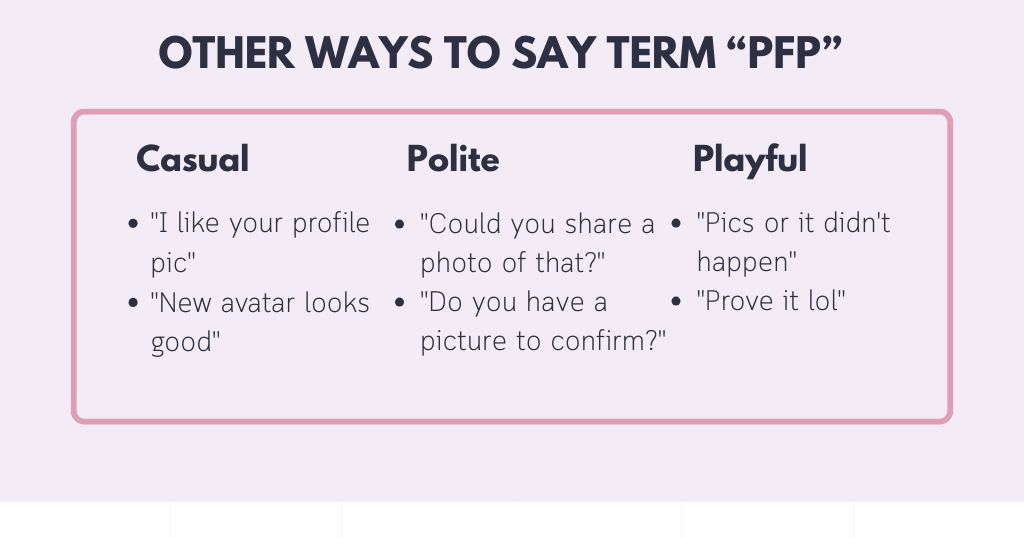
Casual/Friendly:
- “I like your profile pic”
- “New avatar looks good”
- “Send a pic so I know you’re not lying”
Polite/Professional:
- “Could you share a photo of that?”
- “Please update your profile photo when you can”
- “Do you have a picture to confirm?”
Playful/Joking:
- “Pics or it didn’t happen”
- “Prove it lol”
- “Your icon is hilarious”
Real-Life Examples
Friend group chat: “Just met someone who looks exactly like you” “pfp” “[sends photo] I swear it’s uncanny”
TikTok comment: “W pfp, that anime goes hard”
Discord server: “Who keeps changing their pfp? I can’t tell who’s who anymore”
Instagram DM: “Your pfp matches your whole feed vibe”
Snapchat: “Bro your Bitmoji pfp is still wearing winter clothes, it’s June”
Gaming lobby: “Everyone in this clan has the same pfp, y’all are so coordinated”
Marketplace chat: “Is that laptop still available?” “Yeah” “Can you pfp with today’s newspaper in the shot?”
Twitter reply: “I saw a shooting star last night” “pfp or you’re making it up”
More Read: Bop Meaning in Text: This Slang Term Has a Dark Side You Need to Know
Different Apps, Different Rules
TikTok invented something called “PFP cults” where thousands of users change their profile picture to the same image — like a specific green bean or a cat with a funny expression — and then raid comment sections together. It’s about belonging to something bigger.
Discord users with premium subscriptions (Nitro) can use animated GIFs as PFPs, which creates a status thing. Static images feel basic by comparison in some servers.
Instagram users obsess over aesthetic matching. Your PFP needs to fit your grid’s color scheme or vibe. Changing it carelessly can mess up your whole visual brand.
Gaming culture treats PFPs differently. Your avatar might show your rank, your clan, or what character you main. It’s information, not just decoration.
Older platforms like Facebook still call it a “profile picture” in full, while newer apps shorthand everything. That generational gap matters when you’re talking across age groups.
You might also like it: Bando Meaning: What Does This Street Slang Actually Mean?
Mistakes People Make All the Time
People mix up “pfp” with “pp” (profile picture shortened differently), which can be embarrassing since “pp” means something else entirely in other contexts. That’s why most people stick with PFP.
Some think asking for “pfp” always sounds rude, but tone depends on relationship and delivery. Between friends, it’s banter. With strangers, it’s confrontational.
The proof meaning doesn’t exist as strongly outside English-speaking internet culture. If you’re texting internationally, “pfp” for profile picture works, but “picture for proof” might not translate the same way.
Overusing PFP as a compliment makes it lose meaning. If you comment “nice pfp” on every single post, people stop taking it seriously.
Questions Everyone’s Actually Asking
Is it rude to ask someone to change their PFP?
Yes, unless you’re really close or they asked for opinions. People pick their avatars for personal reasons.
Does “W pfp” mean “with” or “win”?
It means “win.” You’re saying their profile picture is a winner, top-tier, excellent choice. “L pfp” is the opposite — a loss, bad pick.
Can you use PFP on any app?
The term works across platforms, but some older people or formal spaces won’t understand it. Stick to “profile picture” if you’re unsure.
Is asking for picture proof calling someone a liar?
Kind of. It’s gentle skepticism, but it can sting if the person’s being honest and you didn’t believe them. Context matters as much as it does with casual replies like KiK, where tone can flip the whole meaning.
Do people still say “display picture” or “DP”?
In some countries, yes. The UK and parts of Europe use DP more often. Both mean the same thing.
PFP is one of those terms that looks simple but changes completely depending on context. As a profile picture, it’s your online face. As picture proof, it’s a trust test. Knowing which meaning fits the moment keeps you from looking confused or accidentally offending someone. The internet moves fast, and PFP is just one example of how three letters can mean everything or nothing depending on who’s typing.

I’m Hazel, and I studied BSC English at GCUF. I focus on explaining word meanings in simple, clear language that anyone can understand. My goal is helping readers grasp everyday English, confusing terms, and slang used in real conversations and social media. I believe language learning works best when definitions connect to actual life situations. Through careful research and straightforward explanations, I make vocabulary accessible for students, learners, and anyone curious about how English really works in daily use.