

TMI means “Too Much Information.” It’s what you say when someone shares details you really didn’t need to know—like stuff about their body, bathroom stories, or super personal things that make you uncomfortable.
People Keep Seeing This and Getting Confused
You’re scrolling through comments and see “TMI!” under someone’s post. Or maybe a friend texts it back to you, and you’re not sure if they’re joking or actually annoyed. The thing is, TMI doesn’t always mean the same thing. Sometimes it’s playful. Sometimes it’s a real boundary. And if you’ve seen it in K-pop spaces, it might mean something completely different.
That’s why people search for this. TMI signals when someone has shared more than expected. Its tone and meaning change depending on the context and relationship, so pay attention to the situation and the way it’s said.
The Real Feeling Behind “TMI”
When someone says TMI, they’re basically hitting the brakes on a conversation. You’ve crossed into territory that feels too personal, too gross, or just way more detail than they wanted. It’s not always mean—sometimes it’s said with a laugh. But it’s a signal that you’ve shared something they’d rather un-hear.
People use it instead of saying “I don’t want to know about that” because it’s faster and sounds less harsh. It keeps things light while still setting a line. Think of it like a friendly “okay, that’s enough” button. It’s kind of like how people use “NM” when they don’t want to explain what they’re actually doing.
Sometimes people overshare without realizing it, and TMI signals that the details are more than others want to hear.
Read More: OSRS Meaning in Text: The Gaming vs. “Getting Real” Confusion
Where You’ll Actually Spot This Term
You’ll see TMI pop up in texts when someone’s venting about being sick and starts describing symptoms in detail. It shows up in group chats when one person goes too deep into their dating life. It’s in Instagram comments under posts where someone overshares about their body or personal habits.
Sometimes people use it on themselves. Like, they’ll finish a story and add “sorry, TMI” because they realized mid-rant that they said too much. That’s the self-aware version—they’re acknowledging the overshare before you have to.
In DMs, it’s usually a quick reaction. Your friend sends three paragraphs about something gross, and you just reply “TMI 😅” to let them know you love them but didn’t need all that. It’s a softer shutdown than saying “WTV” and seeming like you don’t care.
Why “TMI” Hits Different Depending on Who Says It
Here’s where it gets tricky. TMI can sound playful or it can shut down a conversation completely, depending on who says it and how.
With close friends: It’s usually joking. You might say TMI and then keep listening anyway because that’s what friends do. It’s more of a tease than a real complaint.
With someone you barely know: It’s a warning sign. If you’re texting someone new and they hit you with TMI, you probably shared something too personal too fast. They’re uncomfortable, and you should dial it back.
In a sarcastic tone: Some people say TMI when they actually want to hear more. Like if you start a story and stop, they might go “ugh, TMI” but they’re smiling. That’s the opposite of a real TMI—it’s bait to keep you talking.
Warning about tone: Because TMI is just three letters, it’s easy to misread just like “IGHT” can sound dismissive when you can’t hear someone’s voice. If someone says it without an emoji or follow-up message, you might not know if they’re joking or serious. When in doubt, assume they mean it and change the subject. You can always come back to the topic later if they bring it up.
Misinterpretation risk: If you use TMI with someone who’s genuinely trying to open up about something hard (like a health scare or a breakup), it can come off as dismissive. They might think you don’t care. In those moments, it’s better to just listen or say “I’m here for you” instead.
Read More: GGS Meaning: From Gaming Respect to Sarcastic Goodbye
Places Where “TMI” Just Doesn’t Work
Don’t use TMI at work. If a coworker is sharing too much detail in a meeting or email, “TMI” sounds unprofessional and kind of rude. Stick with something like “IMHO, let’s keep this brief” instead, try something like “Let’s keep this high-level” or just steer the conversation somewhere else.
Skip it when someone’s talking about something serious. If a friend is telling you about a medical diagnosis or a tough family situation, responding with TMI makes it seem like you don’t care about their problems. Even if they’re sharing a lot of detail, that’s not the time for this term.
Don’t say it to people older than you (like parents, teachers, or bosses) unless you’re really close. It can sound disrespectful, like you’re cutting them off.
And if you barely know the person, be careful. TMI can kill a conversation before it starts, especially in dating apps or new friendships. You might think you’re being funny, but they might think you’re judging them.
Other Ways to Say “That’s Too Much” Without Using “TMI”
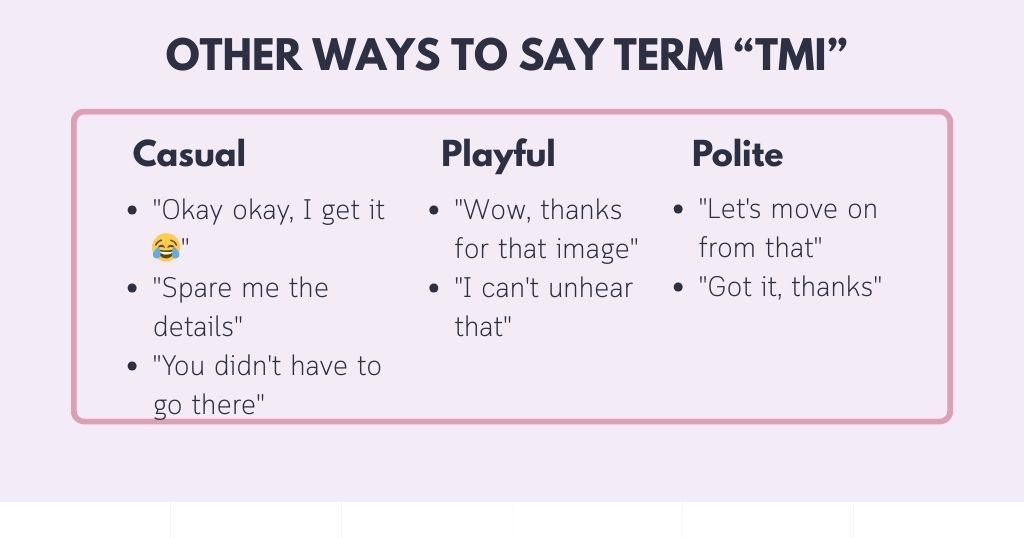
Casual / Friendly:
- “Okay okay, I get it 😂”
- “Spare me the details”
- “You didn’t have to go there”
Polite / Professional:
- “I think that’s more detail than we need”
- “Let’s move on from that”
- “Got it, thanks”
Playful / Joking:
- “Wow, thanks for that image”
- “I can’t unhear that”
- “You’re wild for sharing that”
If you want to keep it even lighter, you could also hit them with a “ROFL” to show you’re laughing but still think it’s wild.”
Actual Texts People Send (TMI Edition)
Someone texts about food poisoning symptoms: “I’ve been in the bathroom all morning and it’s literally coming out both ends” “TMI dude 🤢”
Friend oversharing in group chat: “So my date last night tried to—” “TMI TMI TMI we don’t need the play-by-play”
Self-aware overshare: “I haven’t showered in three days lol… sorry TMI”
Instagram story reply: Story: “Posting from the dentist, they’re drilling my tooth rn and I can smell it burning” Reply: “why would you share that?? TMI”
Joking between friends: “Want to know what my rash looks like?” “Absolutely not. TMI before you even start”
Dating app conversation gone wrong: “I have really bad IBS so I can’t eat most foods” “Oh… TMI for a first conversation maybe?”
Read Also: CD Meaning Decoded: Why This Abbreviation Confuses Everyone
TMI Means Something Totally Different on TikTok and in K-Pop Spaces
On Snapchat, TMI shows up more because that’s where people post their unfiltered, in-the-moment stuff. Since snaps disappear, people feel safer oversharing, which means you’ll see TMI reactions more often there.
TikTok is different. Creators use “#TMI” in videos on purpose to warn viewers that something uncomfortable is coming. It’s almost like clickbait—you know it’s going to be a lot, but you watch anyway. Comments will be full of “TMI!” but everyone’s entertained.
Instagram is somewhere in the middle. People use “TMI” in captions when they’re about to get real about mental health, body stuff, or personal stories. It’s a heads-up, not really a boundary.
Here’s the big culture difference: in K-pop fan spaces, TMI means something totally different. Fans ask idols for their “TMI of the day,” and they’re looking for random fun facts—like what snack they ate or what time they woke up. It’s not about oversharing or being gross. It’s just cute, useless trivia that makes fans feel closer to the person. So if you see someone asking for TMI in that context, they’re not looking for something uncomfortable. They want the opposite.
Younger users often use TMI for mildly awkward details, while older users reserve it for truly uncomfortable overshares. It’s kind of like how “BFF” means different things depending on how seriously you take friendships.
Misreading TMI Meaning: Why This Gets Awkward Fast
People think TMI is always negative. It’s not. Between close friends, it’s just part of the conversation. You overshare, they say TMI, you both laugh, and you keep talking. It’s only harsh if the relationship isn’t there yet.
Overusing it makes it meaningless. If you say TMI to everything, people will stop taking it seriously. It becomes a joke phrase instead of an actual boundary. Save it for moments that genuinely feel like too much.
TMI doesn’t mean the same as NSFW. NSFW is for stuff that’s inappropriate for work or public spaces—like explicit content. TMI is about personal oversharing. You can have TMI that’s totally safe for work (like talking about your weird rash). And you can have NSFW content that isn’t really TMI (like a funny adult meme).
Read Also: What Does CS Mean in Text? From Girls, Instagram & TikTok Explained
Quick Answers About Using “TMI” in Texts
Is saying TMI rude?
It depends on how you say it and who you’re talking to. With friends, it’s usually fine and even funny. With someone you don’t know well, it can feel like a shutdown.
Can TMI be sarcastic?
Yes. Sometimes people say it when they actually want you to keep going with the story. You have to read the room (or the emojis).
Does it mean the same thing everywhere?
Not quite. In Western texting, it’s about oversharing uncomfortable stuff. In K-pop fan culture, it’s about sharing random, unimportant facts.
When did people start using TMI?
It became popular in the late ’90s and early 2000s with chat rooms and instant messaging. People needed a quick way to say “that’s too much detail” without typing it all out.
Can you use TMI in professional emails?
No. It’s too casual and can sound dismissive. Stick to more formal language at work.
What if someone says TMI to me and I didn’t mean to overshare?
Just apologize quickly and move on. Say something like “my bad!” or even “YW” sarcastically if you’re close enough, then change the subject.
Last Thing to Know About “TMI”
TMI is one of those terms that seems simple until you actually try to use it. It’s not just about what you say—it’s about who you’re saying it to, how you say it, and whether they can tell you’re joking. When you get it right, it’s a smooth way to set boundaries without being harsh. When you get it wrong, it can make things awkward fast. The trick is paying attention to the relationship and the vibe before you hit send.

I’m Hazel, and I studied BSC English at GCUF. I focus on explaining word meanings in simple, clear language that anyone can understand. My goal is helping readers grasp everyday English, confusing terms, and slang used in real conversations and social media. I believe language learning works best when definitions connect to actual life situations. Through careful research and straightforward explanations, I make vocabulary accessible for students, learners, and anyone curious about how English really works in daily use.