


The letter K is far more food-rich than most people expect. From everyday breakfast staples to rare global dishes, foods starting with K stretch across every culture, every meal, and every craving. This complete list is built for learners, cooks, and curious minds alike.
Quick List of Foods That Start With K
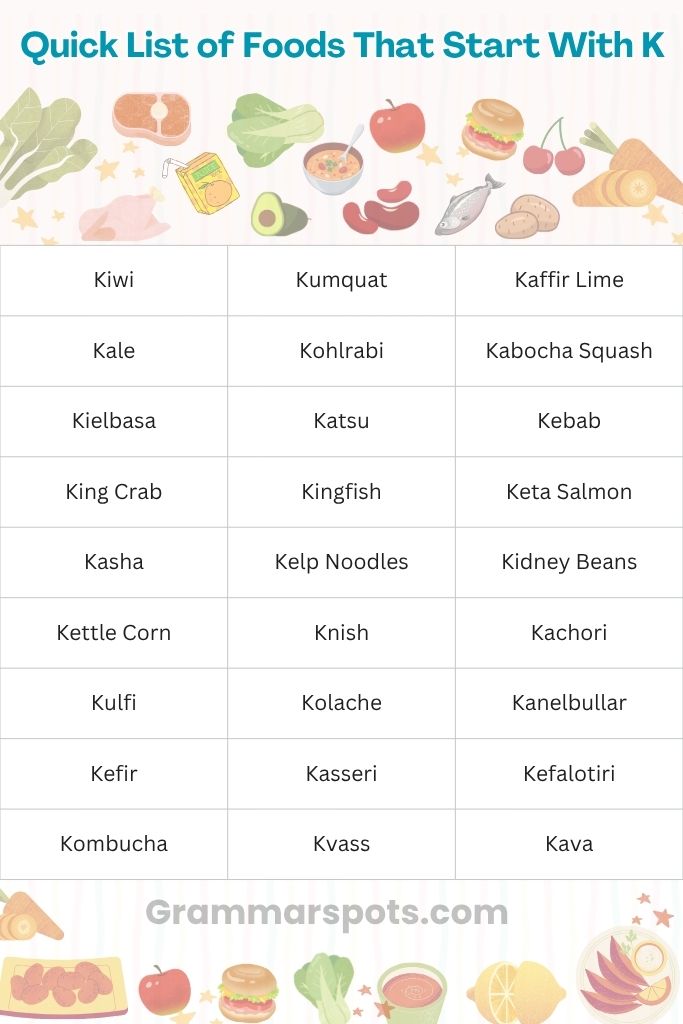
- Kale
- Kiwi
- Kidney beans
- Kimchi
- Kettle corn
- Knish
- Kohlrabi
- Kumquat
- Kefir
- Kielbasa
- King crab
- Kabocha squash
- Kulfi
- Kolache
- Kelp noodles
- Kasha
- Karaage
- Kheer
- Kecap manis
- Kombucha
Quick Reference Table
| Food Name | Category | Flavor Profile |
| Kale | Vegetable | Bitter, Earthy |
| Kiwi | Fruit | Sweet, Tangy |
| Kidney Beans | Legume | Savory, Earthy |
| Kimchi | Fermented Food | Spicy, Sour |
| Kettle Corn | Snack | Sweet, Salty |
| Knish | Snack | Savory, Doughy |
| Kohlrabi | Vegetable | Mild, Sweet |
| Kumquat | Fruit | Tart, Sweet |
| Kefir | Dairy | Tangy, Creamy |
| Kielbasa | Meat | Smoky, Savory |
| King Crab | Seafood | Sweet, Buttery |
| Kabocha Squash | Vegetable | Sweet, Nutty |
| Kulfi | Dessert | Sweet, Creamy |
| Kolache | Pastry | Sweet, Fruity |
| Kelp Noodles | Pantry | Mild, Neutral |
| Kasha | Grain | Nutty, Earthy |
| Kasseri | Cheese | Salty, Tangy |
| Kvass | Beverage | Earthy, Slightly Sour |
| Kecap Manis | Condiment | Sweet, Savory |
| Kalonji | Spice | Peppery, Bitter |
Fruits That Start With K
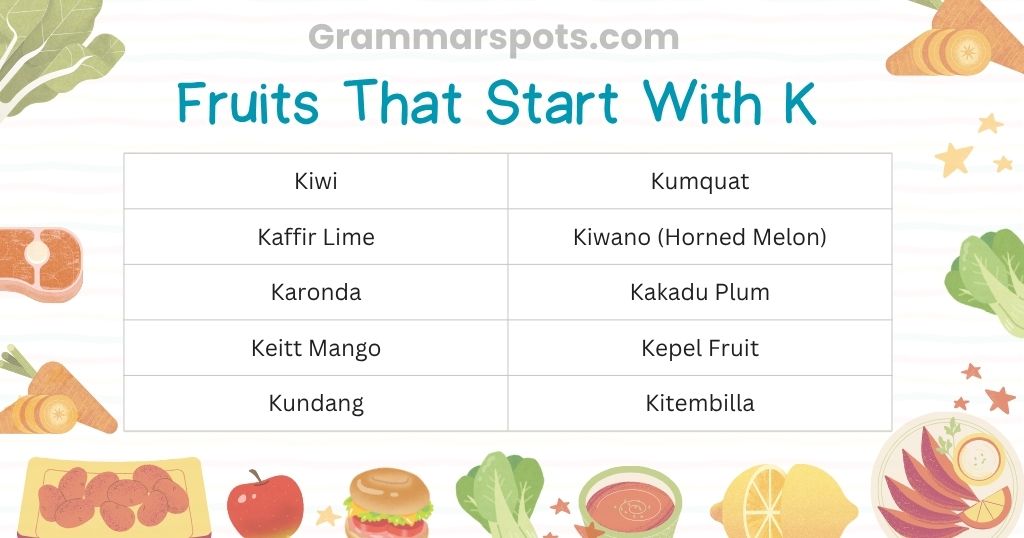
Kiwi: [fruit, tropical, sweet-tart]
A fuzzy green fruit eaten sliced, blended into smoothies, or used on top of desserts and tarts.
Kumquat: [fruit, citrus, tart]
A tiny oval citrus eaten whole the skin is sweet while the inside is sharp and tangy.
Kaffir Lime: [fruit, citrus, floral]
The bumpy rind and leaves are used in Southeast Asian cooking to add a sharp, fragrant citrus punch to curries and soups.
Kiwano (Horned Melon): [fruit, exotic, mild]
An orange, spiky-shelled fruit from Africa with a cucumber-lime flavored jelly interior that’s scooped and eaten fresh.
Karonda: [fruit, Indian, sour]
Small red berries used in Indian chutneys and pickles, with a sharp sourness similar to unripe grapes.
Kakadu Plum: [fruit, Australian, sour]
A native Australian plum with the highest recorded vitamin C content of any fruit in the world.
Keitt Mango: [fruit, sweet, tropical]
A large, late-season mango with firm, mild flesh that holds its shape well in fruit salads.
Kepel Fruit: [fruit, Indonesian, floral]
An ancient Javanese fruit with a custard-like texture and a flavor that blends mango with violet once served in royal courts.
Kundang: [fruit, Southeast Asian, tart]
A small mango-relative with fibrous, sour flesh that’s eaten fresh with salt or made into pickles.
Kitembilla: [fruit, Sri Lankan, tart]
Known as the Ceylon gooseberry, this small purple berry is eaten fresh or made into jams and has a grape-plum flavor.
Kwai Muk: [fruit, Asian, sweet]
A breadfruit relative with a sweet, apricot-like taste, eaten fresh or dried across tropical parts of Asia.
Kordofan Melon: [fruit, African, mild]
A desert melon from Sudan prized more for its oil-rich seeds than its flesh, used in local cooking.
Vegetables Foods That Start With K
Kale: [vegetable, leafy green, bitter]
A dark leafy green eaten sautéed, in soups, blended raw into smoothies, or baked into crispy chips.
Kohlrabi: [vegetable, bulb, mild]
A round, pale green bulb with a flavor between a turnip and a broccoli stem eaten raw in slaws or roasted.
Kabocha Squash: [vegetable, winter squash, sweet]
A Japanese pumpkin with dense, bright orange flesh that’s great roasted, pureed into soup, or used in pie.
Kang Kong (Water Spinach): [vegetable, Asian leafy, mild]
A fast-growing water plant popular across Southeast Asia, stir-fried with garlic and shrimp paste.
Kai Lan (Chinese Broccoli): [vegetable, Chinese, slightly bitter]
A leafy green with thick stems, steamed or stir-fried and served with oyster sauce in Cantonese cooking.
Kinpira Gobo (Burdock Root): [vegetable, root, earthy]
A chewy Japanese root vegetable julienned and stir-fried with soy sauce, mirin, and sesame oil.
Kale Sprouts: [vegetable, hybrid, nutty]
A cross between kale and Brussels sprouts with a milder bitterness especially good roasted at high heat.
Kudzu: [vegetable, root, starchy]
The root of an invasive vine ground into a starch used in Japanese cooking as a sauce thickener.
Komatsuna: [vegetable, Japanese leafy, mild]
A tender Japanese mustard green used in stir-fries and miso soups, milder than spinach and slightly peppery.
Red Kuri Squash: [vegetable, squash, nutty]
A teardrop-shaped orange squash with a chestnut-like flavor excellent in creamy soups and gratins.
Kerguelen Cabbage: [vegetable, wild, rare]
An edible sub-Antarctic plant historically eaten by sailors on long voyages to prevent scurvy.
Kholodets (Aspic Vegetables): [vegetable dish, Eastern European, savory]
Vegetables set in a meat jelly broth served cold as a starter in Russian and Ukrainian homes.
Related Post: 160+ Foods That Start With L: Complete List of Fruits, Vegetables, Drinks, and More
Meats & Proteins Foods That Start With K
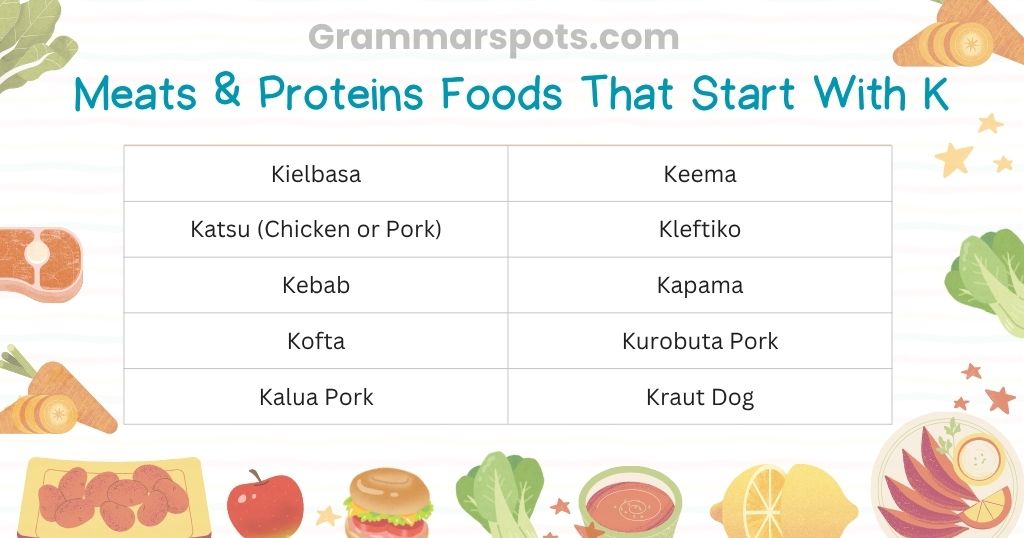
Kielbasa: [meat, Polish sausage, smoky]
A thick garlic-forward Polish sausage grilled, pan-fried with onions, or added to stews and bean dishes.
Katsu (Chicken or Pork): [meat, Japanese, crispy]
A breaded, deep-fried Japanese cutlet served over rice with a sweet-savory tonkatsu sauce.
Kebab: [meat, Middle Eastern, grilled]
Seasoned ground or cubed meat skewered and grilled over open flames one of the world’s most universal street foods.
Kofta: [meat, Middle Eastern, spiced]
Ground lamb or beef mixed with onion, herbs, and spices, shaped into cylinders and grilled or simmered in tomato sauce.
Kalua Pork: [meat, Hawaiian, smoky]
A whole pig slow-cooked in an underground pit called an imu, producing deeply smoky, fall-apart shredded pork.
Keema: [meat, South Asian, spiced]
Minced lamb or goat cooked with tomatoes, green peas, cumin, and garam masala into a thick, savory dish.
Kleftiko: [meat, Greek, slow-cooked]
Lamb wrapped in parchment and slow-baked for hours until it becomes meltingly tender with and lemon.
Kapama: [meat, Bulgarian, braised]
Chicken or pork slow-braised with wine, tomatoes, and cinnamon a warming winter dish from Bulgarian home kitchens.
Kurobuta Pork: [meat, Japanese, premium]
Black Berkshire pig pork heavily marbled, tender, and far more flavorful than conventional pork cuts.
Kraut Dog: [meat, American, street food]
A classic beef hot dog topped with sauerkraut, served from carts across American cities.
Kafta (Lebanese): [meat, Lebanese, grilled]
Spiced ground meat skewers grilled over charcoal, served with flatbread and garlic sauce distinct from Middle Eastern kofta.
Seafoods That Start With K
King Crab: [seafood, crustacean, sweet]
Massive Alaskan crab with sweet, tender leg meat steamed and served with drawn butter as a luxury seafood dish.
Kingfish: [seafood, fish, bold]
A firm, oily fish grilled, smoked, or used in Caribbean-style curries popular in tropical coastal regions.
Keta Salmon (Chum Salmon): [seafood, salmon, mild]
A leaner salmon with pale, mild flesh, often smoked or used for its bright orange roe.
Kampachi: [seafood, Japanese, buttery]
A Hawaiian-farmed amberjack with a clean, mild flavor served raw as sashimi or crudo.
Kippers: [seafood, smoked herring, intense]
Cold-smoked whole herring a traditional British breakfast item with a strong, distinctive smoky-salty flavor.
Kombu: [seafood, seaweed, umami]
Thick dried kelp used as the base of Japanese dashi stock, adding deep savory flavor without any fishiness.
Kingklip: [seafood, fish, delicate]
A South African white fish with sweet, firm flesh pan-fried or baked simply with lemon and butter.
Katsuobushi: [seafood, dried fish, umami]
Shaved dried skipjack tuna used as a topping for Japanese street foods and as the other half of dashi alongside kombu.
Krill: [seafood, crustacean, briny]
Tiny shrimp-like sea creatures processed into pastes and oils, used in Antarctic cuisines and as a health supplement.
Kanikama (Imitation Crab): [seafood, processed, mild]
Surimi-based crab sticks used in sushi rolls, salads, and snacks across Asia and the Western world.
Grains & Pantry Staples That Start With K
Kasha: [grain, buckwheat, nutty]
Toasted buckwheat groats with an earthy, roasted flavor a staple of Eastern European cooking served as porridge or a pilaf base.
Kelp Noodles: [pantry, noodles, neutral]
Translucent noodles made from seaweed with almost no flavor on their own absorb sauces and seasonings well.
Kidney Beans: [legume, pantry, earthy]
A firm red bean used in chili, soups, and rice dishes one of the most protein-rich common legumes.
Kamut: [grain, ancient wheat, nutty]
An ancient grain with a rich, buttery flavor and chewy texture, higher in protein than modern wheat varieties.
Kudzu Starch: [pantry, thickener, neutral]
A Japanese thickening agent derived from kudzu root that creates a silky, glossy finish in sauces and desserts.
Kinako: [pantry, Japanese, nutty]
Roasted soybean powder with a nutty, slightly sweet flavor dusted over mochi and mixed into Japanese sweets.
Kañiwa: [grain, Andean, nutty]
A small Andean grain similar to quinoa but nuttier and slightly higher in protein eaten as a porridge or grain salad.
Kokoda Flour: [pantry, Pacific, mild]
A flour ground from a Pacific Island root crop, used in traditional baking across Fiji and nearby regions.
Khichdi: [grain dish, South Asian, comfort]
A one-pot dish of rice and lentils cooked together with turmeric, ghee, and salt simple, nourishing, and deeply satisfying.
Kkul-tarae (Honeycomb Candy Threads): [pantry sweet, Korean, delicate]
Fine sugar and honey threads pulled into silky strands wrapped around nut fillings used as both a street food and a party snack.
Snacks & Appetizers Foods That Start With K
Kettle Corn: [snack, American, sweet-salty]
Air-popped corn glazed in a light sugar-and-salt coating a fair and market staple with an addictive balance of flavors.
Knish: [snack, Jewish deli, doughy]
A baked or fried dough pastry stuffed with mashed potato, kasha, or sauerkraut a New York deli classic.
Kachori: [snack, Indian, spiced]
A deep-fried flaky pastry filled with spiced lentils or peas, eaten hot with tamarind and mint chutneys.
Keropok: [snack, Malaysian, crunchy]
Fish or shrimp crackers that puff dramatically when deep-fried, served alongside rice dishes or eaten on their own.
Karaage: [snack, Japanese, crispy]
Bite-sized chicken pieces marinated in soy and ginger, deep-fried until juicy inside and crisp outside.
Khakra: [snack, Gujarati, crispy]
A thin, dry, roasted flatbread from Gujarat, India lightly spiced and eaten as an everyday on-the-go snack.
Kimbap: [snack, Korean, savory]
Korean seaweed rice rolls filled with sesame rice, egg, vegetables, and sometimes meat sold everywhere in Korea.
Kisir: [snack, Turkish, tangy]
A bulgur wheat salad with fresh herbs, pomegranate molasses, tomato paste, and chili flakes eaten as a starter or side.
Krupuk: [snack, Indonesian, airy]
Indonesian prawn crackers served alongside rice dishes that puff into light, airy discs when fried in hot oil.
Kaya Toast: [snack, Singaporean, sweet]
Toasted white bread spread thickly with kaya (coconut jam) and butter the classic Singaporean breakfast pairing.
Kibbeh: [snack, Levantine, savory]
Fried or baked bulgur wheat shells stuffed with spiced ground lamb and pine nuts a cornerstone of Lebanese and Syrian cooking.
Khandvi: [snack, Gujarati, soft]
Thin, rolled savory bites made from gram flour and yogurt, seasoned with mustard seeds and coconut light and delicate.
Related Post: 130+ Foods That Start With M: Complete List of Fruits, Vegetables, Desserts, and More
Desserts & Sweets That Start With K
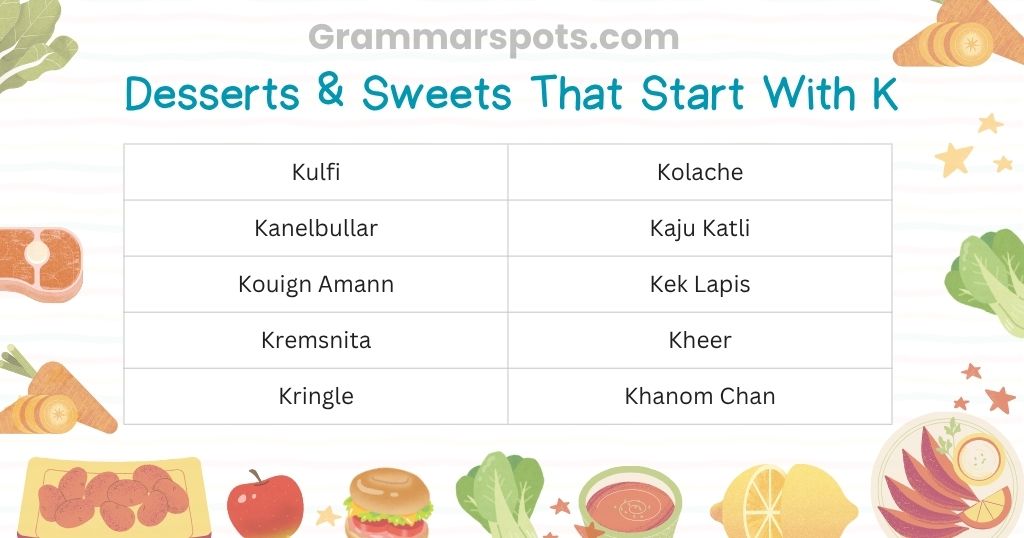
Kulfi: [dessert, Indian, dense]
A slow-frozen Indian ice cream made from reduced whole milk with cardamom and pistachio far denser and richer than regular ice cream.
Kolache: [dessert, Czech-American, soft]
A pillowy pastry filled with fruit jam, sweet cheese, or poppy seeds brought to the US by Czech immigrants.
Kanelbullar: [dessert, Swedish, spiced]
Sweden’s cardamom-and-cinnamon bun similar to an American cinnamon roll but enriched with warming spice in the dough.
Kaju Katli: [dessert, Indian, fudgy]
Diamond-shaped cashew fudge made from ground cashews and sugar smooth, firm, and often topped with edible silver leaf.
Kouign Amann: [dessert, French, caramelized]
A Breton pastry made from laminated dough folded with butter and sugar, baking into a crackling caramelized crust.
Kek Lapis: [dessert, Southeast Asian, layered]
A Malaysian and Indonesian cake built from dozens of thin alternating colored layers intricate and visually striking.
Kremsnita: [dessert, Balkan, creamy]
A Croatian and Slovenian custard slice sandwiched between layers of puff pastry light, eggy, and not overly sweet.
Kheer: [dessert, South Asian, milky]
Rice pudding simmered in whole milk with sugar, cardamom, and saffron until thick served warm or chilled.
Kringle: [dessert, Scandinavian, flaky]
A Scandinavian pretzel-shaped pastry filled with almond paste or fruit a holiday staple in Denmark and Wisconsin.
Khanom Chan: [dessert, Thai, layered]
A Thai layered dessert made from rice flour and coconut milk, tinted green with pandan its multiple layers symbolize good luck.
Kutia: [dessert, Ukrainian, ritual]
A Christmas Eve sweet wheat berry porridge with honey, poppy seeds, and walnuts eaten as the first dish of the festive meal.
Koeksisters: [dessert, South African, syrupy]
Deep-fried braided pastry dough soaked in cold, spiced syrup until sticky-sweet throughout a Cape Malay tradition.
Dairy & Cheeses That Start With K
Kefir: [dairy, fermented, tangy]
A drinkable fermented milk with a slightly fizzy, yogurt-like tang rich in probiotics and used across Eastern European and Middle Eastern diets.
Kasseri: [cheese, Greek, salty]
A semi-hard sheep’s milk cheese that melts beautifully the go-to for saganaki, the pan-fried flambéed Greek cheese dish.
Kefalotiri: [cheese, Greek, sharp]
A hard, pale yellow Greek cheese grated over pasta or used inside spanakopita aged and noticeably salty.
Kashkaval: [cheese, Balkan, buttery]
A smooth yellow sheep’s milk cheese used across the Balkans grills and melts well for hot sandwiches and baked dishes.
Kugelkäse: [cheese, Austrian, sour]
A ball-shaped Austrian fresh cheese made from soured milk, usually mixed with caraway seeds and eaten on dark bread.
Kvarg (Quark): [dairy, fresh, mild]
A European soft dairy product between yogurt and cream cheese used in cheesecakes, dips, and breakfast bowls.
Kiri: [cheese, French, creamy]
A mild, spreadable processed cheese popular in France and across North Africa eaten on bread or crackers, especially by children.
Related Post: 150+ Foods That Start With J: Complete List of Fruits, Vegetables, Snacks and More
Beverages That Start With K
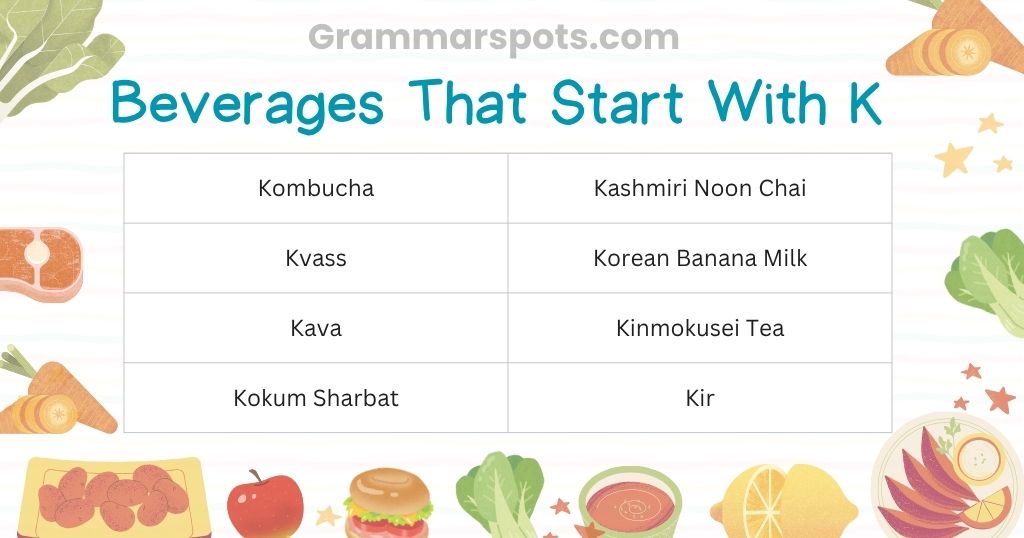
Kombucha: [drink, fermented tea, tangy]
Fermented sweetened tea with a fizzy, lightly sour taste sold in dozens of flavors and widely consumed for gut health.
Kvass: [drink, Eastern European, earthy]
A lightly fermented rye bread drink that’s barely alcoholic, earthy, and slightly sour a centuries-old Russian staple.
Kava: [drink, Pacific ceremonial, earthy]
A ceremonial drink made from ground kava root across Pacific Island cultures earthy, mildly sedating, and drunk from wooden bowls.
Kokum Sharbat: [drink, Indian, sour]
A cooling summer drink from coastal India made with dried kokum fruit deep purple, pleasantly tart, and served cold.
Kashmiri Noon Chai: [drink, South Asian, salty]
A pink-colored salted tea from Kashmir brewed with green tea leaves, milk, and baking soda savory, unique, and culturally significant.
Korean Banana Milk: [drink, Korean, sweet]
A lightly banana-flavored bottled milk drink an iconic Korean convenience store product loved since the 1970s.
Kinmokusei Tea: [drink, Japanese, floral]
A fragrant Japanese tea made from osmanthus flowers delicate, sweet, and golden in color when brewed.
Kir: [drink, French, elegant]
A classic French aperitif of white wine and blackcurrant liqueur (crème de cassis) dry, fruity, and light pink.
Sauces, Spices & Condiments That Start With K
Kecap Manis: [condiment, Indonesian, sweet]
Indonesia’s thick, sweet soy sauce used as a marinade, stir-fry base, and dipping sauce for satay and grilled meats.
Kalonji (Nigella Seeds): [spice, Middle Eastern, peppery]
Small black seeds with a bitter onion-like flavor scattered on naan bread and used in Indian spice blends like panch phoron.
Kokum: [spice, Indian, sour]
A dried coastal fruit used as a souring agent in fish curries and lentil dishes a tamarind alternative from the Konkan coast.
Korean Gochujang: [condiment, Korean, complex]
A fermented red chili paste with deep heat and subtle sweetness the base of bibimbap, tteokbokki, and Korean marinades.
Kemiri (Candlenut) Paste: [spice, Indonesian, rich]
Ground candlenuts used to thicken and add body to Indonesian curry pastes buttery and faintly waxy in texture.
Kyuri Pickles: [condiment, Japanese, tangy]
Quick-pickled Japanese cucumber slices with rice vinegar, sesame, and soy served as a palate cleanser with meals.
Khmeli Suneli: [spice blend, Georgian, aromatic]
A Georgian dried herb and spice blend with fenugreek, coriander, and marigold used in meat stews and bean dishes.
Kasoori Methi: [spice, Indian, bitter-aromatic]
Dried fenugreek leaves crushed and added to Indian curries and breads for a distinctive bittersweet herbal flavor.
Related Post: 55+ Math Words That Start With S (With Meanings and Examples)
International Foods That Start With K

Kimchi: [Korean, fermented, spicy-sour]
Korea’s most iconic dish napa cabbage fermented with gochugaru, garlic, and ginger, served at every Korean meal.
Khachapuri: [Georgian, cheese bread, rich]
A cheese-stuffed Georgian bread the boat-shaped Adjaran version is filled with melted sulguni and topped with a raw egg.
Kare-kare: [Filipino, peanut stew, savory]
A Filipino oxtail stew in a thick peanut sauce, served with fermented shrimp paste (bagoong) stirred in at the table.
Kapusniak: [Polish/Ukrainian, soup, sour]
A hearty Eastern European soup built from sauerkraut, pork, and root vegetables a cold-weather classic.
Kkakdugi: [Korean, radish kimchi, crunchy]
Cubed radish kimchi crunchier and tangier than cabbage kimchi, traditionally eaten alongside rice porridge.
Knödel: [Austrian/German, dumpling, doughy]
Large bread or potato dumplings boiled and served with roasted meats or floating in a clear broth.
Kleicha: [Iraqi, cookie, spiced]
Iraq’s national cookie date or walnut-filled pastry flavored with cardamom and rosewater, eaten during Eid.
Kokoretsi: [Greek/Turkish, grilled offal, smoky]
Seasoned offal wrapped in intestines and slow-grilled over open fire a Greek Easter tradition with bold flavor.
Kuttu Paratha: [Indian, flatbread, earthy]
A buckwheat flour flatbread eaten during Hindu fasting periods dense, nutty, and pan-fried with a little ghee.
Kinilaw: [Filipino, ceviche, sour]
Raw fish “cooked” in vinegar and calamansi juice, mixed with ginger, onion, and chili the Filipino version of ceviche.
Kaldereta: [Filipino, tomato stew, savory]
A rich Filipino tomato-based goat or beef stew with liver paste, bell peppers, and olives bold and deeply flavored.
Khoresh Fesenjan: [Iranian, walnut stew, sour-sweet]
An Iranian pomegranate and walnut stew served over rice one of the most celebrated dishes in Persian cuisine.
Kimchi
Kimchi is the product of centuries of Korean food tradition. Made by packing salted napa cabbage with a spiced paste of gochugaru, garlic, ginger, and fish sauce, it ferments anywhere from a few days to several years. Fresh kimchi is bright and crunchy. Aged kimchi is deeply sour and layered in flavor the same ingredient transformed by time.
The most practical way to cook with kimchi is to use older, more fermented batches. Chopped and fried with rice, pork belly, and a fried egg, it becomes kimchi fried rice one of the most satisfying leftover meals in any kitchen. Simmered with tofu and pork in broth, it becomes kimchi jjigae. It also works brilliantly as a topping on tacos, burgers, and grain bowls.
Kulfi
Kulfi stands apart from ice cream in one key way: it is never churned. Whole milk is simmered down slowly until it reduces to a thick, rich base. That base is sweetened, flavored with cardamom and crushed pistachios, then frozen solid in metal molds. No air is incorporated, which makes kulfi far denser and slower to melt than any Western-style ice cream.
Traditionally it’s unmolded onto a plate and eaten in slices. Street vendors across India and Pakistan serve it on sticks alongside falooda thin rice noodles and rose syrup. Mango kulfi is popular in summer. Rose and saffron versions appear at celebrations. If you’ve only had soft-serve, kulfi will feel like an entirely different dessert category.
Khachapuri
Georgia’s most famous bread is built like a boat. The Adjaran style of khachapuri is shaped from soft, slightly chewy dough, filled end to end with melted sulguni cheese, then cracked with a raw egg and a large pat of butter right as it comes out of the oven. You mix it all together at the table with a spoon and tear the crust walls to dip.
It’s eaten for breakfast in Georgian bakeries, as a shared starter at dinner, or as a full meal on its own. The dough absorbs the butter and egg as you eat. The cheese is salty and gooey, the egg makes it silky, and the bread holds everything together. It’s the kind of dish that’s hard to explain until the first bite then it makes complete sense.
Most Popular Foods That Start With K
- Kale: the dark leafy green that became a global health food phenomenon, eaten in salads, soups, and smoothies.
- Kiwi — a sweet-tart fruit eaten daily in households across New Zealand, Italy, and around the world.
- Kimchi: Korea’s fermented cabbage now found in supermarkets on every continent.
- Kidney Beans — a hearty legume used in chili, curry, and soups across dozens of cuisines.
- Kettle Corn — the sweet-salty popcorn sold at fairs, markets, and sports events worldwide.
- King Crab: one of the most luxurious seafood choices, eaten steamed with drawn butter.
- Kombucha: the fermented tea drink that moved from health stores to mainstream grocery shelves globally.
Rare & Unique Foods That Start With K
- Kinema: a traditional Nepali fermented soybean food from the Himalayan foothills, similar in texture to Japanese natto, eaten with rice.
- Kithul Treacle — a dark, smoky syrup from the sap of the kithul palm tree in Sri Lanka, richer and more complex than maple syrup.
- Kumiss — a fermented mare’s milk drink from Central Asia, slightly alcoholic, tangy, and deeply tied to nomadic culture for thousands of years.
- Kaya (Coconut Jam): a Southeast Asian spread made from coconut milk, eggs, and pandan leaves — custard-like and eaten on toast in Singapore and Malaysia.
- Keule — a rare fruit native to Chile with a sweet, fleshy interior, almost unknown outside South America.
- Kordofan Melon Seeds: the seeds of this Sudanese desert melon are more valuable than the fruit itself, used in local soups and stews.
- Kkul-tarae: Korean honeycomb candy made by folding sugar threads thousands of times into a silky nest wrapped around sesame or peanut filling.
Popular Food Brands Starting With K

- Kellogg’s: the American cereal giant behind Corn Flakes, Frosted Flakes, and Pop-Tarts, operating in over 180 countries.
- Kraft: a global food company best known for boxed macaroni and cheese, cream cheese, and salad dressings.
- Kinder: the Italian-German confectionery brand famous for Kinder Surprise eggs, Kinder Bueno, and chocolate bars.
- Knorr: a seasoning and soup brand present in over 80 countries, widely used for stocks, bouillon, and sauces.
- Kikkoman: Japan’s most recognized soy sauce brand, produced since the 1600s and sold in kitchens worldwide.
- KIND Snacks: an American brand known for nut-and-fruit bars built around simple, recognizable ingredients.
- Kettle Brand: makers of thick, crunchy kettle-cooked potato chips in bold flavors like jalapeño and sea salt.
Fun Facts About Foods That Start With K
- Kiwi was originally called “Chinese gooseberry.” New Zealand exporters renamed it in the 1950s to make it more marketable the rebranding worked so well the new name stuck permanently.
- Kimchi has over 200 distinct varieties. Most people know the napa cabbage version, but kimchi is also made from radish, cucumber, green onion, and even watermelon rind.
- Kale was one of the most common vegetables in medieval Europe it fed entire populations through winter for centuries before potatoes arrived, then nearly vanished, then came roaring back as a health trend in the 2000s.
- Kumquats are the only citrus fruit eaten whole, skin and all. The peel is sweet while the inner flesh is sharp the exact opposite of every other citrus fruit.
- Kulfi melts far slower than ice cream because it contains no incorporated air the dense, compact structure holds its shape on a hot day long after regular ice cream would be a puddle.
FAQs
What foods start with K?
There are over 110 foods starting with K, including kale, kiwi, kimchi, kidney beans, kielbasa, kulfi, kombucha, kettle corn, khachapuri, and king crab. They span every category from fruits and vegetables to international dishes and desserts.
What are some healthy foods that start with K?
Kale, kiwi, kefir, kidney beans, kamut, kombucha, kañiwa, and kinako are all nutritious options. Kale is high in iron and vitamins, kiwi delivers exceptional vitamin C, and kefir and kombucha both support digestive health.
What fruits start with K?
Kiwi, kumquat, kaffir lime, kiwano, Kakadu plum, karonda, keitt mango, kepel fruit, kundang, and kitembilla are all fruits starting with K. Kiwi and kumquat are the most widely available globally.
What junk foods or snacks start with K?
Kettle corn, ketchup chips, Kinder Bueno, karaage (fried chicken), krupuk (prawn crackers), and knish are popular snack and indulgence options that start with K.
Are there Filipino foods that start with K?
Yes kare-kare (peanut oxtail stew), kinilaw (Filipino ceviche), and kaldereta (tomato meat stew) are well-known Filipino dishes. Kare-kare is considered one of the national dishes of the Philippines.
Conclusion
Foods that start with K cover every meal, every culture, and every type of craving. Everyday staples like kale, kiwi, and kidney beans sit alongside rare finds like kumiss, kinema, and kithul treacle. Whether you’re building vocabulary, planning meals, or exploring global cuisine, this list gives you a full, practical, and genuinely useful starting point.

I’m Hazel, and I studied BSC English at GCUF. I focus on explaining word meanings in simple, clear language that anyone can understand. My goal is helping readers grasp everyday English, confusing terms, and slang used in real conversations and social media. I believe language learning works best when definitions connect to actual life situations. Through careful research and straightforward explanations, I make vocabulary accessible for students, learners, and anyone curious about how English really works in daily use.