

SRSLY is texting shorthand for “seriously.” You type it when you want to show you’re being real, or when something surprises you, annoys you, or makes you react strongly to what someone just said.
You Saw It and Now You’re Confused
You saw “srsly” pop up in a text or comment, and you’re not totally sure what vibe the person was going for. Was it a joke? Were they annoyed? Are they asking you something or just making a statement? It’s one of those words that looks simple but can mean different things depending on who sent it and what just happened in the conversation. That’s exactly why people look it up.
The Real Feeling Behind “SRSLY”
When someone types “srsly,” they’re usually reacting to something. It’s not just a shorter way to write “seriously”—it’s a whole mood.
The feeling behind it? It depends. Sometimes it’s shock. Sometimes it’s frustration. Sometimes it’s sarcasm—kind of like how ROFL works differently depending on whether you’re actually laughing or just being polite. Sometimes it just means “no joke, I’m being honest with you right now.”
Where SRSLY Word Actually Shows Up
You’ll see “srsly” show up in quick reactions. Someone shares surprising news, and you reply “srsly??” because you can’t believe it. Your friend complains about something obvious, and you type “srsly” with an eye-roll energy. You’re venting about your day, and you end with “srsly can’t deal” to show you’re at your limit.
It works in group chats when everyone’s talking fast and nobody’s being formal. It shows up under social media posts as a one-word comment that says everything without needing a paragraph, similar to how OIC gets used when you finally understand something. It’s the kind of word you use when you’re comfortable with someone and don’t need to spell everything out perfectly.
The key thing? It’s reactive. You’re almost never planning to use it—it just comes out as a response to whatever just happened in the conversation.
Read Also: ISTG Meaning in Chat: The Real Answer + When NOT to Use It
Why “SRSLY” Can Sound Totally Different Depending on Who’s Reading It
Here’s where things get tricky: “srsly” can sound completely different depending on how you use it.
With a close friend who just told you they won concert tickets? “SRSLY?! That’s amazing!” It’s excitement.
With a coworker who’s complaining about something minor for the third time today? “srsly.” It might come across as dismissive or irritated.
If you’re texting someone you don’t know well, “srsly” without any context can sound rude or sarcastic when you meant to sound genuine. They can’t hear your voice, so they’re left guessing—which is exactly why WTV can sound rude when you meant it casually.”
Warning About Tone
- If you type “srsly.” it can sound annoyed.
- If you type “srsly?” it sounds shocked or questioning.
When it can be Misread
Let’s say someone shares something they’re proud of, and you reply just “srsly” because you’re impressed. They might think you’re being sarcastic or doubting them instead. Always think about what the other person will assume based on your relationship and the situation.
Times When Typing “SRSLY” Is a Bad Move
Don’t use “srsly” in work emails, even if your office is casual—same reason you wouldn’t use TFTI in professional settings. It reads as unprofessional and too informal for anything official.
Skip it when you’re texting someone older who might not be familiar with text slang—they could misunderstand your tone or think you’re being lazy.
Avoid it in serious conversations where someone’s sharing something personal or emotional. If a friend tells you about a breakup or a loss, typing “srsly?” can sound like you don’t care or you’re making light of it. Just write out “seriously” or use different words entirely.
Don’t overuse it in the same conversation. If you reply “srsly” to every single thing, it loses meaning and starts to sound like you’re not really listening.
And definitely don’t use it with people you’re trying to impress or keep things polite with—like a teacher, a boss, or someone’s parents. It’s too casual for those relationships.
Other Ways to Say the Same Thing (Without the Slang)
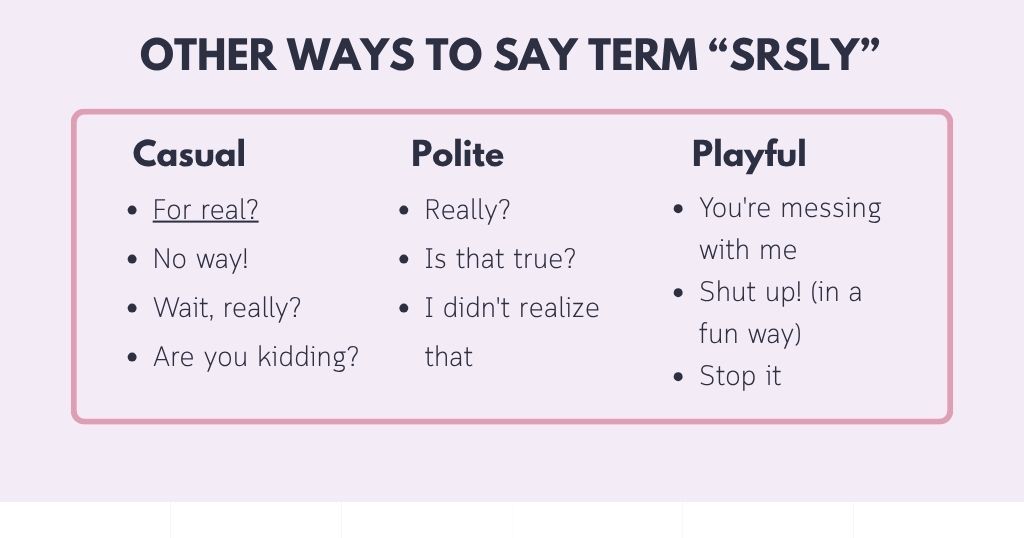
Casual / friendly:
- For real?
- No way!
- Wait, really?
- Are you kidding?
Polite / professional:
- Really?
- Is that true?
- I didn’t realize that
Playful / joking:
- You’re messing with me
- Shut up! (in a fun way)
- Stop it
More Post: What Does TMI Mean? When Those 3 Letters Are Actually Serious
“SRSLY” in Examples: What It Looks Like in Real Texts
Example 1:
Friend: “I just ate an entire pizza by myself”
You: “srsly? respect”
Example 2:
Someone: “The bus is late again”
You: “srsly this happens every day”
Example 3:
Text: “I’m thinking about dyeing my hair purple”
Reply: “SRSLY?? Do it!”
Example 4:
Post: “Why do people put pineapple on pizza”
Comment: “srsly who cares let people enjoy things”
Example 5:
Friend: “I studied for 8 hours straight”
You: “srsly that’s dedication”
Example 6:
Someone: “I can’t believe it’s already March”
You: “srsly where did winter go”
Does Age or App Choice Change How SRSLY Gets Used?
You’ll see “srsly” more on Instagram, TikTok comments, and Snapchat than on LinkedIn or Facebook. Younger people (teens and twentysomethings) use it more naturally, while people over 40 might not recognize it right away or might think it looks messy.
On TikTok, it sometimes shows up in captions when someone’s telling a story they want you to know is real—like “srsly happened to me yesterday.” On Twitter (or X), people used it to save characters back when the limit was stricter, though that matters less now.
The word’s been around since early internet days, tied to old meme culture (think “O RLY?” owl memes from the 2000s). So while it feels current, it’s actually got history. Just like how GG evolved from gaming into everyday conversations.
Why People Get “SRSLY” Wrong Sometimes
People sometimes think “srsly” always means you’re being sarcastic. That’s not true—it can be totally genuine. The confusion happens because tone doesn’t translate well in text, especially with shortened words—similar to how IGHT can sound dismissive when you’re actually agreeing.
Another misunderstanding: some people think dropping the vowels makes it sound angry or aggressive. It doesn’t automatically, but if someone’s already in a bad mood or you’ve been arguing, “srsly” can add fuel to the fire.
And here’s a big one—people assume everyone knows what it means. If you’re texting someone who doesn’t use internet slang much, they might not connect “srsly” to “seriously” and just think you made a typo.
Read More: What Does LS Mean? The Text Abbreviation That Changes Everywhere
Quick Answers About Using “SRSLY”
Is “srsly” rude?
Not by itself. It depends on context and tone. With friends, it’s fine. In formal situations or with people you don’t know well, it can seem dismissive.
Can I use it in a question?
Yes. “Srsly?” is a super common way to ask if someone’s being real or to express shock. Just know that it can also sound skeptical.
Is it the same as “seriously”?
Mostly, but “srsly” feels more casual and spontaneous. Writing out “seriously” sounds more deliberate.
Does everyone spell it the same way?
Not quite. You’ll see “srly,” “srs,” or even “srsly” with extra letters like “srslyyy” when someone’s being dramatic. They all mean basically the same thing.
Will people judge me for using it?
Some might if you use it in the wrong setting. In casual texts with friends? Nobody cares. In a job application? Yeah, don’t do that.
Final Thoughts on This Little Word
“Srsly” is one of those words that works when you’re moving fast and want to keep things light. It’s not fancy, but it does the job when you need to react quickly without overthinking it. Just remember that without your voice or face to back it up, the other person’s filling in the blanks—so think about what they’ll hear based on how you two usually talk. Use it with people who get you, skip it when you’re trying to sound polished, and you’ll be fine. If you’re into other text abbreviations, check out what IIRC means or how YWD works in replies—they’re all about keeping things quick.

I’m Hazel, and I studied BSC English at GCUF. I focus on explaining word meanings in simple, clear language that anyone can understand. My goal is helping readers grasp everyday English, confusing terms, and slang used in real conversations and social media. I believe language learning works best when definitions connect to actual life situations. Through careful research and straightforward explanations, I make vocabulary accessible for students, learners, and anyone curious about how English really works in daily use.