

ASH usually means “as hell” in texts and social media. People use it to make their feelings sound stronger, like “I’m tired ash” instead of “I’m very tired.”
You Saw “ASH” and Got Confused: Here’s Why
You got a text with “ash” in it and you’re not sure what’s going on. Maybe someone said “you look good ash” or “I’m bored ash rn.” Or you saw it all over TikTok comments and Instagram captions, and it doesn’t make sense because… isn’t ash what’s left after something burns?
Here’s the thing: your confusion makes total sense. The word looks simple but people use it in completely different ways depending on where they are and who they’re talking to. You’re not overthinking it.
The Real Feeling Behind ASH
When your friend texts “I’m hungry ash,” they’re basically saying they’re REALLY hungry. Not just a little hungry. Like, stomach-growling-can’t-focus hungry.
Instead of typing “as hell” (which is longer and sometimes feels stronger), people just type “ash.” It’s quicker, softer, and gets the point across without sounding too aggressive. It’s kind of like how NP means “no problem” but sounds way more chill than typing out the full phrase.
The whole point is emphasis. You’re not just sad—you’re sad ash. Not just excited—excited ash. It’s how people show they really mean what they’re saying without writing a paragraph about it.
Where ASH Shows Up Naturally
You’ll see ash pop up when someone’s reacting to basically anything:
- Your friend sends a selfie and you reply “cute ash 😍”
- Someone complains in the group chat: “this homework is hard ash”
- A person comments on your post: “this fit goes hard ash”
- You’re texting late at night: “tired ash but can’t sleep”
It shows up most when people are being casual and honest about how they feel. Nobody’s using ash when they’re trying to sound formal or put-together. It’s a vibe word. You use it when you’re comfortable enough to drop the filter.
Read More: MMF Meaning: What Does MMF Really Mean in Texts and Online?
Reading the Room: Why Context Changes Everything
Here’s where things get tricky. The same word can land completely differently based on who you’re talking to.
With friends: “You’re funny ash” = a genuine compliment, sounds chill and friendly.
With someone you barely know: “You’re funny ash” = might come off too familiar, like you’re being overly comfortable too fast.
In a work chat: Don’t. Just don’t use ash at all. Your coworker or boss will either think you made a typo or wonder why you’re texting like you’re in a group chat with your best friends.
The tone can also flip from sweet to sarcastic real quick. If someone posts something cringe and you comment “brave ash,” that could be supportive… or it could be a roast. Without seeing their face or hearing their voice, it’s easy to miss the real meaning.
Misinterpretation warning: When you’re mad and type something like “I’m annoyed ash,” it might sound way harsher than you meant. The person reading it can’t hear that you’re half-joking. They just see annoyance. If you’re upset about something serious, adding “ash” can make it seem like you’re downplaying it—or the opposite, like you’re angrier than you are.
This is the same issue people run into with SUS in chat—without tone or context, it’s hard to tell if someone’s joking or serious.
Skip ASH in These Situations
Some situations call for actual words, not slang shortcuts.
At work or school (in official stuff): Emails, presentations, papers, anything your teacher or boss will read. Using ash here makes you look unprofessional or like you don’t know how to switch your tone.
Talking to parents or older relatives: Unless your family’s super casual with slang, ash will probably just confuse them. They might think you’re talking about cigarette ash or ask what you mean, which kills the whole vibe.
When you’re apologizing for something serious: “I’m sorry ash” sounds weirdly casual if you actually messed up. It can make the apology feel less genuine, like you’re not taking it seriously.
In any formal writing: Resumes, cover letters, college essays, business messages. If you’re trying to make a good impression or sound respectful, skip the slang entirely.
With people you don’t know well: Strangers, acquaintances, people you just started talking to. Using ash too early can make you seem overly comfortable or immature.
If you’re not sure, just use regular words. “I’m really tired” works everywhere. “I’m tired ash” only works in specific spaces.
Read Also: What Does SMB Mean in Text? The Answer Nobody Actually Explains
Other Ways to Say the Same Thing
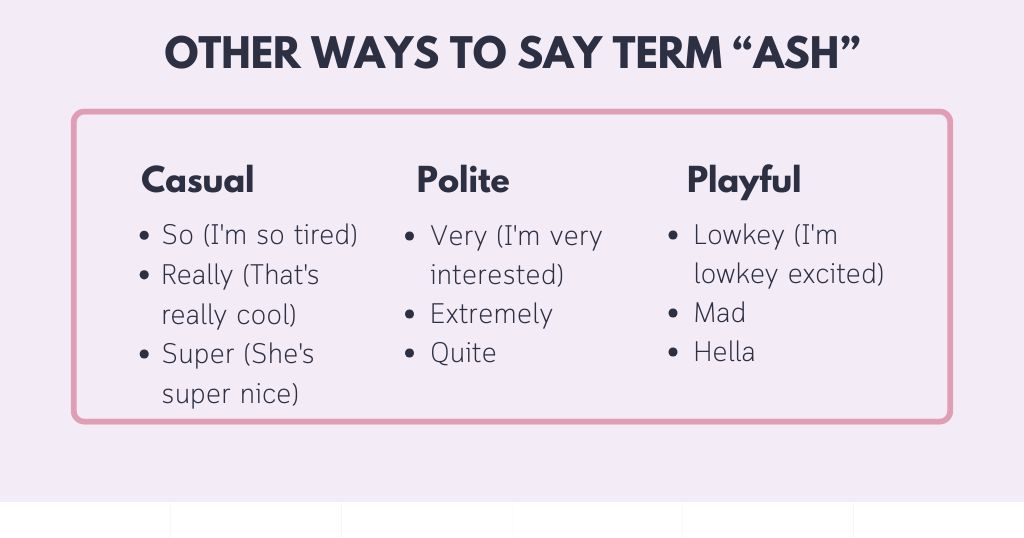
Casual/Friendly (same vibe):
- So (I’m so tired)
- Really (That’s really cool)
- Super (She’s super nice)
Polite/Professional (when you need to sound grown):
- Very (I’m very interested)
- Extremely (That’s extremely helpful)
- Quite (This is quite impressive)
Playful/Joking (keeping it light):
- Lowkey (I’m lowkey excited)
- Mad (That’s mad funny—slang, means “very,” similar to how dope means cool in casual talk)
- Hella (It’s hella good—West Coast slang)
ASH in Action: Real Messages People Actually Send
“Dude I’m stressed ash about this test tomorrow”
“That movie was boring ash, I almost fell asleep”
“You’re talented ash, no joke”
“I miss summer ash 😭”
“He’s being petty ash for no reason”
“This coffee is good ash, where’d you get it”
“Scared ash watching this horror movie alone”
“That concert last night was lit ash”
How Different Apps and Age Groups Use ASH
ASH feels most at home on Instagram, Snapchat, and TikTok. It’s part of how Gen Z and younger millennials text when they’re being real.
Occasionally on TikTok people joke with “ASH” in all caps to describe something bold or savage, but this is far less common than the regular “as hell” meaning.
Older generations don’t really use ash this way. If you’re texting someone over 40, there’s a solid chance they’ll be confused. They might know “AF” (as f***) but ash is newer and softer. It’s part of a bigger shift where Gen Z creates softer versions of intense slang, just like thicc became a compliment instead of an insult.
The word’s also picking up different meanings in some groups. On Snapchat, “fine ash” or “pretty ash” are straight-up compliments about someone’s looks—like “attractive as hell.” It’s smoother than saying “hot.”
One more thing: don’t confuse “ash” with “ashy.” Ashy means your skin’s dry and needs lotion. Completely different word.
Read More: What Does IGH Mean in Text? (It’s Not What You Think)
What People Get Wrong About This Term
People think it’s always positive. Nope. You can be “annoyed ash” or “mad ash” just as easily as “happy ash.” It’s neutral—it just makes whatever you’re feeling louder.
They assume it’s an acronym. Sometimes people write it as A.S.H. or ASH, thinking each letter stands for something. Kind of like the confusion around what ISG means. For the “as hell” meaning, it’s not an acronym. It’s just the word ash replacing the phrase.
They use it in every sentence. Overusing ash makes you sound like you don’t know other words. If every single text has “ash” in it, people stop taking it seriously. It loses its punch.
They think it’s rude. It’s not rude by itself, but it can feel disrespectful depending on context. Telling your teacher “this assignment is confusing ash” in an email? Rude. Telling your friend the same thing? Totally fine.
They don’t realize tone matters. Text doesn’t have facial expressions or voice. “That’s interesting ash” could mean you’re genuinely interested or you’re being sarcastic. The other person has to guess. If you want to be clear, add an emoji or extra context.
Questions You’re Probably Wondering
Can ASH mean something else besides “as hell”?
Yeah. In some conversations, people use “ash” as short for “ashamed,” like “I’m ash I forgot your birthday.” On TikTok, ASH in all caps sometimes means “as savage as hell.” Context tells you which one. Context changes everything similar to how OTP has multiple meanings depending on where you see it.
Is it okay to use ash with anyone?
Not really. Stick to friends and people your age who get slang. Don’t use it with bosses, teachers, or people you’re trying to impress professionally.
Does ash sound aggressive?
Not usually. It’s actually softer than “AF” (as f***), which can sound more intense. ASH is more laid-back.
Will people judge me for using it?
Depends who “people” are. Your friends? Probably not. Someone hiring you or grading your work? Maybe. Know your audience.
Is this slang going to stick around?
Hard to say. Slang changes fast. ASH is popular now, but in a few years, something else might replace it. That’s just how internet language works.
Can I use it in captions and comments?
Yeah, that’s super common. Instagram captions, TikTok comments, Snapchat replies—ash fits right in. Just don’t overdo it.
ASH is just one of those terms that makes texting feel more natural and expressive. It’s not complicated—you’re just amplifying whatever you’re saying without typing extra words. Use it with people who get it, skip it when the situation calls for actual sentences, and you’ll be fine. Don’t stress it too much. If you’re still not sure, watch how other people use it first and copy the vibe. That’s honestly how most slang gets learned anyway.

I’m Hazel, and I studied BSC English at GCUF. I focus on explaining word meanings in simple, clear language that anyone can understand. My goal is helping readers grasp everyday English, confusing terms, and slang used in real conversations and social media. I believe language learning works best when definitions connect to actual life situations. Through careful research and straightforward explanations, I make vocabulary accessible for students, learners, and anyone curious about how English really works in daily use.